
Viral Investment Scam Alert 2026: Can ₹22,000 Really Earn ₹5.5 Lakh a Week? PIB Warns Against Fake Video
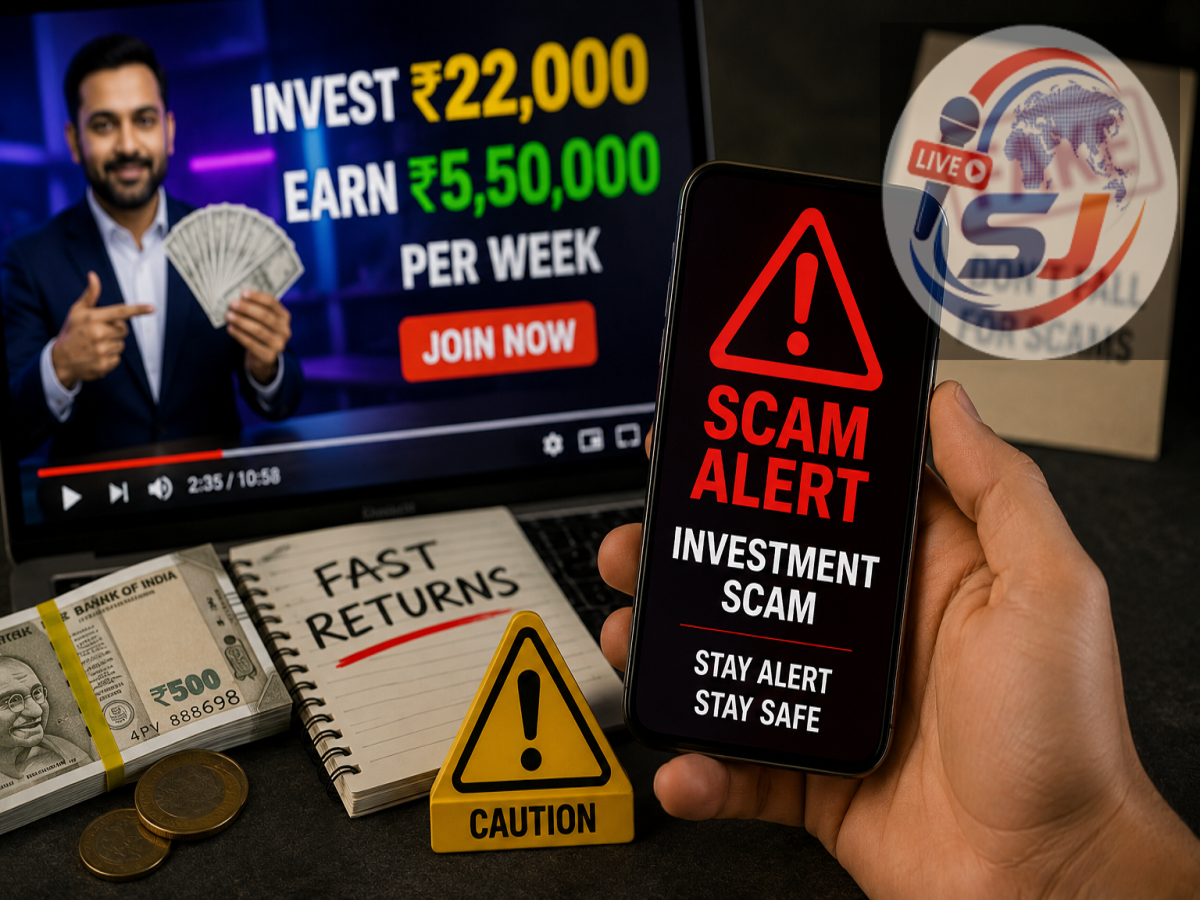
A video circulating on social media claims that people can invest just ₹22,000 and earn as much as ₹5.5 lakh every week through a special investment platform. The video appears to feature Finance Minister Nirmala Sitharaman promoting the supposed opportunity.
However, the claim is fake. According to the information shared in the fact-check, the video has been manipulated using artificial intelligence and should not be treated as a genuine statement by the Finance Minister.
Such scams are becoming increasingly sophisticated, with fraudsters using the faces and voices of politicians, business leaders and celebrities to make fraudulent investment offers appear credible.
What Does the Viral Video Claim?
The viral video promotes what appears to be an online investment opportunity. It claims that an initial investment of around ₹22,000 could generate weekly earnings of ₹5.5 lakh.
The promise itself is a major warning sign. Turning ₹22,000 into ₹5.5 lakh would mean generating around 25 times the original investment, and the video reportedly suggests that such returns could be earned repeatedly.
Scammers commonly use extraordinary return claims to create excitement and encourage people to transfer money before checking whether the platform is genuine.
PIB Fact Check Flags the Video as Fake
The government's fact-checking mechanism has warned people against the viral content.
According to the fact-check described in the report, the Finance Minister has not endorsed such an investment scheme, and people should not interpret the viral clip as an official government announcement.
The government's PIB Fact Check portal can be used to check suspicious claims involving central government policies, announcements and schemes.
A government minister appearing in a video is therefore not enough to establish that an investment opportunity is genuine.
AI and Deepfake Technology Can Make Scams Look Real
One reason these scams can be difficult to identify is the growing use of AI-generated or manipulated audio and video.
Fraudsters may take an authentic video of a public figure and alter the audio, facial movements or context. The resulting clip can make it appear as though the person is endorsing a product or investment scheme they never promoted.
Viewers should therefore watch for unusual lip movements, unnatural speech, inconsistent audio, strange facial expressions and claims that sound dramatically different from the person's usual public statements.
Even if none of these signs is obvious, independently verifying the claim remains essential.
Why ₹22,000 to ₹5.5 Lakh Should Raise an Immediate Red Flag
No legitimate investment should be trusted merely because an advertisement promises exceptionally high or guaranteed returns.
Returns from shares, mutual funds and other market-linked investments fluctuate, and losses are also possible. Claims suggesting that a small amount can produce huge, guaranteed weekly profits should therefore be treated with extreme caution.
Fraudsters may initially ask for a relatively manageable deposit. After payment, a fake dashboard could show artificial "profits" to persuade the victim to invest more.
When the victim tries to withdraw the supposed earnings, scammers may demand additional money in the name of taxes, processing charges, account activation or withdrawal fees.
Never Transfer Money Before Checking the Platform
Before investing through a website, app, WhatsApp message, Telegram group or social-media advertisement, check who actually operates the service.
For securities-market services, investors can use official resources provided by the Securities and Exchange Board of India (SEBI) to verify regulatory information.
Do not rely solely on screenshots of registration certificates, celebrity photographs, testimonials or links supplied by the person promoting the investment.
A scammer can easily create fake documents and websites that resemble legitimate financial platforms.
Be Careful With Links in Social Media Advertisements
A fraudulent investment advertisement may contain a link that redirects users to a fake website or asks them to install an unknown application.
Avoid entering bank-account details, card numbers, UPI PINs, passwords or OTPs on unfamiliar websites.
Never share an OTP, UPI PIN, CVV or banking password with someone claiming that it is required to "activate" an investment or release profits.
Also be cautious if someone asks you to install a screen-sharing or remote-access application.
What to Do If You Have Already Sent Money
Anyone who suspects that money has been transferred to an investment scam should act quickly rather than continuing to negotiate with the fraudster.
Immediately contact your bank or payment provider and report the suspicious transaction. Preserve screenshots, phone numbers, payment receipts, website addresses, social-media profiles and chat records that could help investigators.
Cyber-financial fraud can also be reported through the Government of India's National Cyber Crime Reporting Portal. The official cybercrime helpline number is 1930.
Simple Rule to Remember
An investment advertisement featuring a Finance Minister, business tycoon or celebrity does not prove that the investment is legitimate.
Offers promising guaranteed or extraordinarily high returns with little or no risk should be treated as potential scams until independently verified through official sources.
In this case, the viral claim that investing ₹22,000 can generate ₹5.5 lakh every week should not be trusted. The reported PIB fact-check identifies the video involving Finance Minister Nirmala Sitharaman as manipulated and warns users against falling for the investment offer.
Disclaimer: This article is intended for awareness and informational purposes only. Investment decisions should be made after verifying the platform, understanding the risks and, where appropriate, consulting a qualified financial professional.