
Vande Bharat Cabin Reel Goes Viral, Raises Questions Over Railway Security
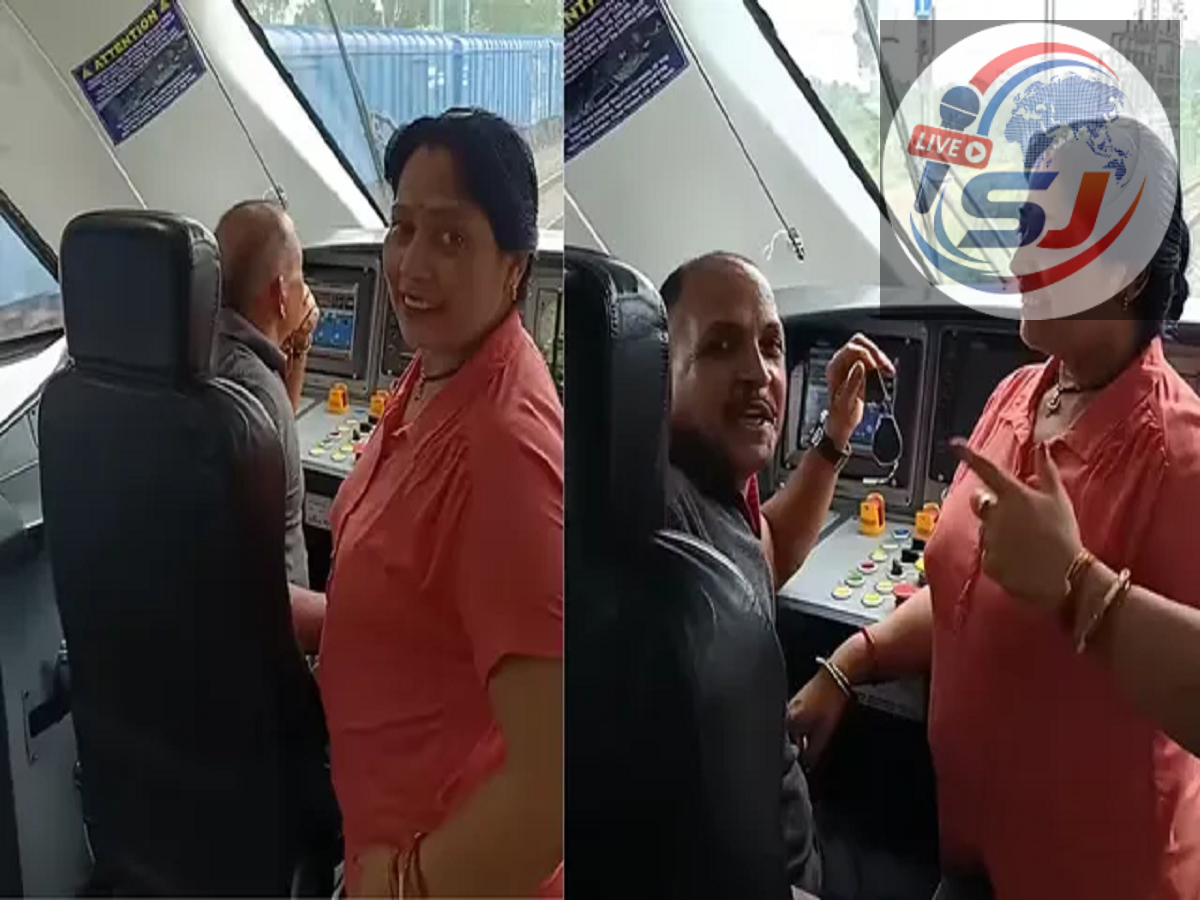
Vande Bharat Viral Video: A video circulating widely on social media has triggered a fresh debate over railway security after a woman and a man were seen inside the loco pilot’s cabin of a Vande Bharat train.
The driving cabin is a restricted operational area and is generally not meant for ordinary passengers. The viral clip has therefore prompted questions over how members of the public were apparently allowed to enter the cabin and record a social media reel.
The footage has also drawn the attention of Railway Seva, the official passenger assistance platform of Indian Railways, which sought additional information about the incident for further examination.
What Does the Viral Video Show?
The clip circulating online shows a woman and a man seated inside what appears to be the loco pilot’s cabin of a Vande Bharat train.
A railway employee or loco pilot can also be seen in the footage.
The woman appears to be posing and recording content from inside the cabin, an area containing equipment associated with train operations.
The video quickly attracted attention because access to such areas is normally restricted.
Social media users questioned whether passengers or family members of railway employees should be permitted inside an operational train cabin merely for recording photographs or reels.
आजकल सरकारी नौकरी करने वालों की बीवियों को Reel बनाने का ऐसा कीड़ा काटा है कि वो आगे पीछे कुछ नहीं सोच रही हैं,
— Prem Bhardwaj (@premkumarcbn01) August 3, 2026
इन मोहतरमा का नाम सरिता यादव है , ये ट्रेन के इंजन में पूरे परिवार के साथ Reel बना रही हैं,@IRCTCofficial @RailMinIndia इस वायरल विडियो की जांच कर ऐसे कर्मचारियों पर… pic.twitter.com/5sQMckLHuP
Social Media User Raised the Issue
The video was widely shared on X by a user named Prem Bhardwaj.
Bhardwaj identified the woman in the footage as Sarita Yadav and alleged that she had entered the Vande Bharat cabin with family members to shoot social media content.
However, those identity and relationship claims originated from the social media post and should not be treated as independently verified facts unless confirmed by railway authorities.
The user urged Indian Railways to investigate the circumstances under which access to the cabin was apparently granted.
The viral post also prompted broader discussion about whether social media content creation is increasingly leading people to ignore restrictions in sensitive public infrastructure.
Railway Seva Responds to Complaint
After the video gained traction, Railway Seva responded to the complaint.
The official platform requested further details including the train number, date, time and contact information so that the matter could be examined.
This indicates that railway authorities had taken note of the viral footage and were seeking information necessary to identify the train and circumstances surrounding the incident.
At the time of the initial reports, however, there was no publicly confirmed announcement detailing disciplinary or legal action against any individual shown in the video.
Was the Train Being Driven From the Cabin?
An important detail has also emerged from subsequent reporting.
The cabin visible in the video was reportedly located at the rear of the train and was not being used to operate the train at that time.
That distinction matters because it would be inaccurate to suggest, without evidence, that the reel was being filmed next to a driver actively controlling the moving train.
Even so, the incident has raised questions because a driving cab remains a restricted technical area containing operational systems and equipment.
The issue is therefore primarily about unauthorized access, adherence to safety protocols and whether railway personnel allowed people into a location that should normally remain secured.
Why Is Access to a Loco Pilot Cabin Sensitive?
A train driver's cabin is very different from a regular passenger coach.
It contains controls, monitoring systems and equipment used in train operation. Access is typically limited to authorized railway personnel because unnecessary presence in such spaces can interfere with operational discipline and safety procedures.
Even when a particular driving cab is not actively controlling a train, maintaining restricted access is important.
Permitting unauthorized people into technical areas can create risks such as accidental interaction with equipment, distraction of staff or normalization of unsafe practices.
This is why the viral video has attracted criticism even though there is no confirmed evidence that the people shown interfered with any train control.
Reel Culture and Railway Safety
The episode has once again brought attention to risky social media behaviour around trains and railway infrastructure.
Over the past several years, videos filmed on railway tracks, station edges and other restricted locations have repeatedly circulated online.
Such content can be dangerous when creators prioritize dramatic visuals over safety regulations.
Railway authorities have regularly urged passengers not to enter restricted areas or engage in activities that could compromise their safety or that of others.
The Vande Bharat cabin controversy is slightly different because the central question is not simply what the individuals were doing, but how they apparently obtained access to the restricted area in the first place.
Instagram Account Reportedly Became Unavailable
The Instagram account from which the reel was reportedly uploaded later became inaccessible.
Users attempting to visit the page reportedly encountered a “page not found” message.
It remains unclear whether the account was deleted, temporarily deactivated or removed for another reason.
The disappearance of the page does not establish responsibility or wrongdoing, but it has added further attention to the controversy.
What Could Happen Next?
Railway authorities would first need to establish basic facts such as which Vande Bharat service was involved, when the footage was recorded, who was present and whether any railway employee facilitated unauthorized access.
If a violation of railway rules is confirmed, any action would depend on the findings of the inquiry and the applicable service or safety regulations.
Reports have suggested that disciplinary action against railway staff could be considered if misconduct is established, but no specific punishment should be assumed before an official investigation is completed.
Why the Incident Matters
The controversy highlights the importance of keeping technical and operational railway areas secured even when they are not actively being used.
Vande Bharat trains are among Indian Railways’ most prominent passenger services, and any apparent lapse involving their restricted operational areas can attract significant public scrutiny.
For passengers, the basic rule remains simple: driving cabins and other restricted railway spaces should not be entered without authorization, whether for photography, videos or social media reels.
The viral footage may ultimately prove to involve a non-operational rear cabin, but it has nevertheless raised a legitimate question for railway authorities: how were unauthorized individuals apparently allowed into a restricted area, and were established access protocols followed?
Until an official inquiry provides further details, claims regarding the identities, relationships or responsibility of the people involved should be treated as allegations rather than confirmed facts.