
Drone Captures Heartbreaking Moment as Mother Dolphin Carries Dead Calf for Days in the Indian Ocean
Researchers Say the Bottlenose Dolphin Continued Supporting Her Calf After Its Death While Other Dolphins Stayed Close Throughout the Journey
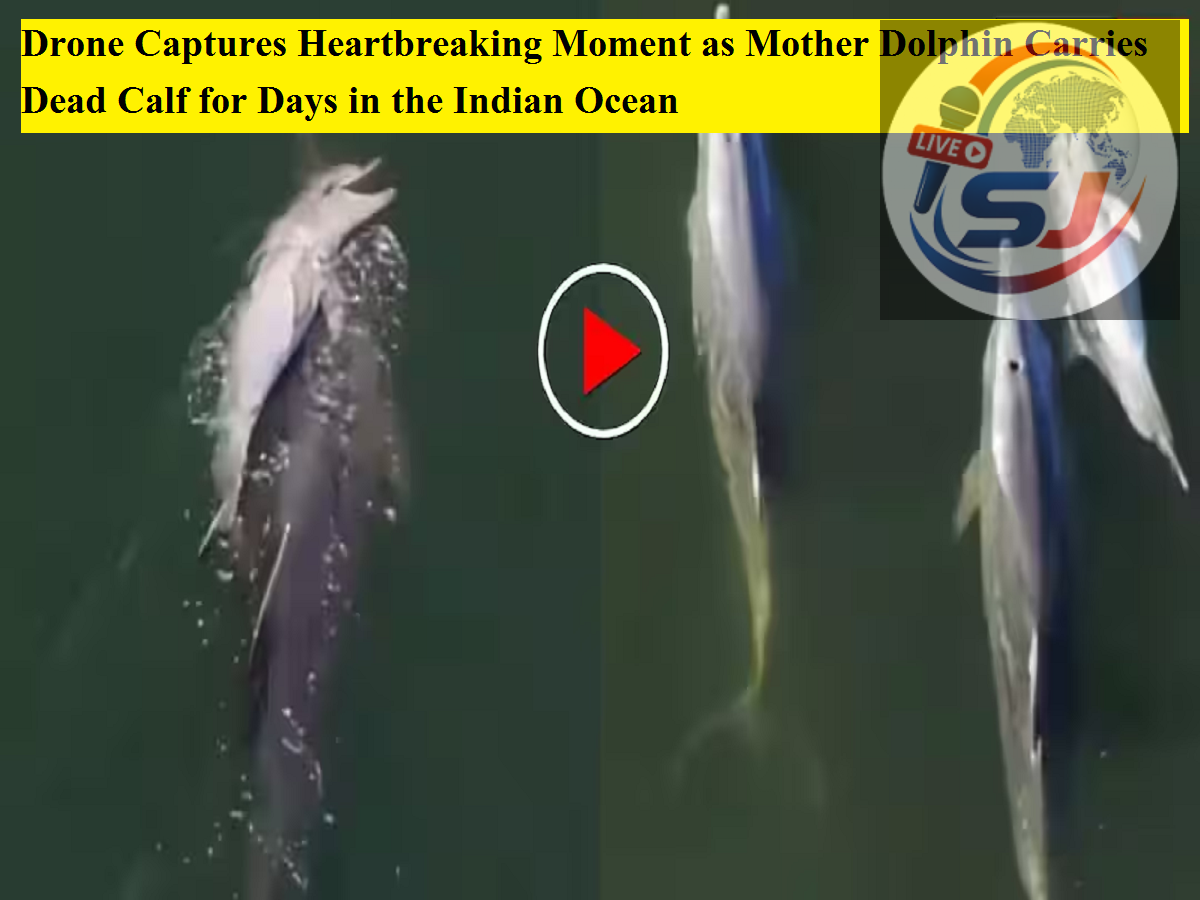
A deeply emotional scene from the Indian Ocean has drawn worldwide attention after researchers documented a mother bottlenose dolphin carrying her deceased calf for several days. The touching footage, captured by drone, highlights the strong maternal bond and complex social behavior observed among dolphins.
The video was recorded by the Australian conservation organization Geographe Marine Research, whose team had been monitoring the dolphin population in the region. After the footage was shared online, it quickly spread across social media, with many viewers expressing sadness and admiration for the mother's unwavering attachment to her calf.
Researchers Observe Mother Dolphin Carrying Her Calf
According to researchers, the female bottlenose dolphin, known as Fragile, was seen supporting the body of her approximately two-week-old calf by balancing it on her head and back while swimming through the ocean.
The behavior reportedly continued for nearly six days, with the mother repeatedly lifting the calf toward the surface as she traveled with her pod.
Marine scientists explain that this type of behavior has been documented in dolphins and some whale species, where mothers continue to remain close to their deceased offspring instead of immediately abandoning them.
A History of Previous Losses
Researchers also revealed that this was not the first tragedy experienced by the dolphin.
According to observations shared by the research team, Fragile had previously lost four calves before this incident. Despite the repeated losses, she continued displaying strong maternal instincts by remaining with her latest calf even after it had died.
Scientists say such behavior reflects the powerful bond between mother dolphins and their young, although the exact reasons behind the prolonged carrying of deceased calves are still being studied.
Other Dolphins Stayed Beside Her
One of the most striking aspects of the observation was the response of the surrounding dolphin pod.
Throughout the period, other dolphins reportedly remained close to the grieving mother instead of leaving her alone. They swam alongside her while maintaining a respectful distance, appearing to accompany her during the difficult period.
Marine biologists note that dolphins are highly social mammals known for living in closely connected groups. They often cooperate while hunting, protecting one another from predators, and caring for injured or vulnerable members of their pod.
Although scientists avoid attributing human emotions directly to animal behavior without sufficient evidence, many researchers agree that dolphins display complex social interactions that suggest strong bonds within their groups.
Drone Footage Highlights Rare Animal Behavior
The aerial footage provided researchers with a clear view of the mother's actions without disturbing the animals in their natural habitat.
Drone technology has increasingly become an important tool in marine research, allowing scientists to observe whales, dolphins, and other marine species from above while minimizing human interference.
Such observations help researchers better understand behaviors related to parenting, communication, migration, and social interactions among marine mammals.
Video Sparks Emotional Reactions Online
After the footage began circulating on social media, thousands of users shared emotional responses.
Many viewers commented on the apparent devotion shown by the mother dolphin, while others were equally moved by the presence of the surrounding pod that remained nearby throughout the observation.
A grieving dolphin mother carried her dead calf for several days during a period of mourning.
— Wafula 🇰🇪 🇨🇩 🇻🇳 (@IamWafula1) August 4, 2026
Fraggle the dolphin has lost her last four calves, according to Geographe Marine Research. pic.twitter.com/k65iZ4iTIP
Several users remarked that the video served as a reminder that many animal species form strong family and social bonds. Others described the footage as one of the most touching wildlife moments they had seen.
Scientists Continue Studying Dolphin Social Bonds
Marine researchers say dolphins remain one of the most intelligent and socially complex marine mammals. Their behavior has long fascinated scientists, particularly in areas involving communication, cooperation, caregiving, and responses to the loss of offspring.
While the exact emotional experiences of animals cannot be confirmed in the same way as humans, observations like these continue to contribute to scientific understanding of dolphin behavior and the intricate relationships that exist within their social groups.
The widely shared drone footage has once again highlighted both the remarkable maternal instincts of dolphins and the importance of continued research into the emotional and social lives of marine mammals.