
Which Solar Panels Last the Longest? Compare Monocrystalline, TOPCon and HJT Technology
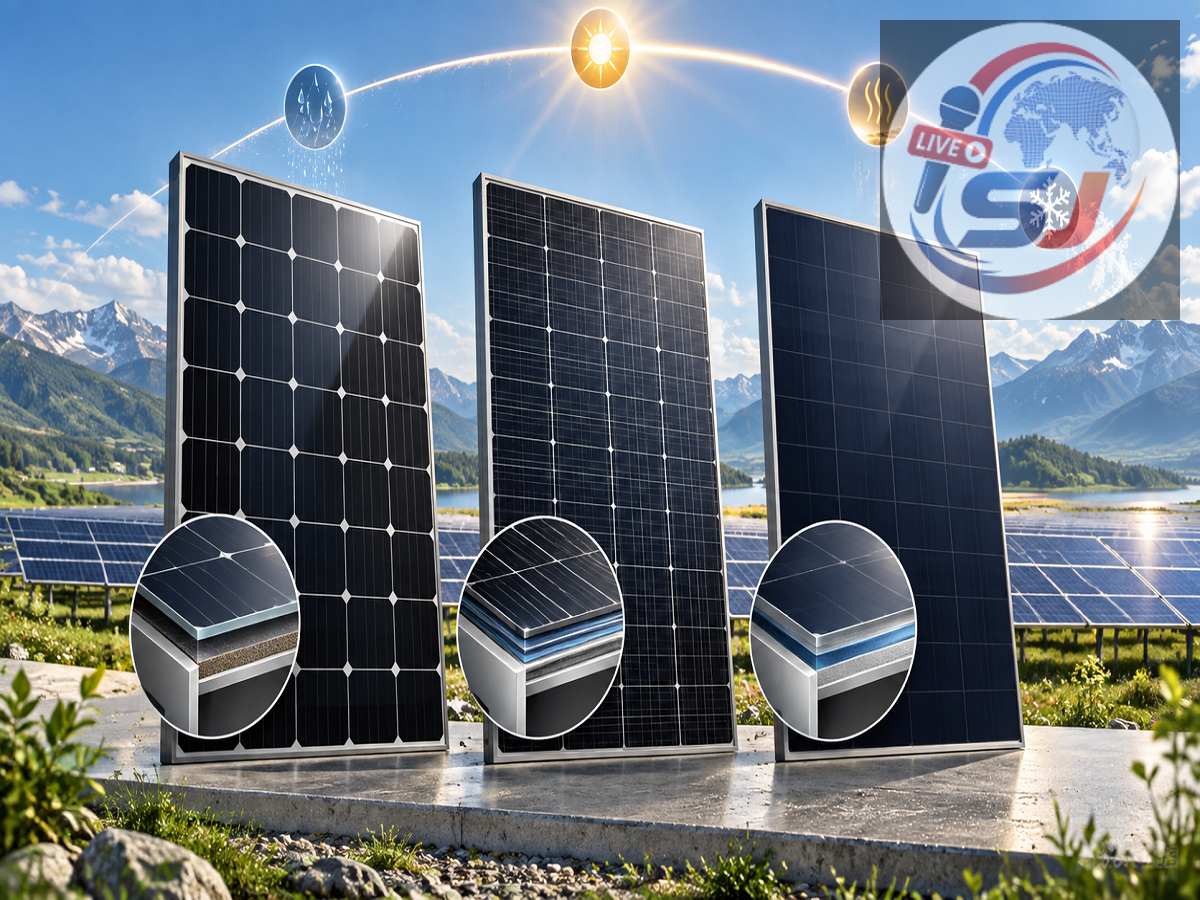
Installing a rooftop solar system is a long-term financial decision. Buyers often compare panel capacity, efficiency and installation cost, but the expected working life of the equipment is equally important. A low-priced panel may appear attractive initially, yet faster degradation or a weak warranty could reduce the electricity generated over its lifetime.
Most quality solar panels are designed to operate for 25 years or longer. They do not normally stop producing power immediately after completing 25 years. Instead, their output gradually declines as the cells and other module components age.
Modern monocrystalline panels—particularly those using N-type TOPCon or heterojunction technology—often come with some of the strongest long-term performance warranties. However, no single panel technology can automatically guarantee the longest service life. Manufacturing quality, installation standards, climate, materials and maintenance also play major roles.
How Long Does a Solar Panel Usually Last?
The average operational lifespan of a modern photovoltaic panel is generally estimated at around 25 to 35 years. Some well-manufactured and properly maintained panels may continue generating useful electricity for 40 years or more, though their output will be lower than when they were new.
The US Department of Energy says the average operational lifespan of solar panels had increased to approximately 25 to 35 years by 2025.
A panel reaching the end of its performance-warranty period does not necessarily become unusable. It may continue working, but the owner must decide whether its reduced production remains economically worthwhile.
Why Monocrystalline Panels Are a Popular Long-Term Choice
Monocrystalline solar panels are manufactured using cells made from a single-crystal silicon structure. They generally offer higher efficiency than traditional polycrystalline panels, allowing more power to be generated from a limited roof area.
These panels are widely used in residential installations because they combine good efficiency, long-term reliability and broad market availability. A quality monocrystalline module can typically remain operational for 25 to 35 years, with some systems lasting even longer under favourable conditions.
However, “monocrystalline” is a broad description. Two panels using monocrystalline cells can have very different degradation rates, warranties and build quality. Buyers must examine the complete product specification rather than relying only on the cell category.
Are N-Type TOPCon Panels More Durable?
N-type TOPCon has become a popular technology in the rooftop solar market. These modules are made using N-type silicon cells and a passivated contact structure intended to improve efficiency and reduce certain forms of degradation.
Compared with conventional P-type panels, good-quality N-type TOPCon modules may experience lower light-induced degradation. Many manufacturers offer long performance warranties, sometimes guaranteeing approximately 87% to 89% of the original rated output after 30 years.
This does not mean every TOPCon panel will automatically perform at that level. The final result depends on the manufacturer’s design, encapsulation, glass, backsheet, cell interconnections and quality-control standards. Buyers should examine the exact warranty document for the model being offered.
What About HJT Solar Panels?
Heterojunction, commonly called HJT, combines crystalline silicon cells with thin layers of amorphous silicon. This design can deliver high conversion efficiency, good performance in hot weather and relatively low long-term degradation.
HJT panels are often positioned as premium products. Some models carry 30-year performance warranties and promise high power retention at the end of that period.
Their temperature characteristics can make them attractive in hot regions, where panel temperature may become significantly higher than the surrounding air. Lower temperature-related losses can improve electricity generation during hot afternoons.
However, HJT modules may cost more than standard monocrystalline or TOPCon alternatives. Buyers should compare the additional lifetime generation against the higher purchase price instead of choosing solely on the basis of technology.
Panel Life and Performance Warranty Are Different
A common mistake is to treat the warranty period as the exact life of the panel. Solar modules generally come with two different warranties.
A product warranty covers manufacturing defects, materials or workmanship. A performance warranty promises that the panel’s output will not fall below a specified percentage over a stated period.
For example, a manufacturer may provide a 12- or 15-year product warranty while guaranteeing a certain level of power output for 25 or 30 years. A longer performance warranty does not necessarily mean defects will be repaired free of cost for the same duration.
Before purchasing, check:
-
Length of the product warranty
-
Performance guaranteed after 25 or 30 years
-
First-year degradation limit
-
Annual degradation rate after the first year
-
Warranty claim process in India
-
Availability of local service support
What Determines How Long a Panel Will Survive?
The cell technology is only one part of the module. Long-term durability also depends on the frame, glass, encapsulant, junction box, connectors and backsheet.
Extreme heat, humidity, dust, hail, strong wind and salty coastal air can accelerate wear. Poor mounting can create stress on the frame or glass, while incorrect wiring may cause hotspots and damage.
Glass-glass modules can offer improved resistance to moisture and environmental stress in some applications, but they are generally heavier. The roof and mounting structure must be capable of supporting the complete system safely.
Regular visual inspection is important. Owners should look for cracked glass, loose wiring, damaged connectors, corrosion, water entry and unusual reductions in electricity generation.
Do Inverters Last as Long as Solar Panels?
The solar panels may operate for several decades, but other parts of the system may need replacement earlier. A string inverter often has a shorter service life than the panels, while batteries—if included—also have their own operating cycles and warranty periods.
The International Energy Agency’s PV methodology commonly uses a 30-year panel service life but a shorter period for inverters, illustrating why buyers should budget for possible component replacement during the system’s lifetime. IEA PVPS material also notes that newer systems may experience annual degradation of roughly 0.5% to 0.6%, although real-world results vary.
Which Panel Should You Choose?
For many homes, a reputable monocrystalline panel offers a practical balance of price, efficiency and durability. Buyers seeking lower degradation and longer performance guarantees may consider high-quality N-type TOPCon or HJT modules.
The longest-lasting option is not simply the panel carrying the newest technology label. A bankable manufacturer, strong product warranty, low guaranteed degradation, reliable installer and weather-appropriate mounting system are equally important.
Before investing, compare total system cost, expected annual generation, warranty support and the manufacturer’s service network. A slightly more expensive panel with better construction and dependable support may deliver more value over 25 to 30 years than the cheapest available alternative.