
WhatsApp Tests Scam Alert Feature: On-Device AI Can Warn You About Suspicious Messages
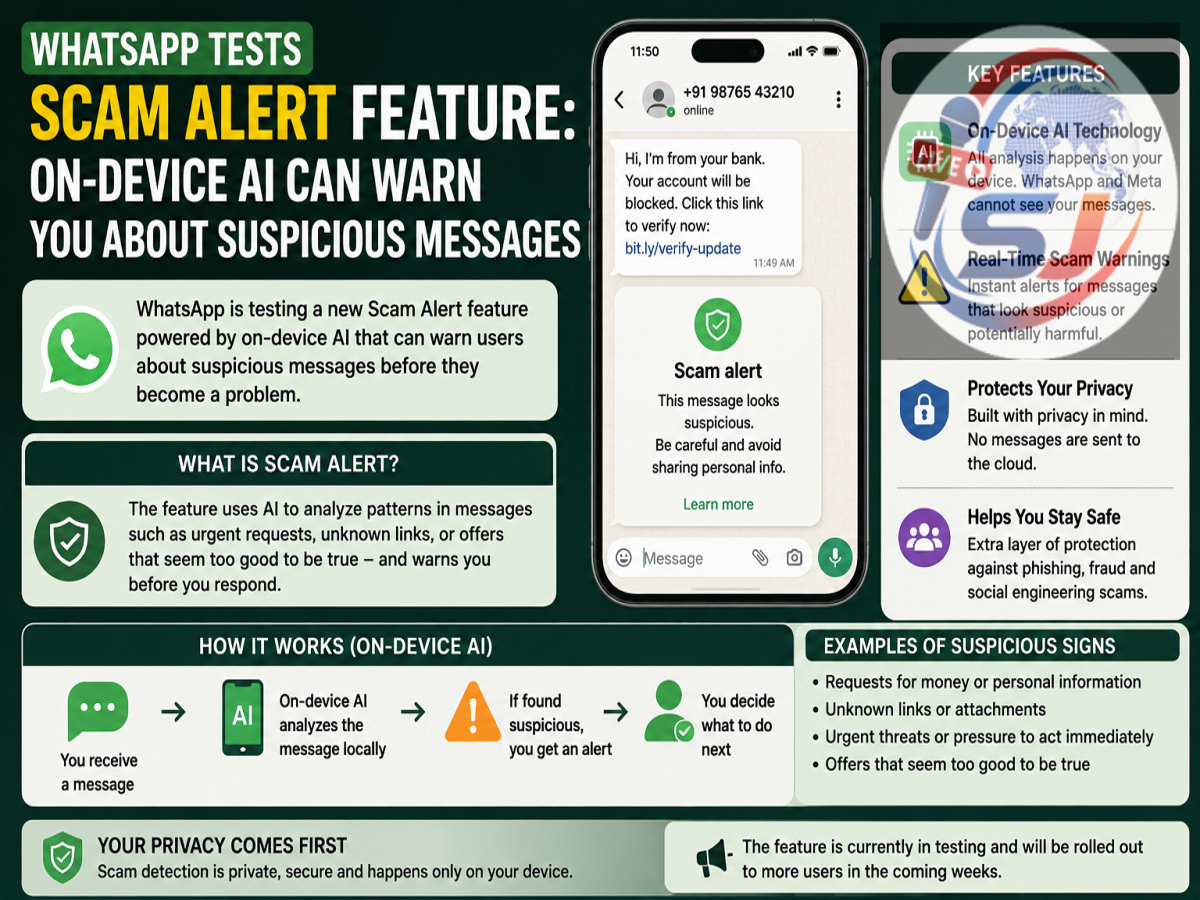
WhatsApp Scam Alert Feature: A simple message from an unknown number saying "Hi" or pretending to be a friend, relative or company representative can sometimes be the first step in an online scam. WhatsApp is now testing a new safety feature designed to identify potentially fraudulent messages before users get pulled deeper into such conversations.
Called Scam Alert, the feature uses an on-device machine-learning model to examine suspicious messages and display a warning when it detects signs commonly associated with scams. Importantly, the analysis happens on the user's phone rather than sending private message content to Meta's servers.
However, users should know that Scam Alert is currently in limited beta testing, rather than being available to every WhatsApp user worldwide.
What Is WhatsApp's New Scam Alert Feature?
Scam Alert is an optional security feature being developed to give WhatsApp users an additional layer of protection against suspicious conversations.
It is particularly focused on messages arriving from people who are not saved in a user's contacts. When the system determines that a message resembles a potential scam, WhatsApp can show a warning directly within the chat.
The warning is intended to encourage users to think carefully before responding, sharing information or continuing the conversation.
This could be useful because many online fraud attempts begin with an apparently harmless message. The scammer may initially pretend to know the recipient before gradually attempting to gain trust or extract money, OTPs, banking information or other sensitive details.
How Does WhatsApp Detect a Possible Scam?
The most interesting part of Scam Alert is how it works.
WhatsApp says the detection process runs directly on the user's device. A machine-learning model examines certain incoming messages and attempts to identify characteristics that could indicate fraudulent activity.
If the system considers a message suspicious, it can display a Scam Alert to the recipient.
This means users get an additional warning before deciding whether they want to continue interacting with an unknown sender.
The feature does not mean WhatsApp can guarantee that every scam will be detected. Machine-learning systems can make mistakes, and sophisticated fraudsters continually change their tactics. Users will therefore still need to exercise caution when dealing with unknown contacts.
Will WhatsApp Read Your Private Messages?
Privacy is one of the biggest questions surrounding any feature that analyses message content.
Meta says Scam Alert has been designed to work alongside WhatsApp's existing end-to-end encryption. The classification process takes place locally on the device, and message content is not automatically sent to WhatsApp or Meta for scam detection.
This is important because personal WhatsApp messages and calls are protected with end-to-end encryption, meaning people outside the conversation, including WhatsApp, cannot normally read or listen to them.
The company is therefore trying to provide scam detection without abandoning the privacy protections associated with encrypted messaging.
What Happens When WhatsApp Detects a Suspicious Message?
If Scam Alert identifies a potentially fraudulent conversation, the user may see a warning indicating that the message could be a scam.
The recipient then remains in control of what happens next.
Users can choose to block or report the sender, dismiss the warning, or mark the conversation as trusted. Marking a chat as trusted can prevent repeated scam warnings for that conversation.
Nothing is automatically reported simply because the on-device system has flagged a message. This reduces the risk of a machine-learning prediction automatically triggering action against a conversation.
Can Users Share Suspicious Messages With WhatsApp?
While automatic detection remains on the device, users can voluntarily provide additional information if they want to help WhatsApp investigate a suspicious conversation.
Reports on the beta feature indicate that users may have the option to share the last five messages from the conversation with WhatsApp for further review. This step is optional rather than automatic.
Users should therefore distinguish between local scam detection and voluntarily reporting a suspicious conversation.
Is Scam Alert Available to Everyone?
Not yet.
WhatsApp began a limited beta rollout of Scam Alert in August 2026. The feature is initially being tested with researchers, including members of Meta's bug bounty community, before any broader availability.
That means many users may not currently see Scam Alert in their WhatsApp settings.
Users should also be cautious about websites, APK files or social-media posts claiming they can manually unlock the feature. Installing unofficial or modified versions of WhatsApp can create security and privacy risks.
The safest approach is to keep the official WhatsApp application updated and wait for the feature to become available through an official rollout.
Why Is WhatsApp Adding Another Scam Protection Tool?
Online scams have become increasingly sophisticated.
Fraudsters may impersonate relatives, employers, delivery companies, banks or government officials. Others may start conversations with vague messages designed simply to make the recipient respond.
Once contact is established, the attacker may attempt to move the conversation toward an urgent payment, investment opportunity, fake job offer or request for confidential information.
Meta says scam techniques are evolving from traditional impersonation and social engineering to newer AI-generated lures, which is one reason platforms are developing additional detection mechanisms.
Don't Depend Completely on the Scam Warning
Even if Scam Alert becomes widely available, users should not assume that the absence of a warning means a message is safe.
No automated system can reliably identify every fraudulent conversation.
Users should remain suspicious when an unknown sender requests an OTP, PIN, password, payment or banking information. Messages creating extreme urgency — such as claiming an account will immediately be blocked — also deserve additional scrutiny.
If someone claims to represent a bank, government agency or company, users should independently verify the request through the organisation's official contact channels instead of relying on phone numbers or links contained in the suspicious message.
WhatsApp Scam Alert Could Add an Extra Safety Layer
WhatsApp's new Scam Alert represents a different approach to fighting messaging fraud because suspicious-message detection is performed on the phone itself rather than requiring private conversations to be routinely uploaded for analysis.
The optional feature can warn users when machine learning identifies a potentially suspicious message from an unknown sender, while leaving the decision about blocking, reporting or trusting the conversation to the user.
For now, though, it remains a limited beta feature, so users should not expect to find it immediately on every device.
Even after a wider rollout, the strongest protection will remain a combination of automated warnings and careful user behaviour. If an unfamiliar WhatsApp message unexpectedly asks for money, passwords, OTPs or sensitive personal information, verify the sender before taking any action.