
WhatsApp Teen Accounts: How Parental Controls Will Work
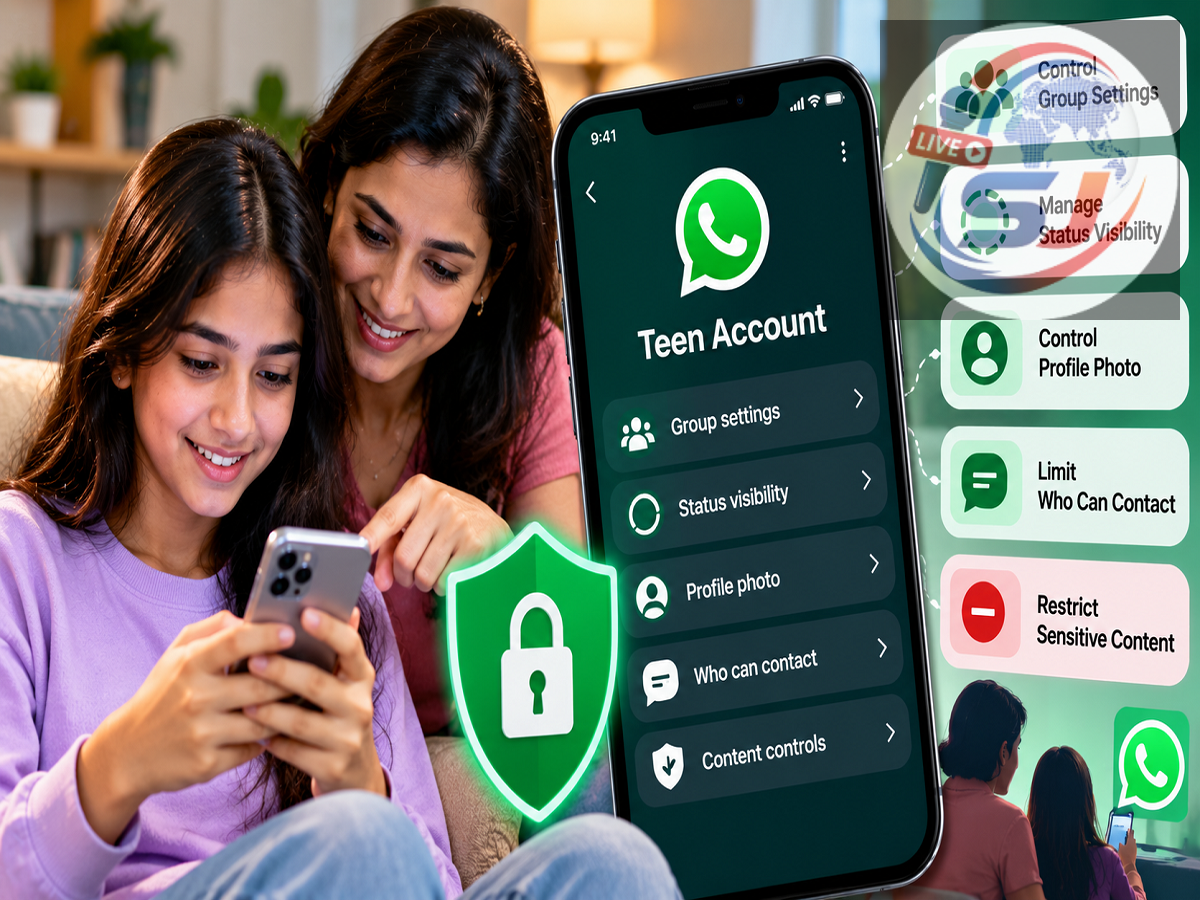
WhatsApp is introducing new parental controls for teen accounts, giving parents more options to manage certain privacy and safety settings without allowing them to read their children's private conversations.
Under the new Parent-Managed Accounts system, parents may be able to control who can see a teen's profile photo, who can add them to groups and how certain features such as Channels, Status and Meta AI are used.
At the same time, WhatsApp says personal messages and calls will continue to be protected by end-to-end encryption. This means the new parental controls are designed to manage selected account settings rather than give parents direct access to private conversations.
The feature is being rolled out gradually, so it may not immediately be available to every WhatsApp user or in every region.
What Are WhatsApp Parent-Managed Accounts?
Parent-Managed Accounts are designed to give families more control over how younger users interact with WhatsApp.
Instead of providing parents with full access to a teen's account, the system focuses on selected privacy, safety and content-related settings.
According to the details provided, parents will be able to manage some options relating to profile visibility, groups, Channels, Status and Meta AI.
The idea is to provide additional supervision while maintaining the privacy of personal messages and calls.
Parents Can Manage Profile Photo Settings
One of the controls relates to the teen's WhatsApp profile photo.
Profile pictures can reveal personal information, particularly when they are visible to people outside a user's close contacts.
Under the new parental-control system, parents may be able to decide who can see the profile picture associated with the teen's account.
This could help families apply more restrictive privacy settings for younger WhatsApp users.
The exact options available may depend on the final version of the feature and the user's region.
More Control Over WhatsApp Groups
WhatsApp groups are another important part of the new system.
Parents may be able to control settings related to who is permitted to add their teen to a WhatsApp group.
This can be particularly useful because teenagers may be invited to school, gaming, social or community groups that include people they do not personally know.
The new system is also expected to provide parents with certain notifications related to group activity.
For example, parents could receive information when their teen joins or leaves a group.
They may also receive an alert if there is a significant change in the number of members in a group their teen has joined.
However, these notifications do not mean parents will be able to read the group's messages.
Can Parents Read Teen WhatsApp Group Chats?
No. Based on the details provided, the new controls do not give parents access to conversations inside WhatsApp groups.
Parents may receive certain information about group-related activity, such as joining or leaving, but this is different from accessing the content of the conversation.
WhatsApp's encryption protections continue to apply to eligible private messages and calls.
This distinction is important because parental supervision on WhatsApp is not being designed as a tool that allows parents to secretly read every message sent or received by a teenager.
Parents Can Manage Status Settings
WhatsApp Status is also included in the new parental-control system.
Parents may be given controls relating to who can see a teen's Status updates and, depending on the available settings, how the teen interacts with Status content.
Status can include photos, videos, text and other temporary updates.
Providing parents with control over relevant visibility settings could help limit exposure to people outside the teen's intended audience.
The exact options may vary as WhatsApp continues developing and rolling out the system.
WhatsApp Channels Will Also Get Controls
WhatsApp Channels allow users to follow updates from creators, organisations, businesses and other publishers.
The Parent-Managed Accounts system is expected to include settings that allow parents to manage aspects of a teen's experience with Channels.
This gives families another level of control over how younger users interact with content outside their personal chats.
As with other features, availability and the precise controls offered may vary depending on the rollout.
Meta AI Gets a Separate Parental Setting
Meta AI is another area covered by the new controls.
According to the supplied information, parents will be able to choose between a standard experience designed for users aged 13 and above and a more restricted Limited Content option.
The more restrictive setting is intended to provide parents with additional control over the type of AI experience available to the teen.
This could become increasingly important as AI assistants become more deeply integrated into messaging applications.
A Parent PIN Will Protect Important Settings
One of the key elements of the system is a parent-controlled PIN.
The PIN is intended to prevent teens from simply changing restricted settings without parental approval.
If a teen wants to make a controlled setting less restrictive, parental authorisation may be required through the PIN.
Parents should therefore choose a PIN that cannot be easily guessed and should avoid sharing it unnecessarily.
This approach allows teenagers to continue using WhatsApp while ensuring that selected safety settings cannot be changed without approval.
Will Parents Be Able to Read Private Chats?
One of the biggest questions surrounding parental controls is whether they will allow parents to access personal messages.
According to WhatsApp, the answer is no.
The new system is not designed to give parents the ability to open and read a teen's private chats simply because the account is parent-managed.
Personal messages and calls will continue to use WhatsApp's end-to-end encryption.
End-to-end encryption is designed so that the content of eligible messages and calls can be accessed by the people participating in the conversation rather than being made available as readable content to intermediaries.
The parental-control system therefore focuses on account settings and selected activity information rather than the contents of private conversations.
Parental Control Does Not Mean Full Account Access
This is one of the most important things for families to understand.
Parent-managed does not mean parents receive unrestricted access to everything their teen does on WhatsApp.
Instead, parents are given control over specific areas intended to improve privacy and safety.
Depending on availability, these can include:
-
Profile photo visibility
-
Group-related permissions and activity alerts
-
Status privacy settings
-
WhatsApp Channels controls
-
Meta AI experience settings
-
PIN-protected changes to selected restrictions
Private message content and calls remain outside the parental-control interface described in the supplied information.
Can Parents Change the Controls Later?
The controls are designed to be adjustable.
Parents may be able to modify the settings later if they want to increase or reduce restrictions.
The supplied information also indicates that parents can turn off the controls.
This allows families to adapt the settings as circumstances change rather than being locked permanently into one configuration.
Why You May Not See the Feature Yet
Users should not be surprised if Parent-Managed Accounts do not currently appear in their WhatsApp application.
WhatsApp says the feature is being introduced gradually.
That means availability may differ between countries, accounts, devices and app versions.
The company has not provided a single rollout date for every region, according to the supplied information.
Users in India may therefore need to wait until the feature becomes available to their account.
Keeping WhatsApp updated to the latest official version is advisable, but installing the latest version does not necessarily guarantee immediate access if the feature is being activated gradually.
More Parental Controls Could Arrive Later
WhatsApp has indicated that the current system is a starting point.
The company could introduce additional controls in the future based on feedback from families and the way the feature is used.
For now, the key idea behind Parent-Managed Accounts is to provide parents with more control over selected privacy, group, content and AI settings while maintaining the privacy of teens' personal conversations.
Parents may be able to manage who sees profile information, control certain group interactions, adjust Status and Channels settings and choose a more restricted Meta AI experience.
But they will not automatically gain access to private chats and calls.
As the feature is being rolled out gradually, users who cannot currently find Parent-Managed Accounts should wait for the official option to reach their WhatsApp account rather than downloading unofficial apps or modified versions.
Note: The features described above are based on the supplied information about WhatsApp's gradual rollout. Availability, menu names and individual controls may differ by account, device or region and may change as WhatsApp expands the feature.