
WhatsApp Scam Alert: One Wrong Click Can Cost You Money; Follow These Safety Tips to Protect Your Account
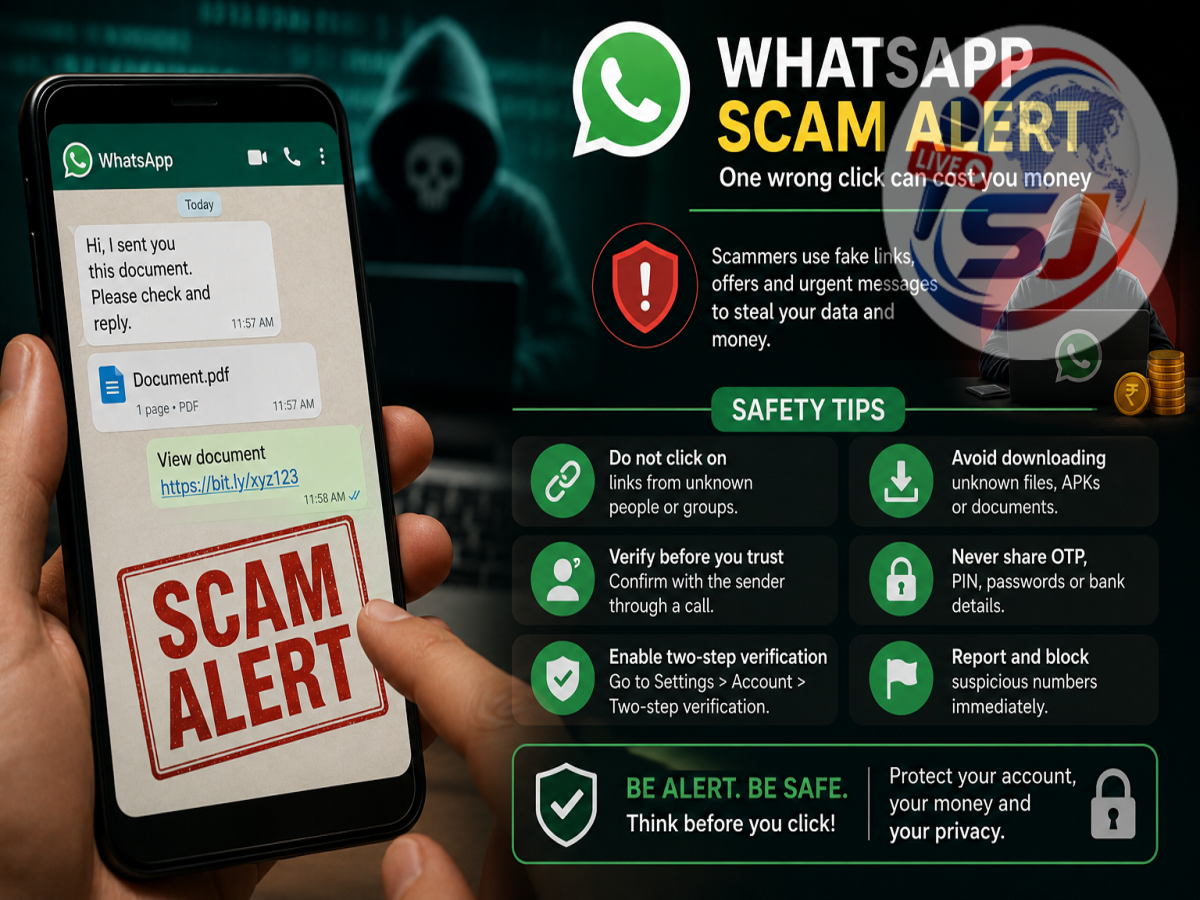
WhatsApp has become much more than a messaging app. People now use it to communicate with family, conduct business, exchange documents and even discuss payments. This widespread use has also made the platform attractive to scammers who try to steal money, personal information or access to users' accounts.
Fraudsters commonly create a sense of urgency, fear or excitement. A message may claim that you have won a prize, your bank account is about to be blocked, an attractive job is waiting for you or a relative urgently needs money. The objective is usually the same: convince you to click a link, reveal sensitive information or transfer money before you have time to verify the story.
Understanding these tactics can help you avoid becoming a victim.
Be Careful With Messages From Unknown Numbers
An unexpected WhatsApp message from an unfamiliar number should always be treated cautiously.
Scammers may offer high-paying part-time jobs, investment opportunities, prizes, cashback or easy ways to earn money. Some begin with harmless conversation and gradually try to gain the victim's trust.
Avoid sharing personal or financial information simply because the sender appears professional. Verify the identity of the person or organisation independently before responding to any financial request.
Never Share OTP or Verification Codes
One-time passwords, verification codes, UPI PINs, card PINs and banking credentials should never be shared with another person.
A scammer may claim to be calling from a bank, government department, police unit, customer-care centre or even WhatsApp support and ask you to provide a verification code.
A WhatsApp registration code is particularly sensitive. If someone obtains it, they may attempt to register your WhatsApp account on another device.
Treat every OTP and verification code as confidential, even when the request appears to come from someone you trust.
Think Before Clicking a WhatsApp Link
Suspicious links are among the most common tools used in online fraud.
Messages such as "Your account will be suspended," "You have won a reward," "Complete KYC immediately" or "Click here to receive your payment" are designed to make users act quickly.
A link can lead to a fake website that looks similar to a bank, shopping platform or government portal. The page may then ask for your password, card details, OTP or other sensitive information.
Instead of opening the link, independently visit the organisation's official app or website to check whether the message is genuine.
Beware of Fake Profiles and Impersonation
Seeing a familiar profile photograph does not prove that the person messaging you is actually your friend or relative.
Scammers can copy publicly visible profile pictures and names to create convincing fake accounts. They may then contact relatives, colleagues or friends with an emergency story and ask for an immediate money transfer.
If someone you know suddenly requests money from a new number, verify the request by calling them on a number you already have saved or contacting another trusted family member.
Do not use only the contact details provided in the suspicious message for verification.
Video and Voice Calls Can Also Be Misused
Fraud attempts are not limited to text messages.
Scammers may use voice or video calls to impersonate officials, customer-care executives or acquaintances. Advances in AI-generated audio and video can also make impersonation attempts more convincing.
Do not transfer money or disclose confidential information simply because the caller appears or sounds familiar. When a request is unusual, independently verify the person's identity before taking action.
Review Your WhatsApp Privacy Settings
Reducing the amount of personal information visible to strangers can make impersonation and social-engineering attacks more difficult.
Review who can see your profile photo, About information, status, last seen and online activity. You can restrict these details to your contacts where appropriate.
Also be cautious about what you publicly share through your profile photo and status. Details about family members, workplace, travel or daily routines can sometimes give scammers information they can use to create a believable story.
Turn On Two-Step Verification
WhatsApp's two-step verification feature provides an additional layer of account security.
Once enabled, a PIN is required periodically and when registering your phone number with WhatsApp under certain circumstances. This can make account takeover more difficult even if someone manages to obtain your registration code.
Choose a PIN that is difficult to guess and never disclose it to another person.
Always Verify Before Sending Money
Emergency-money scams often succeed because they pressure victims to act immediately.
A message might claim that a family member has had an accident, a friend has lost access to their bank account or a colleague urgently needs money.
Before transferring anything, contact the supposed requester through another trusted channel. A short verification call could prevent a significant financial loss.
The same rule applies to QR codes and UPI requests. Understand what a payment screen is asking you to approve before entering a UPI PIN.
Block and Report Suspicious Accounts
If an unknown account repeatedly sends suspicious links, asks for money or requests sensitive information, stop communicating with it.
WhatsApp provides options to block and report accounts. Reporting suspicious activity can also provide the platform with information needed to investigate abusive accounts.
If you believe financial fraud has already occurred, contact your bank or payment provider immediately and report the incident through India's official cybercrime reporting channels as quickly as possible.
A Few Seconds of Verification Can Prevent a Major Loss
Most WhatsApp scams rely on human behaviour rather than sophisticated technology. Fraudsters want victims to react to fear, greed, urgency or trust without checking the facts.
Never share OTPs or PINs, avoid suspicious links, verify unexpected requests for money and keep your privacy and security settings updated.
When a WhatsApp message demands immediate action involving money or sensitive information, verification should always come before clicking, replying or paying.