
WhatsApp Bill Payments Arrive in India: Pay Electricity, Water and Credit Card Bills Directly in the App
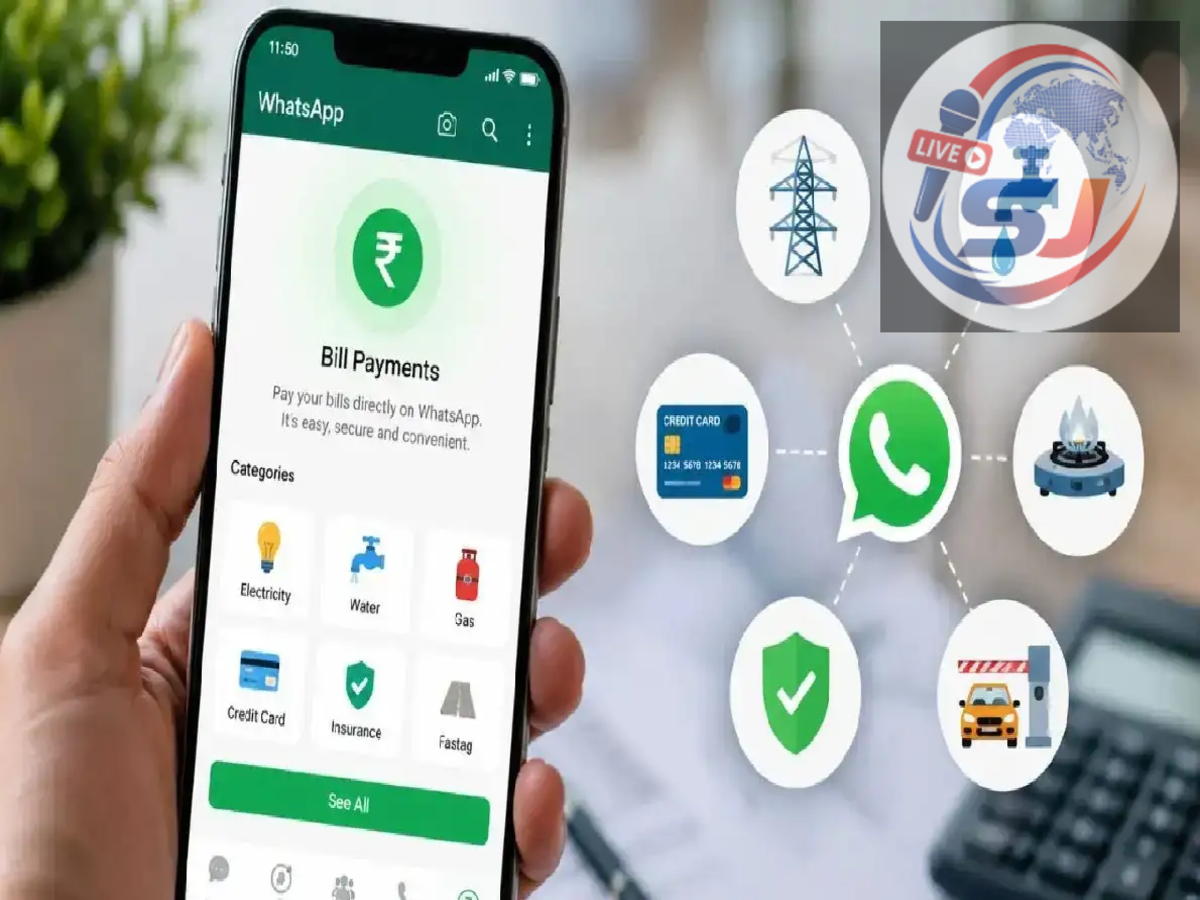
WhatsApp is expanding its payments experience in India with a new bill payment feature that aims to make everyday transactions easier. Indian users will be able to pay several types of household and financial bills directly through WhatsApp instead of switching between different payment apps or websites.
The new facility expands WhatsApp's payment capabilities beyond conventional money transfers and mobile-related transactions. With the feature, eligible users can search for billers, retrieve bills, manage payment accounts and complete payments from within the messaging app.
The service is being introduced through the Bharat Connect (BBPS) network, allowing WhatsApp to connect users with a wide range of participating billers.
The rollout is being carried out in phases, which means some users may receive the feature before others.
What Can You Pay Through WhatsApp?
The new bill payment service is designed to cover several everyday expenses.
According to the details announced for the rollout, WhatsApp users will eventually have access to 22,722 billers across more than 30 categories.
These include commonly used services such as electricity and water bills.
Users can also find billers covering categories such as gas, FASTag, insurance, credit cards and loan repayments.
This could be particularly useful for households that currently use different apps for electricity bills, credit card payments, FASTag-related payments and other recurring expenses.
Instead, supported bills could be managed through a service many people already use every day.
WhatsApp Bill Payment Feature Is Rolling Out Gradually
Users should not worry if the new option is not visible on their WhatsApp account immediately.
The bill payment feature is being introduced in phases and is expected to become available more widely to users across India over the coming weeks.
The rollout covers both Android and iOS.
Feature availability can therefore depend on the user's account and rollout stage. Keeping WhatsApp updated to the latest available version may also help users access newly introduced features when they become eligible.
How to Pay a Bill Through WhatsApp
Once the bill payment service becomes available on your account, the process is designed to be straightforward.
Open WhatsApp and look for the ₹ payment icon or the relevant Payments section available in your version of the app.
Open the bill payment service and select the type of bill you want to pay.
For example, you may choose electricity, water, gas, credit card or another supported category.
Next, select the relevant biller.
You will then need to provide the account information required by that service provider. The exact information can differ depending on the bill category.
After entering and confirming the details, WhatsApp can retrieve the relevant billing information where supported.
Before proceeding, carefully verify the biller's name, customer or account details and the amount displayed.
Once everything is correct, proceed to the payment stage and choose one of the available payment methods.
UPI, Debit Card and Credit Card Payment Options
The bill payment facility is expected to provide multiple ways to complete transactions.
According to the rollout details, users can have payment options including UPI, debit cards and credit cards, subject to the biller, transaction and payment methods supported for that particular payment.
Having multiple payment choices means users are not necessarily restricted to a single mode for every bill.
However, availability can vary, so users should check the payment options displayed for their particular bill before completing the transaction.
Any applicable fees or conditions should also be reviewed on the payment screen before confirmation.
Household Bills Summary Makes Repeat Payments Easier
One of the useful additions to the new system is a feature designed to make recurring household payments easier to manage.
WhatsApp's bill payment experience can show previously used billers through a Household Bills Summary.
This means users may not have to search for the same electricity provider, water supplier or other biller every month.
Billers that have previously been paid through WhatsApp can be made easier to access from the home interface, providing a faster route for future payments.
For people responsible for several recurring household expenses, this could reduce the number of steps needed each month.
One-Tap Access to Frequently Used Billers
WhatsApp is also making repeat billers easier to reach.
Once you have used WhatsApp to pay a supported bill, that biller may subsequently appear through quicker access options.
Instead of navigating through the full catalogue each time, frequently used or previously paid billers can be accessible with fewer taps.
Popular bill categories may also appear more prominently in the interface.
Users looking for other services can choose See All or the equivalent option available in their app to browse the broader selection of bill categories.
The exact layout may vary as the service rolls out.
Manage Multiple Accounts Under the Same Biller
Another practical feature is support for managing multiple accounts associated with the same biller.
This could be useful for someone responsible for more than one property or multiple family bills.
For example, a person may need to pay electricity bills for their own home, their parents' home and an office.
Instead of treating each payment as an entirely separate process, supported billers may allow multiple customer accounts to be managed from the same WhatsApp bill payment experience.
This can make the feature useful not only for individual payments but also for managing recurring household or family expenses from one place.
Why Bharat Connect Matters
The bill payment system uses the Bharat Connect, commonly associated with the Bharat Bill Payment System or BBPS ecosystem.
The network is designed to provide an interoperable infrastructure through which customers can access supported bill payment services.
For WhatsApp users, the integration means the messaging app can act as another interface through which supported bills are discovered and paid.
The number of billers and categories available to an individual user can still depend on the services supported through the network and the stage of WhatsApp's rollout.
Check Everything Before Tapping Pay
The convenience of paying bills inside a messaging app should not make users less careful.
Before authorizing any transaction, verify the biller name, account or consumer number and payment amount.
For credit card payments, ensure that you have selected the correct card account and that the outstanding amount shown is accurate.
After completing a payment, keep the transaction confirmation or reference details until the payment is reflected by the biller.
If the transaction is pending or unsuccessful, avoid immediately paying the same bill repeatedly without first checking its status.
Beware of Fake WhatsApp Bill Payment Messages
The introduction of a new payment feature can also create opportunities for scammers to circulate fake messages.
Users should be suspicious of messages claiming that they need to click an unknown external link to “activate” WhatsApp bill payments.
Never share a UPI PIN, card PIN, CVV, OTP or other sensitive banking credentials with another person over WhatsApp.
A UPI PIN should only be entered on the appropriate payment authorization screen when you are making a payment. You do not need to reveal it to another person to receive money or activate a feature.
If someone claiming to be customer support asks for confidential banking details, treat the request with caution.
What If You Cannot See the Bill Payment Option?
Since the feature is being rolled out gradually, it may not immediately appear for every Indian user.
First, check whether you are using the latest version of WhatsApp available for your smartphone.
If the app is updated but the feature still does not appear, your account may simply not have received the rollout yet.
There is generally no reason to download unofficial WhatsApp versions or install unknown third-party apps to gain early access.
Waiting for the official feature to become available is the safer option.
WhatsApp Is Becoming More Than a Messaging App
WhatsApp started primarily as a messaging platform, but its role in India has gradually expanded to include calling, business communication and digital payments.
Adding a wider range of bill payments pushes the platform further into everyday financial services.
The biggest attraction is convenience.
Instead of using one service for electricity, another for FASTag and yet another for a credit card bill, supported payments can potentially be accessed through the same app people already use for everyday communication.
Final Takeaway
WhatsApp's new bill payment facility in India could make routine payments considerably more convenient for eligible users.
The service is set to support 22,722 billers across more than 30 categories, covering services such as electricity, water, gas, FASTag, insurance, credit cards and loan-related payments.
Users can select a bill category and biller, enter the required account details, verify the bill and complete the transaction using an available payment method such as UPI, debit card or credit card.
Features such as Household Bills Summary, quicker access to previously used billers and support for multiple accounts under the same biller could make recurring payments easier to organize.
The key point, however, is that the rollout is gradual. If the option has not yet appeared on your WhatsApp account, keep the official app updated and wait for availability rather than relying on unofficial apps or suspicious activation links.