
WhatsApp Account Hacked? Know the Biggest Scam Risks and 7 Security Steps That Can Protect You
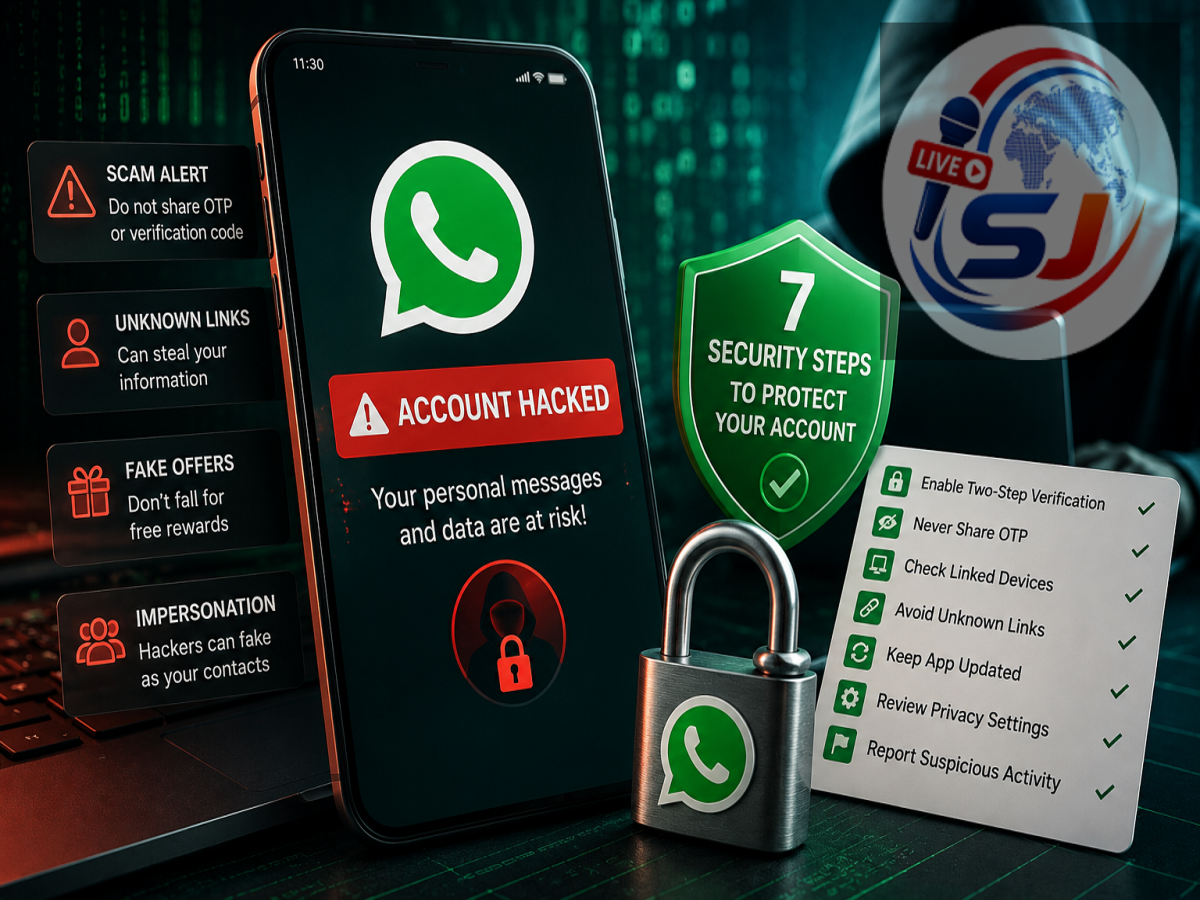
WhatsApp has become an essential part of everyday communication, but its massive user base also makes it an attractive target for cybercriminals. Account takeovers, impersonation scams and fraudulent requests for money are becoming increasingly common, making it important for users to understand how these attacks work and what they can do to protect themselves.
The issue recently came into focus after BJP MP and party spokesperson Sambit Patra said his WhatsApp account had been compromised. According to Patra, fraudsters gained control of the account and used his identity to send messages to people in his contact list asking for money.
The incident is another reminder that cybercriminals do not target only inexperienced internet users. Politicians, celebrities and other public figures have also reported similar account compromises.
What Happened to Sambit Patra's WhatsApp Account?
Sambit Patra disclosed on X that his WhatsApp account had been hacked and warned people not to trust messages asking for money from his number.
According to the reported details, some contacts received requests for payments of as much as Rs 55,000. Suspicion grew when the person controlling the account reportedly refused the suggestion of collecting money in cash and insisted on receiving the payment digitally.
Patra subsequently warned his contacts that such requests were fraudulent and asked them not to transfer money. He also said that senior Odisha Police officials had been informed about the incident.
The case demonstrates one of the biggest dangers associated with an account takeover. A scammer does not necessarily need to convince a victim that they represent a bank or government department. If criminals gain access to the WhatsApp account of a friend, relative, colleague or other trusted person, they can use that existing relationship to make a fraudulent request appear believable.
Public Figures Have Also Reported WhatsApp Account Compromises
Patra is not the only prominent person to have reported such an incident.
NCP (SP) MP Supriya Sule and actor Swara Bhasker have previously spoken publicly about their WhatsApp accounts being compromised. BJP leader Dinesh Chand Sharma was also reportedly targeted, with fraudulent money requests being sent to numerous contacts.
Such cases underline an important cybersecurity lesson: a message appearing to come from someone you know does not automatically make it genuine.
If a contact suddenly asks for money, an OTP or confidential information, users should verify the request through a phone call or another trusted communication channel before taking action.
How Many WhatsApp Accounts Are Hacked Every Day?
There is no publicly available official figure from WhatsApp or the Indian government showing exactly how many WhatsApp accounts are successfully hacked in India each day.
Claims cited in legal proceedings have suggested that more than one million WhatsApp accounts worldwide may face hacking or takeover attempts or incidents daily. However, such figures should not be confused with an official WhatsApp statistic.
Cybercrime complaints in India nevertheless show that account compromises, impersonation and online financial fraud remain serious concerns.
WhatsApp also takes action against large numbers of accounts for violations of its policies. However, an account being banned does not necessarily mean that it was hacked.
Accounts can face enforcement for several reasons, including spam, suspected fraudulent activity and other violations of the platform's rules.
How Do Criminals Take Control of WhatsApp Accounts?
WhatsApp communications use security protections, but criminals frequently target the user rather than attempting to defeat the underlying encryption.
Social engineering is one of the most common approaches. Instead of exploiting a complicated technical vulnerability, criminals manipulate people into providing information or performing an action that gives the attacker access.
OTP theft is a common example. A scammer may attempt to register a victim's WhatsApp number on another device and then trick the victim into revealing the verification code.
QR-code scams and malicious device-linking techniques can also be used to gain access to WhatsApp sessions. SIM-swap fraud represents another potential risk because criminals may attempt to gain control of a victim's mobile number.
This is why users should treat verification codes, security PINs and device-linking requests as highly sensitive.
WhatsApp Has Been Taking Action Against Scam Networks
Meta has said that criminal networks often operate across multiple online platforms rather than relying on only one service.
According to the company, millions of WhatsApp accounts associated with criminal scam centres were removed during the first six months of the year.
WhatsApp has also been introducing additional safeguards intended to alert users to potentially risky interactions. These include providing safety information in certain situations involving unfamiliar people and displaying warnings that encourage users to think carefully before responding to suspicious communications.
Technology can provide additional protection, but users still need to evaluate unexpected requests carefully.
7 WhatsApp Security Steps Users Should Follow
1. Enable two-step verification
Two-step verification adds another security layer to the account. Once activated, WhatsApp can require a six-digit PIN in addition to the normal verification process.
Users can check this option through WhatsApp's account security settings.
2. Add a recovery email address
Adding an email address to the account can help with recovering or resetting the two-step verification PIN when necessary. Make sure the email account itself is protected with a strong password and appropriate security measures.
3. Regularly review linked devices
Open WhatsApp's Linked Devices section and check every computer, browser and device connected to the account.
If you notice a device you do not recognize, log it out immediately.
4. Never disclose an OTP or security PIN
Verification codes and two-step verification PINs should never be shared with another person. Someone claiming to be from a company, bank or support service and requesting such credentials should be treated with extreme caution.
5. Verify unexpected requests for money
If a friend, colleague or relative suddenly asks for an urgent online payment, call them directly before transferring anything.
A few seconds of independent verification could prevent a financial loss.
6. Limit what strangers can see
Review WhatsApp's privacy settings for your profile picture, About information, status and last-seen activity. Restricting information to contacts where appropriate can reduce the amount of personal information visible to strangers.
7. Keep WhatsApp and your phone updated
Software updates often contain important security improvements and fixes. Using an outdated version of WhatsApp or the smartphone operating system can unnecessarily increase security risks.
What Should You Do If Your WhatsApp Account Is Compromised?
If you suspect that someone has taken control of your WhatsApp account, act quickly.
Try to register your phone number with WhatsApp again and review the Linked Devices section for unfamiliar sessions. Inform friends, relatives and colleagues that suspicious messages from your number should be ignored, particularly requests involving money.
Users should also contact WhatsApp support when necessary. If the incident involves financial fraud, impersonation or another cybercrime, it should be reported to the appropriate cybercrime authorities or police.
If money has already been transferred to a fraudster, reporting the incident as quickly as possible becomes especially important.
Millions of Accounts Face WhatsApp Enforcement in India
WhatsApp regularly bans large numbers of accounts in India for violations of its policies.
Figures cited by government officials indicate that the platform has taken action against roughly 9.8 million accounts per month on average during the period referenced. Monthly totals have varied, with some months crossing the 10-million mark.
That works out to roughly 320,000 account actions per day on average.
However, this number should not be interpreted as the number of WhatsApp accounts hacked every day. Enforcement figures include accounts associated with spam, scams and other policy violations, in addition to other categories of misuse.
The distinction is important because a banned account and a hacked account are not the same thing.
Cyber Fraud Is Becoming an Expensive Problem
The financial impact of cybercrime has also increased significantly.
According to government figures cited in the original report, cybercriminals defrauded people of approximately Rs 22,845.73 crore during 2024, representing a sharp increase compared with the previous year.
Government action has also resulted in millions of WhatsApp profiles and groups reportedly being blocked following official directions.
The scale of enforcement highlights why digital security cannot be treated as an optional precaution.
For WhatsApp users, one of the most effective protections remains simple: do not act immediately on an unexpected request. Whether a message asks for money, an OTP, a password, a QR-code scan or personal information, verify the identity of the sender independently.
Even when a message comes from a familiar WhatsApp account, the person behind the screen may not be who you think they are.