
WhatsApp Account Ban: Avoid These 4 Mistakes That Could Put Your Account at Risk
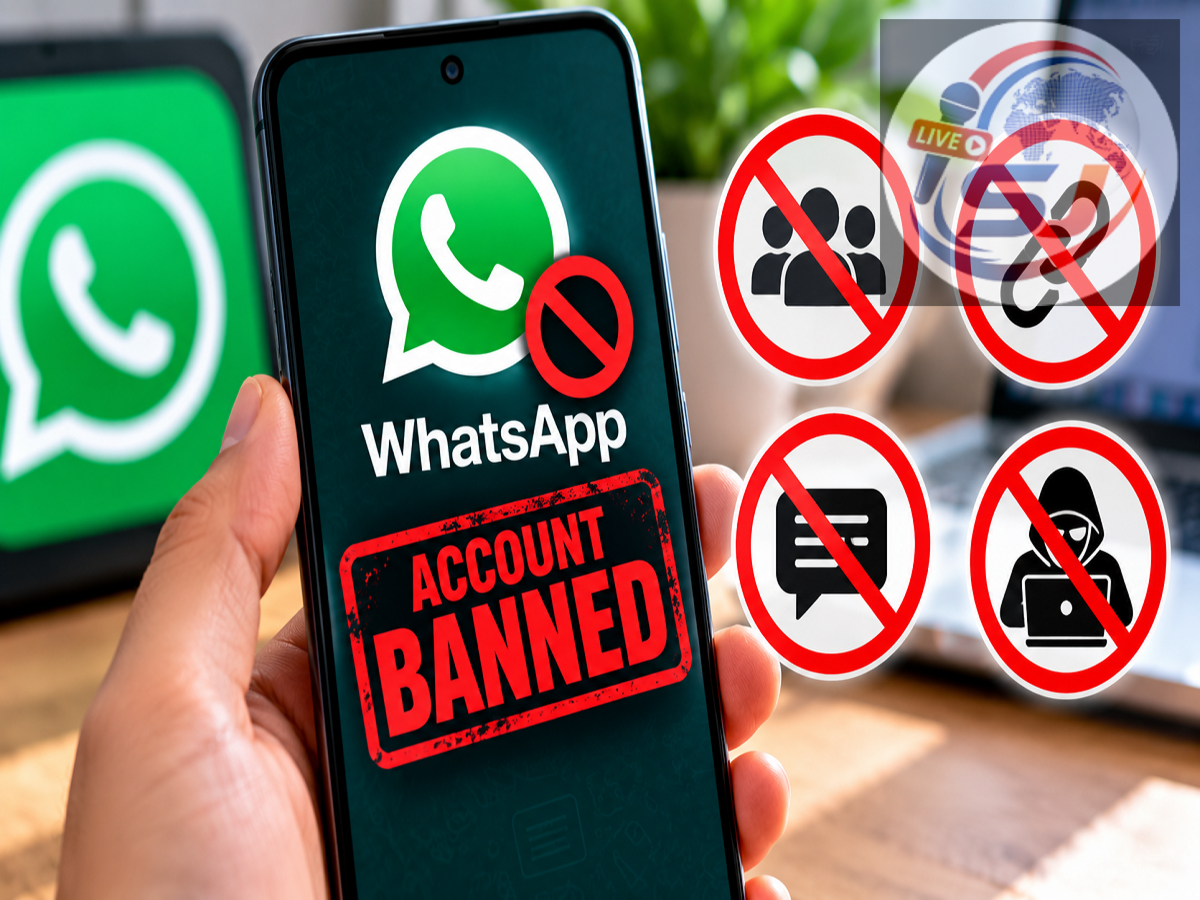
WhatsApp has become an essential communication tool for millions of people, making a sudden account restriction or ban extremely inconvenient. While users may assume that accounts are banned only for serious violations, some seemingly ordinary activities can also create problems when they go against WhatsApp's policies.
According to WhatsApp, it uses technology as well as reports from users to identify accounts that may be violating its rules. Certain patterns of messaging, excessive automation or misuse of contact information can therefore increase the risk of enforcement action.
If you regularly use WhatsApp for personal communication, groups, business or customer outreach, here are four practices you should be particularly careful about.
1. Don't Keep Messaging Someone Who Doesn't Want to Hear From You
Repeatedly sending unwanted messages is one behaviour users should avoid.
If someone clearly tells you that they do not want to receive messages, continuing to contact that person can lead to complaints or reports against your account.
WhatsApp advises users to respect other people's communication preferences. If someone asks you not to contact them, the safer approach is to stop messaging them.
Repeated unwanted messages can appear similar to spam, particularly if multiple recipients block or report the same account.
For businesses and individuals involved in promotional communication, this becomes even more important. Having someone's phone number does not automatically mean they want to receive repeated marketing messages.
2. Avoid Bulk Messaging, Automation and Unauthorised Tools
Sending a very large number of messages at once can also put an account at risk, especially when unofficial or automated methods are involved.
WhatsApp may use technological systems, including machine-learning techniques, alongside user reports to identify suspicious behaviour.
Users should be cautious about activities such as unauthorised bulk messaging, automated messaging or auto-dialling.
The use of unauthorised tools to automatically create accounts or groups can also violate platform rules.
Similarly, unofficial applications designed to imitate, modify or automate WhatsApp functionality can create both account and security risks.
If you use WhatsApp for business communication, it is better to rely on officially supported WhatsApp services and features rather than third-party automation tools that promise unlimited messaging.
3. Don't Use Someone's Phone Number or Personal Data Without Permission
Another important rule concerns privacy and contact information.
Users should avoid collecting, sharing or using another person's phone number without appropriate permission.
Problems can also arise when contact databases obtained from unauthorised sources are used to send messages or add people to groups.
For example, purchasing a large database of mobile numbers and then messaging those people without their consent can generate complaints and spam reports.
Similarly, adding unknown users to groups without a legitimate reason or appropriate permission can create a poor experience and may result in the account being reported.
Businesses should be especially careful when handling customer contact information.
Contact data should come from legitimate sources and should be used in accordance with applicable privacy requirements and WhatsApp's policies.
4. Don't Overuse Broadcast Lists
WhatsApp's Broadcast List feature can be useful when you need to send the same information to multiple contacts.
However, it should not be treated as an unlimited promotional messaging tool.
Broadcast messages are generally delivered to recipients who have saved the sender's phone number in their contacts, subject to WhatsApp's applicable functionality.
Even then, repeatedly sending unwanted promotional content can irritate recipients.
If several users start blocking or reporting an account because of repeated broadcasts, WhatsApp may review the account and take appropriate action under its policies.
The best practice is therefore simple: use broadcast communication only when recipients have a genuine reason to expect messages from you.
Why User Reports Matter
WhatsApp does not necessarily need to manually read every conversation to identify problematic account behaviour.
The platform says it uses technology and information available through user reports to identify potential violations.
This means user behaviour matters.
If a large number of people receiving messages from an account repeatedly block or report it, that can create a negative signal.
This is another reason why legitimate businesses should avoid aggressive marketing tactics even if they have access to large numbers of phone contacts.
Other Activities That Can Violate WhatsApp Rules
Spam is not the only behaviour users need to avoid.
WhatsApp's terms and policies also restrict various forms of prohibited activity, including certain illegal conduct, threats, harassment, hateful behaviour and other misuse of the service.
Users should therefore avoid using WhatsApp to distribute harmful or unlawful content.
False or misleading information can also create issues depending on the nature of the content and how the platform's applicable policies are violated.
The safest approach is to use WhatsApp for genuine communication while respecting other users' privacy, consent and right to stop receiving messages.
Be Careful With Unofficial WhatsApp Apps
Unofficial or modified versions of WhatsApp can be particularly risky.
Third-party apps may promise additional features that are unavailable in the official application, but using unsupported software can potentially expose an account to enforcement action.
There can also be privacy and cybersecurity concerns.
An unofficial application may request access to messages, contacts, photos or other sensitive information. Users have less assurance about how such data is handled compared with software distributed through official channels.
Using the official WhatsApp application and supported business tools is therefore the safer choice.
What If Your WhatsApp Account Is Banned?
If WhatsApp restricts or bans an account and you believe the decision was made incorrectly, check the options displayed inside the official app.
Depending on the type of enforcement action, WhatsApp may provide a way to request a review.
Avoid paying unknown third parties who claim they can "unban" an account in exchange for money, OTPs or account credentials.
Never share your WhatsApp verification code, two-step verification PIN or other sensitive credentials with someone claiming to restore your account.
Businesses Should Be Extra Careful
Small businesses often depend heavily on WhatsApp to communicate with customers.
A shop, service provider or online seller may send order confirmations, offers and other updates through the platform.
But business use does not remove the need for consent and responsible messaging.
Companies should avoid repeatedly contacting people who have shown no interest, using purchased databases or employing unauthorised bulk-messaging software.
Official business communication tools should be preferred when messaging customers at scale.
Four Simple Rules Can Reduce the Risk
Avoiding a WhatsApp account ban does not require complicated technical knowledge.
Remember these four basic principles:
Don't repeatedly send unwanted messages.
Don't use unauthorised bulk-messaging or automation tools.
Don't misuse phone numbers or personal information obtained without permission.
Don't abuse Broadcast Lists for repeated unsolicited messaging.
Following these practices can reduce the likelihood of complaints and help keep your WhatsApp account in good standing.
At the same time, users should periodically review WhatsApp's latest Terms of Service and messaging policies because platform rules and enforcement practices can change.
Disclaimer: This article provides general information about responsible WhatsApp usage. An account is not automatically banned simply because of a single activity described above; enforcement depends on WhatsApp's applicable policies, detected behaviour, user reports and other factors. Users should refer to WhatsApp's latest official Terms of Service and policy documentation for current rules.