
UPI Wrong Payment 2026: Sent Money to the Wrong Account? Follow These 5 Steps to Recover Your Money
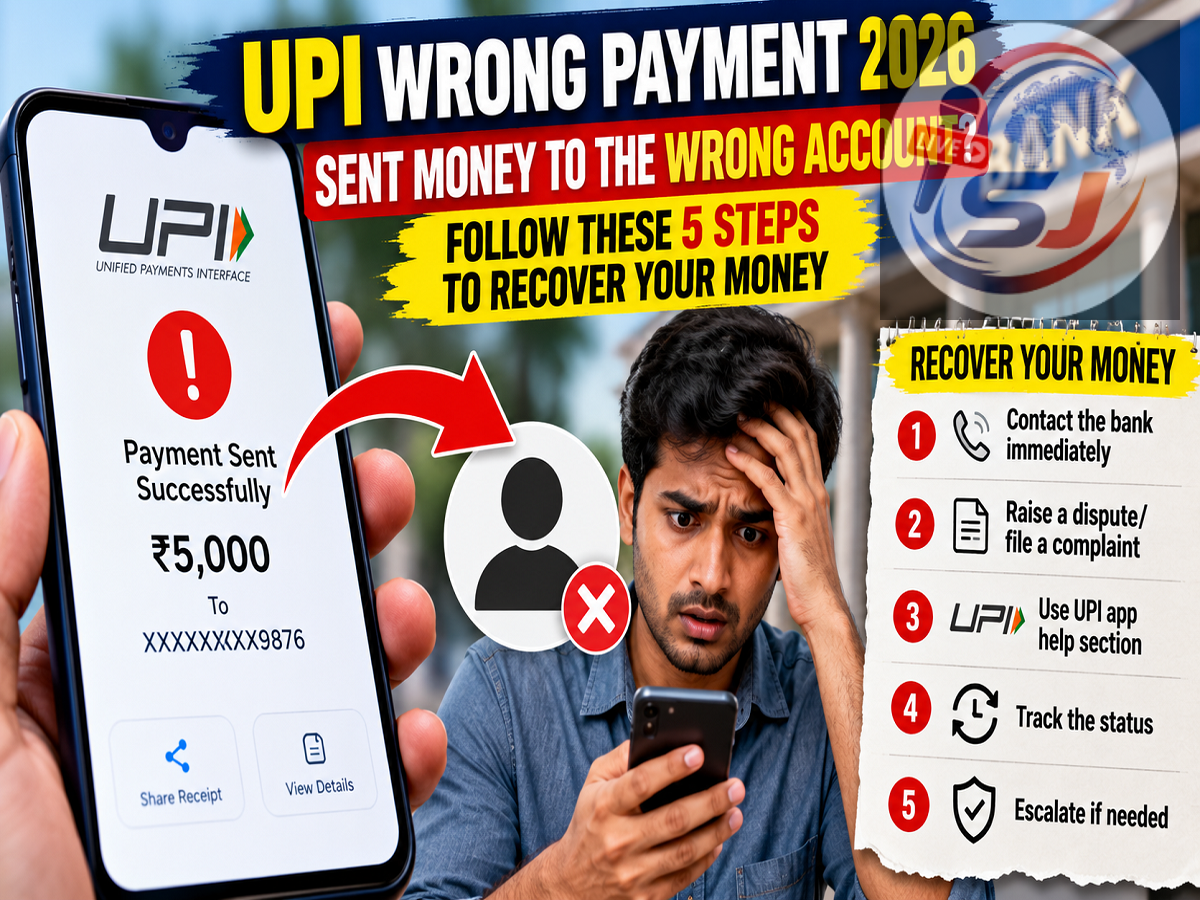
UPI Wrong Transaction Refund 2026: Digital payments have become an essential part of everyday life in India. Whether you are shopping at a local store, paying electricity bills, transferring money to family members or making online purchases, Unified Payments Interface (UPI) allows transactions to be completed within seconds.
Popular applications such as Google Pay, PhonePe, Paytm and BHIM have made money transfers convenient. However, this convenience also comes with the possibility of making mistakes.
Sometimes, users accidentally select the wrong UPI ID, enter an incorrect mobile number or scan an unintended QR code. As a result, money may be transferred to someone else's bank account.
If this happens, the first question is usually whether the transferred amount can be recovered.
The good news is that there are official complaint and dispute-resolution channels available. However, a refund is not guaranteed simply because the payment was made by mistake.
Taking immediate action, maintaining proper transaction records and following the correct complaint procedure may improve the chances of recovering the money.
UPI Wrong Payment: Can You Get Your Money Back?
If you accidentally transfer money to an incorrect UPI ID or bank account, you should report the transaction as soon as possible.
Unlike some card transactions, a successfully completed UPI payment generally cannot be cancelled directly through the application after the money has reached the recipient's account.
This means users cannot simply press a button to reverse every successful transaction.
However, banks and UPI service providers have mechanisms for raising complaints and requesting assistance with disputed payments.
The outcome depends on the circumstances of the transaction, the response of the receiving bank and the applicable rules.
Here are five important steps to follow.
1. Report the Wrong Transaction Through Your UPI App
The first step is to open the UPI application used to make the payment.
Whether you used Google Pay, PhonePe, Paytm or another UPI-enabled application, navigate to the transaction history section.
Locate the payment that was accidentally sent to the wrong person.
Depending on the application, you may find options such as Help, Support, Report a Problem or Raise a Complaint.
Select the relevant transaction and explain that the payment was made to an unintended recipient.
Keep the following information available:
-
Date and time of the transaction
-
Amount transferred
-
UPI transaction ID or reference number
-
Recipient's UPI ID, where available
-
Name of the bank account used for payment
-
Screenshot or receipt showing the transaction details
These details can help the payment service provider identify the transaction and begin the complaint process.
After submitting the complaint, save the ticket number for future reference.
2. Contact Your Bank Immediately
Reporting the issue through the UPI app is important, but you should also inform your bank directly.
Contact the customer care department of the bank account from which the money was deducted.
Explain that you accidentally transferred funds to an incorrect UPI ID or recipient.
Provide the transaction reference number, amount and other relevant details.
Ask the bank to register a formal complaint and provide a complaint acknowledgement or reference number.
The bank may be able to initiate a recovery request through the appropriate banking channels.
In some cases, the sending bank may coordinate with the beneficiary bank to seek the recipient's cooperation in returning the funds.
However, this does not mean that the sending bank can automatically withdraw money from the recipient's account.
A successful UPI payment is generally treated differently from a failed or pending transaction.
3. Understand Why a UPI Refund May Take Time
Not every UPI payment problem follows the same refund process.
There is an important difference between a failed transaction and a successful payment sent to the wrong person.
Failed UPI Transaction
A failed transaction may occur when money is deducted from the sender's account but does not reach the intended beneficiary.
Such cases are generally handled under the applicable transaction reversal and dispute-resolution rules.
Depending on the type of transaction, the relevant RBI turnaround-time framework may require reversal within a prescribed period.
Successful Payment to the Wrong Account
If the transaction is marked successful and the amount has reached another person's account, recovery can be more complicated.
The bank may need to communicate with the recipient's bank and request that the money be returned.
The recipient's cooperation may be necessary, and additional investigation could be required.
Therefore, users should not assume that all incorrect UPI payments will automatically be refunded within a fixed number of hours or days.
4. Escalate the Complaint if the Money Is Not Returned
If your initial complaint remains unresolved, follow up with the bank using the complaint reference number.
You can also escalate the matter through the bank's grievance redressal system or designated nodal officer.
UPI users may additionally use the complaint escalation channels provided by the relevant payment service provider and the National Payments Corporation of India (NPCI), as applicable.
If the complaint concerns a deficiency in banking or payment services and the regulated entity does not resolve it satisfactorily, you may be eligible to approach the Reserve Bank of India's Integrated Ombudsman.
Generally, customers can approach the RBI Ombudsman if the regulated entity rejects the complaint, provides an unsatisfactory response or fails to respond within 30 days.
Complaints can be submitted through the RBI's official Complaint Management System at cms.rbi.org.in.
However, the Ombudsman process is not a guarantee that money voluntarily transferred to the wrong recipient will be recovered. The complaint must fall within the applicable rules and jurisdiction.
5. Understand the Difference Between a Wrong Payment and UPI Fraud
This distinction is extremely important because the appropriate response may differ.
Wrong UPI payment: You personally authorised the transaction but accidentally sent the money to an unintended recipient.
For example, you entered an incorrect UPI ID and approved the payment using your UPI PIN.
Unauthorised transaction: Money was transferred from your account without your permission or authorisation.
This may involve account compromise, stolen credentials or other fraudulent activity.
If you suspect an unauthorised transaction, notify your bank immediately and request appropriate security measures.
You can also report suspected cyber financial fraud through India's national cybercrime helpline at 1930 or the official portal at cybercrime.gov.in.
Prompt reporting is particularly important in fraud cases because the applicable customer-liability rules may depend on the circumstances and timing of the report.
UPI Wrong Transaction: What if the Recipient Refuses to Return the Money?
Sometimes, the person who received the accidental transfer may refuse to return the amount.
In such situations, you should continue following the formal complaint process with your bank.
Keep records of all communications, transaction details and complaint acknowledgements.
If the matter cannot be resolved through banking channels, you may consider obtaining legal advice about the appropriate remedies available in your circumstances.
Avoid threatening the recipient or sharing their personal information publicly.
It is also important not to pay anyone claiming that they can recover your money in exchange for an advance fee.
How to Avoid Sending UPI Money to the Wrong Account
UPI transactions are convenient, but a few simple precautions can reduce the risk of mistakes.
Before approving a payment, carefully verify the recipient's displayed name and UPI ID.
If you are transferring a large amount to someone for the first time, consider confirming their payment details through a trusted communication channel.
Be cautious when scanning QR codes, particularly those received through unknown messages or social media accounts.
Always check the payment amount before entering your UPI PIN.
Remember that entering a UPI PIN generally authorises a payment. You do not need to enter your UPI PIN simply to receive money.
Never share your UPI PIN, OTP or banking passwords with anyone claiming to provide refund assistance.
Important UPI Complaint Channels
| Complaint Channel |
When to Use It |
|---|---|
| Google Pay, PhonePe, Paytm or BHIM support |
To report the transaction through the payment app |
| Your bank's customer care |
To register a formal wrong-transfer complaint |
| Bank grievance redressal department |
To escalate an unresolved banking complaint |
| NPCI complaint mechanism |
For applicable UPI dispute escalation |
| RBI Complaint Management System |
For eligible complaints against regulated entities |
| Cybercrime helpline 1930 |
For suspected cyber financial fraud |
Use official websites and application support channels rather than telephone numbers shared in unknown messages.
UPI Wrong Payment Refund 2026: Final Update
Accidentally transferring money to the wrong UPI account can be stressful, particularly when the amount is substantial.
However, taking prompt action may help.
Start by reporting the transaction through your UPI application, contact your bank and obtain a complaint reference number.
If the issue remains unresolved, follow the appropriate grievance escalation process.
Most importantly, understand whether the payment was a successful transfer to an unintended recipient, a failed transaction or an unauthorised debit.
A successful UPI transfer cannot normally be cancelled instantly, and recovery is not guaranteed. But reporting the mistake quickly and following official banking procedures gives you a better opportunity to seek resolution.
Disclaimer: This article provides general information about UPI transaction complaints and recovery procedures. Refund eligibility depends on the transaction circumstances, banking rules and dispute-resolution outcome. Always use official bank, NPCI and RBI channels for assistance.