
UPI QR Code Scam Alert 2026: Never Scan a QR Code or Enter Your UPI PIN to Receive Money
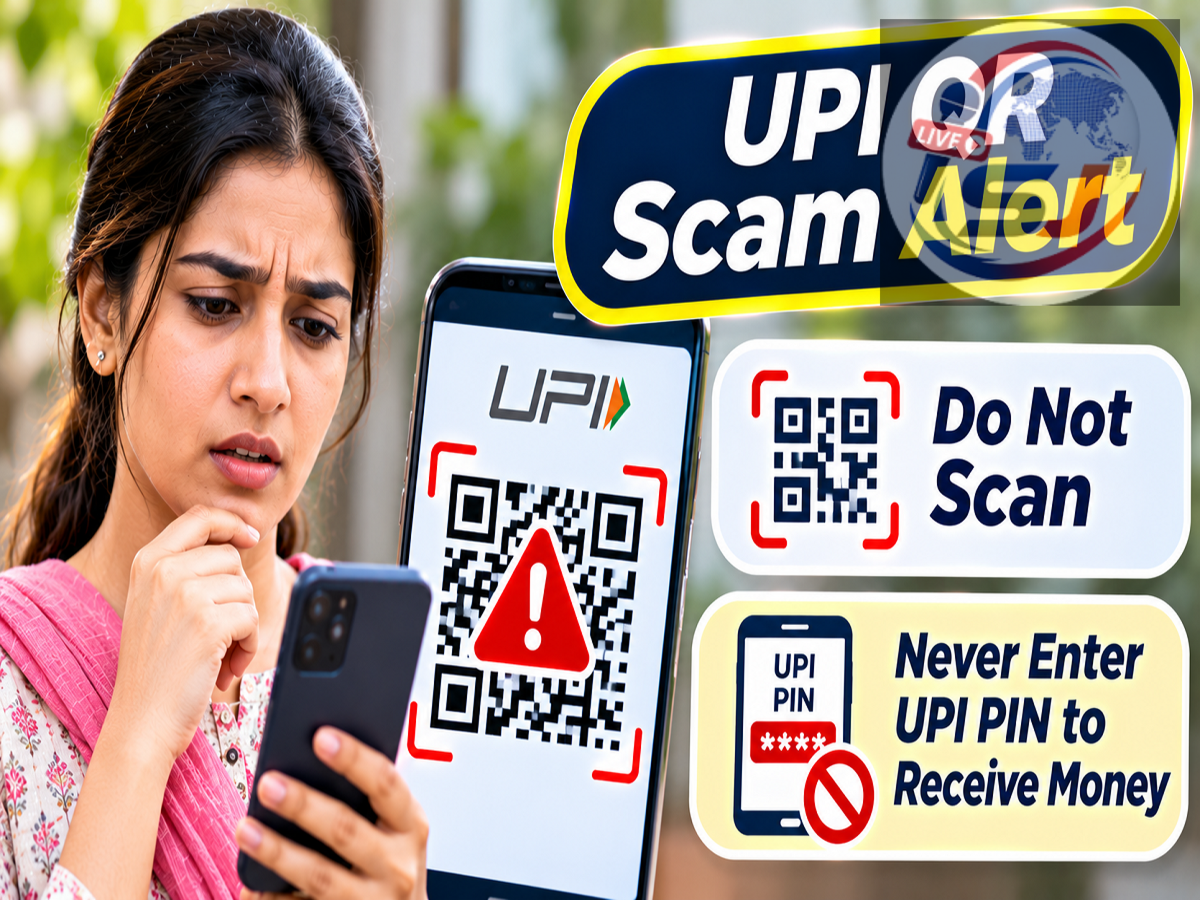
UPI Fraud Alert 2026: Digital payments have made everyday financial transactions faster and more convenient, but cybercriminals are increasingly exploiting users' lack of awareness to commit online fraud. One common trick involves convincing people to scan a QR code or enter their UPI PIN under the false promise of receiving money.
The Department of Telecommunications (DoT) has shared an important cyber safety message warning people to remain cautious while making payments through QR codes.
According to the advisory, fraudsters may trick users into scanning a QR code by claiming that the action is necessary to receive a payment. In reality, you do not need to enter your UPI PIN to receive money into your bank account.
The warning encourages digital payment users to avoid suspicious requests, protect their financial information and verify transactions before approving them.
UPI QR Code Scam 2026: Key Highlights
| Particulars |
Details |
|---|---|
| Fraud Type |
UPI QR Code Scam |
| Awareness Initiative |
Department of Telecommunications |
| Common Trick |
Asking users to scan a QR code to receive money |
| Main Risk |
Authorising an unintended payment |
| UPI PIN Required to Receive Money? |
No |
| UPI PIN Required to Send Money? |
Generally yes, when authorising a UPI debit |
| Cyber Fraud Helpline |
1930 |
| Complaint Website |
What Is a UPI QR Code Scam?
A UPI QR code scam is a type of digital payment fraud in which criminals mislead users into authorising transactions.
QR codes are commonly used by shops, businesses and individuals to receive payments through UPI applications.
Normally, a customer scans a merchant's QR code, enters the payment amount if necessary and authorises the transaction using their UPI PIN.
Fraudsters exploit this familiar process by claiming that scanning a QR code will allow someone to receive money.
For example, a criminal posing as a buyer may tell a seller that a QR code must be scanned to collect payment.
If the seller follows the instructions without checking the transaction details, they may accidentally approve a payment from their own bank account.
The important distinction is that scanning a payment QR code generally initiates a payment process rather than a request to receive money.
How Do Fraudsters Use QR Codes to Steal Money?
Cybercriminals may use different situations to convince people to follow fraudulent payment instructions.
1. Fake Buyer Scam
A person selling a product through an online marketplace may receive a message from someone claiming to be interested in buying it.
The supposed buyer agrees to the price and promises immediate payment.
However, instead of sending money directly to the seller's UPI ID, the fraudster shares a QR code.
The seller is then instructed to scan the code and enter a UPI PIN to receive the payment.
This can result in the seller authorising a payment rather than receiving one.
2. Fake Refund Scam
Fraudsters may impersonate customer care representatives and claim that a refund is ready.
They might send a QR code and ask the customer to scan it to complete the refund.
If the QR code initiates a payment request, the customer could lose money by approving the transaction.
Legitimate refunds do not require customers to authorise an unrelated payment to an unknown account.
3. Fake Prize or Cashback Offer
Another trick involves messages claiming that a person has won a reward, cashback or promotional payment.
The recipient may be told to scan a QR code and enter a UPI PIN to claim the amount.
Such requests should be treated with caution.
A genuine incoming UPI payment does not require the recipient to enter their UPI PIN.
4. Fraudulent Payment Collection Requests
Some scammers send payment collection requests and describe them as incoming transfers.
The victim may believe that approving the request will add money to their account.
In reality, approving a collection request can authorise money to leave the account.
Users should always read the payment confirmation screen before entering their PIN.
Do You Need a UPI PIN to Receive Money?
No. A UPI PIN is not required to receive a normal incoming UPI payment.
When someone sends money to your UPI ID or registered bank account, the payment can be credited without you entering your UPI PIN.
The UPI PIN is used to authorise certain transactions that debit money from your bank account.
This distinction is one of the most important rules of digital payment safety.
| Transaction |
Is a UPI PIN Required? |
|---|---|
| Receiving money through UPI |
No |
| Sending money through UPI |
Generally yes |
| Paying a merchant through a UPI QR code |
Generally yes |
| Approving a UPI collect request |
Yes, when authorising payment |
| Receiving a refund into your account |
No UPI PIN required to receive the credit |
| Checking your bank balance through UPI |
May require UPI PIN authentication |
If someone asks you to enter your UPI PIN to receive a payment, treat the request as a major warning sign.
How to Identify a Suspicious QR Code Payment Request
Fraudsters often create a sense of urgency to prevent victims from checking transaction details.
Be cautious if someone claims that a payment will expire unless you immediately scan a QR code.
Other warning signs include requests to share your UPI PIN, pressure to approve an unfamiliar transaction or instructions to ignore warnings displayed by your payment application.
A person who genuinely wants to send money can normally transfer it directly to your UPI ID or another supported payment address.
There is no need to authorise a separate outgoing transaction to receive that money.
Important UPI Safety Tips for Digital Payment Users
Following a few precautions can help reduce the risk of QR code fraud.
-
Never enter your UPI PIN to receive money. Incoming payments do not require PIN authorisation.
-
Check the recipient's name. Before making a payment, verify the details displayed in the UPI application.
-
Read the transaction screen. Confirm whether you are sending money or approving a payment request.
-
Avoid unknown QR codes. Do not scan codes received from strangers merely because they promise refunds or rewards.
-
Keep your UPI PIN confidential. Never share it with customer care representatives, friends or unknown callers.
-
Verify payment receipts. Check your bank account or transaction history instead of relying only on screenshots.
-
Use official applications. Download UPI apps from trusted sources and keep them updated.
-
Report suspicious activity. Inform your bank and the appropriate cybercrime authorities if fraud is suspected.
What Should You Do If You Accidentally Send Money to a Fraudster?
If you realise that you have authorised a fraudulent UPI transaction, act immediately.
First, contact your bank or UPI service provider and report the transaction.
You should also call the national cybercrime helpline 1930 as quickly as possible.
A complaint can be registered through the official National Cyber Crime Reporting Portal at cybercrime.gov.in.
Keep relevant information available, including the transaction ID, amount, date, recipient details and screenshots of suspicious messages.
Prompt reporting may help authorities and financial institutions take timely action, although recovery of the transferred money is not guaranteed.
Can Suspicious Calls and Messages Be Reported on Sanchar Saathi?
Yes. The Department of Telecommunications operates the Sanchar Saathi platform, which includes the Chakshu facility for reporting suspected fraudulent communications through supported channels.
People receiving suspicious calls or messages related to payment scams can use the official Sanchar Saathi portal to submit eligible reports.
However, if money has already been lost, the appropriate immediate reporting channels are the bank, the 1930 cybercrime helpline and the National Cyber Crime Reporting Portal.
Sanchar Saathi reporting should not replace a financial cybercrime complaint.
Why Is UPI Awareness Important?
UPI has become an important part of India's digital payment ecosystem.
People use it for shopping, bill payments, money transfers and many other everyday transactions.
As digital payments become more common, fraudsters may target users who are unfamiliar with the difference between receiving and sending money.
QR code scams are particularly deceptive because they misuse a payment method that people already trust.
Understanding the purpose of a UPI PIN and carefully reviewing transaction details can prevent many avoidable mistakes.
Digital payment security depends not only on technology but also on informed decisions by users.
UPI QR Code Fraud 2026: Key Takeaway
The Department of Telecommunications has warned citizens against fraudulent QR code payment requests.
Cybercriminals may pretend to send money while actually attempting to make users authorise payments from their own accounts.
Remember the most important UPI safety rule: You never need to enter your UPI PIN to receive money.
Do not scan unfamiliar payment QR codes under pressure, never share sensitive banking information and verify every transaction before approving it.
If you suspect financial fraud, report it immediately through the official cybercrime channels.
Source Credit: Department of Telecommunications, Government of India — Cyber Awareness advisory on QR code payment fraud and UPI PIN safety. Official references: Department of Telecommunications, Sanchar Saathi and National Cyber Crime Reporting Portal.