
UPI QR Code Alert: Small Merchants Face Re-KYC Deadline as Payment Firms Seek More Time From RBI
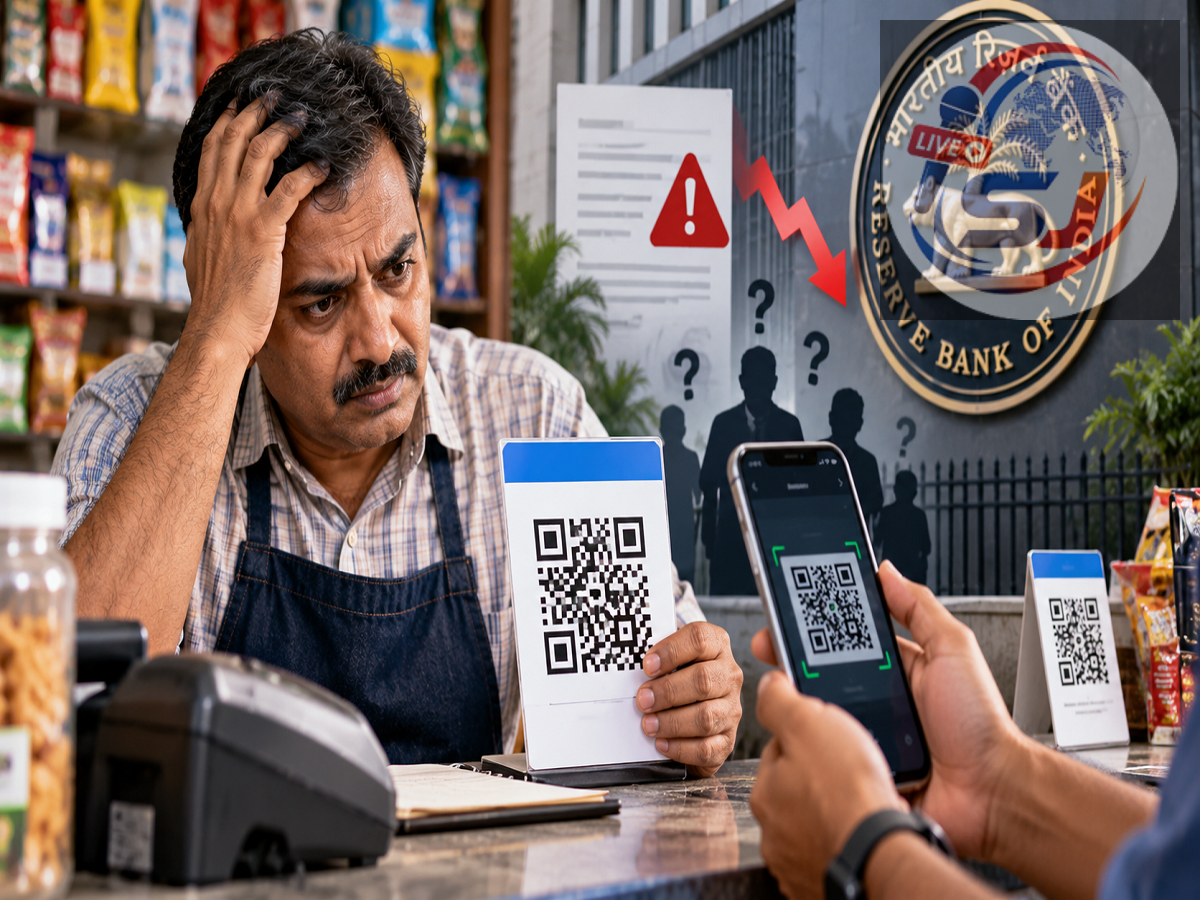
UPI QR Code Re-KYC Update: Millions of small shopkeepers and street vendors who accept digital payments through QR codes are facing an important compliance deadline. Payment aggregators are racing to complete the re-KYC process for existing merchants, while industry representatives have reportedly sought additional time from the Reserve Bank of India (RBI).
The issue is particularly important for small and informal businesses such as tea stalls, vegetable sellers, neighbourhood grocery stores and street vendors, where QR-based UPI payments have become an everyday part of doing business.
According to industry estimates cited in recent reports, around 30% to 35% of small informal offline merchants using QR codes could struggle to complete the verification process within the reported September 15, 2026 timeline.
This does not mean that UPI will stop working across India after September 15. The concern is specifically about merchants whose required verification remains incomplete.
What Is the September 15 Re-KYC Issue?
Payment aggregators are required to conduct due diligence and comply with applicable KYC requirements for merchants operating through their networks.
Recent industry reports say September 15, 2026 is the timeline payment aggregators are working against to complete re-KYC of existing merchants.
The challenge is the sheer number of merchants involved.
Digital payment platforms have expanded rapidly across India, and QR codes are now used by everyone from established stores to small roadside businesses. Completing verification across this large and highly fragmented merchant network has created a significant operational challenge.
Why Are Small QR Merchants More Vulnerable?
Large and organised businesses generally maintain formal documentation and have dedicated systems to handle compliance requirements.
The situation can be very different for a small street vendor or independently operated neighbourhood shop.
Many such businesses are informal, and some may not have all the documents required to complete the verification process quickly. Others may not fully understand what needs to be submitted or updated.
This makes the long tail of small merchants particularly challenging for payment companies trying to complete re-KYC across their networks.
Could a Merchant's QR Code Stop Accepting Payments?
The primary concern is that payment acceptance could be interrupted for merchants whose required verification remains incomplete.
For example, imagine a customer buying vegetables or groceries and attempting to scan the seller's usual QR code. If that merchant's payment facility has been restricted because of incomplete compliance, the transaction may not go through in the usual way.
The customer could then have to use an alternative payment method.
However, consumers should not interpret this as a nationwide shutdown of QR codes or UPI.
The issue concerns potentially non-compliant merchant accounts rather than the entire digital payments infrastructure.
How Many Small Merchants Could Be Affected?
Industry estimates suggest that roughly 30% to 35% of small informal offline merchants using UPI QR codes could face difficulty meeting the timeline.
Reports have also indicated that around a million small online businesses could be at risk of missing the verification window.
Payment aggregators are expected to complete verification for a substantial majority of their merchants, but the remaining backlog is large enough to cause concern.
This is one reason payment industry participants have reportedly approached the RBI seeking additional time.
Why Is Re-KYC Necessary?
KYC, or Know Your Customer, is a verification process used to establish the identity and other required details of a customer or merchant.
In the payments ecosystem, merchant due diligence can help ensure that payment facilities are being provided to genuine businesses and can assist in combating fraud, money laundering and misuse of payment infrastructure.
RBI's regulatory framework requires payment aggregators to carry out appropriate merchant due diligence.
As digital payments expand into smaller towns, villages and informal businesses, maintaining adequate verification standards becomes increasingly important.
Payment Companies Face a Major Operational Challenge
Completing KYC for millions of merchants is not simply a matter of sending a notification asking them to upload documents.
Payment companies may need to contact merchants, explain the requirements, collect or verify information and resolve documentation issues.
The challenge becomes greater in smaller towns and rural areas where merchants may have limited familiarity with formal compliance procedures.
Recent industry reporting also points to capacity constraints in carrying out physical verification requirements, adding to the difficulty of clearing the backlog before the deadline.
Will UPI Stop Working After September 15?
No, the reported deadline should not be interpreted as a shutdown of UPI across India.
Consumers will continue to be able to use digital payment services through compliant merchants and the broader UPI ecosystem.
The potential disruption concerns individual merchants whose verification requirements remain incomplete and whose payment acceptance facility may consequently be affected.
Large merchants and businesses that have completed the necessary verification should not be assumed to face the same issue.
What Should Shopkeepers Do?
Merchants who accept UPI payments through QR codes should pay attention to genuine KYC or re-KYC communications from their authorised payment provider.
If a merchant has received a request to update documents or complete verification, it would be sensible to check the requirement directly through the payment provider's official application or authorised support channel.
Merchants should also be cautious about fraud.
A deadline involving KYC can create an opportunity for scammers to send fake messages or make calls claiming that a QR code will immediately be blocked.
Shopkeepers should never share their UPI PIN, OTP, banking password or other confidential credentials with someone claiming to complete KYC over a call or message.
Should Customers Start Carrying Cash?
There is no reason to assume digital payments will suddenly stop working everywhere.
However, consumers who regularly shop at small roadside stalls, vegetable markets or other informal businesses may find it useful to keep an alternative payment option available.
If an individual merchant's QR payment facility becomes temporarily unavailable, a customer could use another accepted payment method.
The potential problem is expected to be merchant-specific rather than a system-wide failure.
Industry Seeks More Time From RBI
Payment aggregators have reportedly asked the RBI to extend the timeline because of the remaining verification backlog.
Whether additional time will ultimately be provided is the key development merchants should watch.
Until there is further regulatory clarity, businesses should avoid assuming that the deadline will automatically be extended and should complete any pending legitimate verification requirements as soon as possible.
For customers, the main takeaway is equally straightforward: UPI itself is not shutting down. The concern centres on QR-based payment acceptance for individual merchants whose required re-KYC remains unfinished.
Merchants should rely on official communication from their payment provider and RBI-related regulatory updates rather than social-media rumours about blanket QR-code bans.