
UPI MDR Rules 2026: 5 Types of Payments Above ₹2,000 to Face a Flat ₹5 Fee
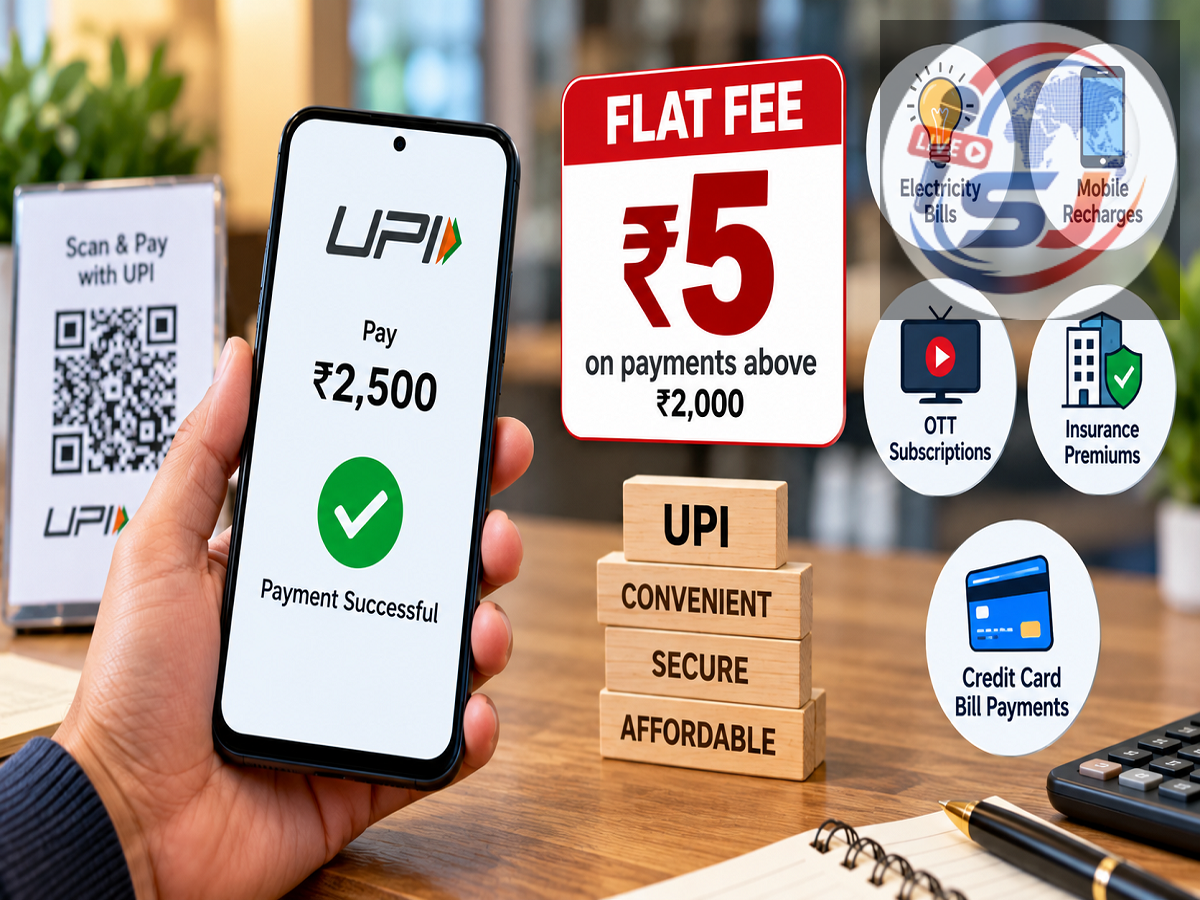
India’s revised UPI Merchant Discount Rate (MDR) framework does not apply the same charge to every eligible merchant payment above ₹2,000. While the standard MDR has been fixed at 0.4% for specified person-to-merchant transactions, the government has introduced a concessional flat ₹5 MDR for several essential and low-margin categories.
The special treatment is significant for sectors where even a percentage-based transaction charge could add substantial payment-processing costs. Under the revised structure, qualifying UPI transactions above ₹2,000 in five major categories—railways, fuel, telecommunications, insurance and agricultural inputs—will attract a fixed MDR of ₹5 per transaction rather than the standard percentage-based rate.
For consumers, however, there is an important distinction: MDR is a merchant-side charge and is not supposed to be collected from the customer as a UPI usage fee.
How Does the Standard UPI MDR Work?
Under the revised framework, eligible person-to-merchant (P2M) UPI transactions exceeding ₹2,000 will generally attract an MDR of 0.4% of the transaction amount, subject to a maximum charge of ₹300 per transaction.
For instance, a standard eligible merchant payment of ₹5,000 would result in an MDR of ₹20 at 0.4%. A ₹10,000 transaction would generate an MDR of ₹40, while a ₹50,000 payment would carry ₹200.
Once the calculated amount reaches ₹300, the cap comes into effect. Therefore, a ₹1 lakh transaction under the standard category would not generate ₹400 in MDR; the applicable amount would remain capped at ₹300.
However, the government has created a separate flat-rate structure for certain essential and thin-margin sectors.
Which Five Categories Get the ₹5 Flat MDR?
Qualifying UPI payments above ₹2,000 in the following categories will attract a flat MDR of only ₹5 per transaction:
| Payment Category | MDR on Qualifying Payment Above ₹2,000 |
|---|---|
| Railways | ₹5 flat |
| Fuel | ₹5 flat |
| Telecommunications | ₹5 flat |
| Insurance | ₹5 flat |
| Agricultural Inputs | ₹5 flat |
This concessional structure means the MDR remains ₹5 for a qualifying transaction in these categories even when a percentage-based calculation would have produced a higher amount.
1. Railway Payments
Railway transactions are included in the concessional MDR category.
Suppose an eligible railway payment amounts to ₹5,000. Under the normal 0.4% MDR calculation, the merchant-side charge would work out to ₹20. Under the special flat-rate framework, however, the applicable MDR would be only ₹5.
This treatment is designed to prevent a percentage-based MDR from creating a larger processing burden on such transactions.
2. Fuel Payments at Petrol Pumps
Fuel is another category covered by the ₹5 flat-rate model.
For example, if a qualifying UPI fuel payment is ₹4,000, the standard 0.4% calculation would produce an MDR of ₹16. Under the concessional structure, the applicable MDR would instead be fixed at ₹5.
The provision is particularly relevant to petrol pumps because fuel retail operates differently from many conventional retail categories and has relatively thin margins.
3. Telecom Payments
Qualifying telecommunications transactions above ₹2,000 will also receive the concessional MDR treatment.
This category can cover eligible telecom-related merchant transactions that meet the conditions prescribed under the framework. Rather than applying the standard 0.4% rate, a qualifying transaction will attract a fixed MDR of ₹5.
Many routine prepaid mobile recharges are below ₹2,000 and would therefore remain outside the MDR threshold in any case.
4. Insurance Payments
Insurance has also been included among the sectors receiving the flat-rate benefit.
Premium payments can often be significantly higher than ₹2,000. Applying the standard percentage-based MDR to larger insurance transactions could therefore generate a noticeably higher merchant-side processing cost.
Under the concessional model, an eligible insurance payment above ₹2,000 attracts a flat ₹5 MDR instead of the normal 0.4% charge.
For example, 0.4% of a ₹25,000 transaction would equal ₹100. If the payment qualifies under the special insurance category, the MDR would instead be ₹5.
5. Agricultural Input Payments
The fifth major category is agricultural inputs.
Qualifying merchant payments for specified agricultural inputs above ₹2,000 will also come under the flat ₹5 MDR structure. This is intended to provide concessional treatment to transactions connected with an important and price-sensitive sector.
The precise classification of a transaction will depend on the merchant category and applicable payment-network rules, so merely purchasing something related to agriculture does not necessarily mean every transaction automatically receives the concessional rate.
Does the Customer Have to Pay ₹5?
This is the most important point for ordinary UPI users.
The ₹5 MDR should not be interpreted as a ₹5 fee that customers must pay whenever they make an eligible railway, fuel, telecom, insurance or agricultural payment through UPI.
MDR is a merchant-side payment-processing charge. The government’s framework does not turn it into a direct customer fee for using UPI.
So, if a customer makes a qualifying ₹5,000 payment at a merchant in one of these concessional categories, the ₹5 MDR applies within the merchant and payments ecosystem rather than being automatically added to the customer’s transaction amount.
Payments of ₹2,000 or Less Remain Outside MDR
The ₹5 concessional rate becomes relevant only for qualifying transactions above ₹2,000.
Merchant payments of ₹2,000 or less continue to have zero MDR under the revised framework. Therefore, a qualifying ₹1,500 fuel payment, for example, would not attract the ₹5 MDR simply because fuel is included in the concessional category.
Person-to-person UPI transfers are treated separately and remain outside the MDR framework irrespective of the transaction amount, subject to normal UPI transaction limits.
Why the Flat ₹5 Model Matters
The difference becomes much clearer with larger transactions. Consider a qualifying ₹50,000 payment. At the standard 0.4% rate, MDR would amount to ₹200. If that transaction falls into one of the eligible flat-rate categories, the MDR would be only ₹5.
The revised system therefore creates different MDR structures depending on the nature of the merchant transaction rather than applying a single percentage to every payment above ₹2,000.
For UPI users, the main takeaway is straightforward: not every payment above ₹2,000 attracts the standard 0.4% MDR. Eligible railway, fuel, telecom, insurance and agricultural-input transactions receive concessional treatment with a flat ₹5 MDR, while the charge itself remains on the merchant side rather than becoming a direct UPI fee for customers.