
UPI Fraud Alert 2026: Never Enter Your UPI PIN to Receive Money, Rajasthan Government Issues Safety Warning
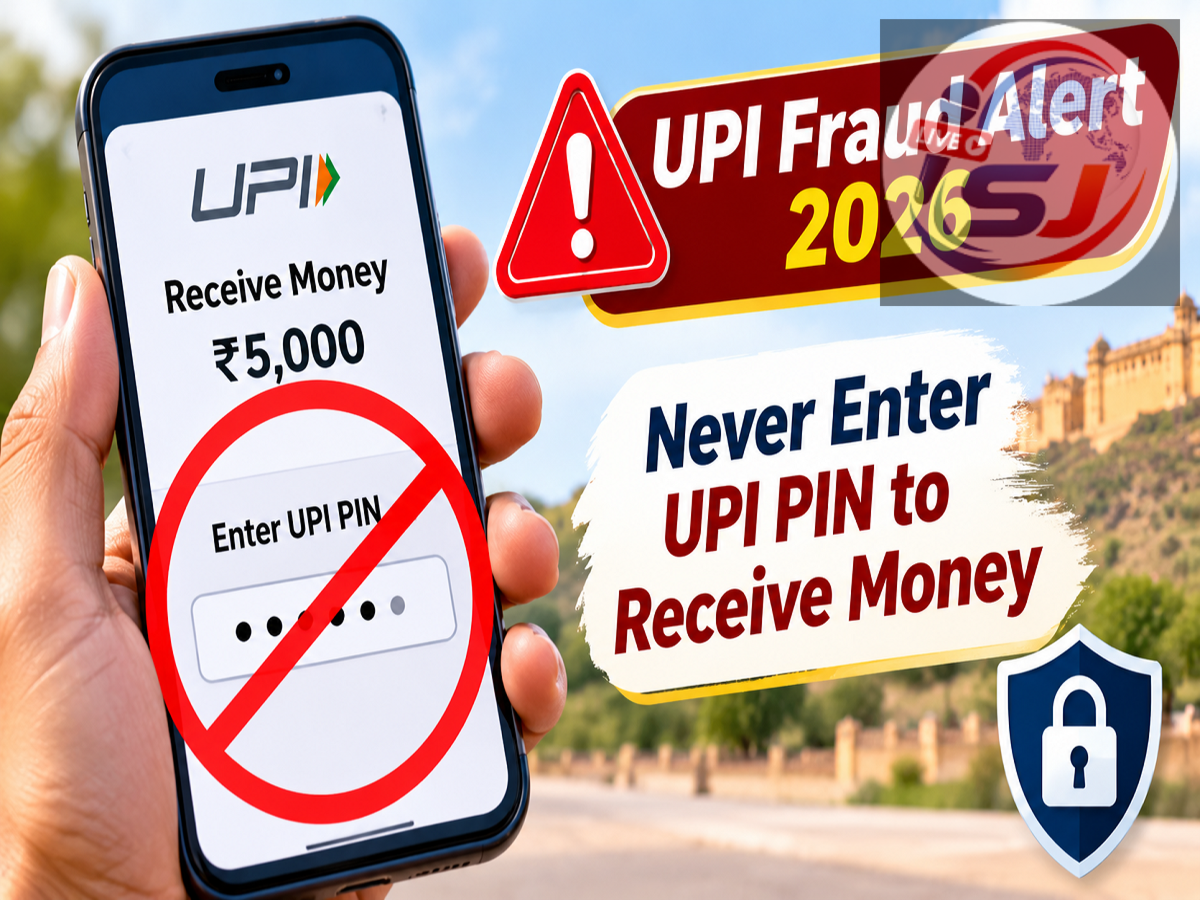
UPI Payment Safety Tips 2026: Digital payments have become an essential part of everyday financial transactions in India. From shopping and paying electricity bills to transferring money to friends and family, millions of people use Unified Payments Interface (UPI) applications for quick and convenient transactions. However, the growing popularity of digital payments has also created opportunities for cybercriminals to deceive unsuspecting users.
The Rajasthan government's Department of Information Technology and Communication (DoIT&C) has shared an important cyber safety message, reminding people to remain cautious while sending or receiving digital payments.
The advisory highlights one particularly important rule: You do not need to enter your UPI PIN to receive money in your bank account.
Users should also carefully examine transaction details before approving any payment request to avoid accidentally transferring money to fraudsters.
Rajasthan Government Shares Important UPI Safety Advisory
The Rajasthan government's cyber awareness message encourages people to remain alert during online financial transactions.
Digital payment fraudsters frequently exploit confusion about how UPI transactions work.
Some scammers contact potential victims and claim that a payment, refund, cashback reward or prize has been sent to their accounts.
They may then ask the recipient to enter a UPI PIN to complete the transaction.
However, entering a UPI PIN generally authorises money to be debited from the user's account rather than credited to it.
Understanding this distinction can help people identify suspicious payment requests before losing money.
Do You Need a UPI PIN to Receive Money?
No. Receiving a standard UPI payment does not require the recipient to enter a UPI PIN.
When someone transfers money to your UPI ID or linked bank account, the amount is credited through the payment system without requiring you to approve the incoming transfer using your PIN.
A UPI PIN is generally required when you authorise transactions that debit money from your account, such as sending funds or approving certain payment requests.
Therefore, if someone claims that you must enter your UPI PIN to receive a refund, prize or payment, treat the request as suspicious.
Never share your UPI PIN with another person, even if they claim to represent a bank, government department or customer support service.
How Do Scammers Trick People Through UPI Payment Requests?
One common digital payment scam involves fraudsters sending a payment collection request instead of transferring money.
For example, a scammer may tell someone that they are sending ₹5,000 as a refund.
Instead of initiating a transfer, the scammer sends a request asking the person to approve a payment of ₹5,000.
If the recipient misunderstands the request and enters their UPI PIN, the transaction may debit money from their bank account.
The fraudster may then receive the amount, depending on the transaction's processing and completion.
Such scams often rely on urgency, misleading explanations and the victim's unfamiliarity with payment approval screens.
UPI Collect Request vs Receiving Money: Know the Difference
Understanding the difference between receiving money and approving a payment request is essential.
| Transaction Type |
Is a UPI PIN Required? |
What Happens? |
|---|---|---|
| Receiving a normal UPI transfer |
No |
Money is credited to your account |
| Sending money through UPI |
Yes, generally |
Money is debited from your account |
| Approving a UPI collect request |
Yes, generally |
Money is debited from your account |
| Checking your UPI balance |
Usually yes |
Balance is displayed; no transfer occurs |
| Scanning a QR code to make a payment |
Yes, generally |
Money is transferred after authorisation |
The important point is that a UPI PIN is an authorisation mechanism. Users must understand what they are authorising before entering it.
Some legitimate UPI activities, such as balance enquiries, may also require a PIN without transferring money. Therefore, the safest rule is to verify the transaction purpose rather than assuming every PIN screen means the same thing.
Beware of Fake Refund and Cashback Offers
Cybercriminals may use attractive offers to convince users to approve fraudulent transactions.
Common examples include fake cashback rewards, shopping refunds, lottery winnings, online marketplace payments and customer service reimbursements.
A scammer might claim that money is waiting to be credited but that the recipient must first complete a verification step.
This verification may involve entering a UPI PIN, scanning a QR code or approving a payment request.
Such instructions should immediately raise suspicion.
Legitimate incoming UPI transfers do not require recipients to enter their PIN to accept the money.
If someone claims otherwise, users should independently verify the transaction through their banking application or official customer support channel.
QR Code Fraud: Can Scanning a Code Make You Lose Money?
QR codes are widely used for making payments at shops, restaurants and other establishments.
However, fraudsters can misuse them by convincing people to scan a code under the false impression that they will receive money.
In a typical UPI payment flow, scanning a payment QR code prepares an outgoing payment to the displayed recipient.
If the user subsequently enters the amount and authorises the transaction, money may be transferred from their account.
Simply scanning a QR code does not ordinarily complete a payment. The danger arises when users approve an outgoing transaction without checking the details.
People should never scan an unknown QR code and authorise a payment merely because someone claims it is necessary to receive money.
Check These Details Before Approving Any UPI Transaction
Before entering a UPI PIN, users should carefully review the information displayed on their payment application.
Important details include the recipient's name, UPI ID, payment amount and transaction type.
If the displayed recipient does not match the intended person or business, the payment should not be approved.
Similarly, users should be cautious if the transaction amount differs from what they expected.
Unexpected payment requests should be declined until the sender's identity and purpose have been independently verified.
Taking a few additional seconds to review the transaction can prevent serious financial losses.
Never Share Your UPI PIN, OTP or Banking Credentials
UPI users should keep their financial authentication details confidential.
A bank employee, legitimate payment application representative or government official should not ask customers to disclose their UPI PIN.
One-time passwords, debit card details and banking passwords should also be protected.
Fraudsters may impersonate customer care executives and claim that an account requires urgent verification.
They may also send suspicious links or ask users to install remote-access applications.
Such requests can expose sensitive financial information or allow unauthorised access to devices.
Users should contact their bank only through verified official channels.
What Should You Do If You Accidentally Approve a Fraudulent UPI Payment?
If money has been transferred through a suspected fraudulent transaction, immediate action is important.
First, contact the bank or payment service provider and report the transaction.
Users should also preserve the transaction reference number, payment screenshots and any messages received from the suspected fraudster.
In India, financial cyber fraud can be reported through the national cybercrime helpline 1930.
Complaints can also be submitted through the official National Cyber Crime Reporting Portal.
Reporting quickly may improve the chances of authorities and financial institutions taking timely action, although recovery of the lost amount is not guaranteed.
Users should also change compromised credentials and review their account security if they suspect unauthorised access.
How to Protect Yourself From UPI Fraud in 2026
Digital payment security depends on both technical safeguards and responsible user behaviour.
Keeping payment applications updated, using secure device locks and reviewing bank transaction alerts can help reduce risk.
Users should avoid responding to unexpected payment requests from unknown individuals.
It is also advisable to verify financial claims through independent communication channels rather than trusting messages or calls from unfamiliar numbers.
Families should educate elderly members and first-time digital payment users about the difference between receiving money and approving a debit transaction.
Awareness of basic UPI safety practices can help prevent many common fraud attempts.
Final Takeaway: Remember This Simple UPI Safety Rule
The Rajasthan government's cyber safety message highlights a straightforward but important precaution for digital payment users.
You never need to enter your UPI PIN to receive a normal UPI transfer.
Whenever a payment application asks for PIN authorisation, users should carefully check what action is being approved.
A request that appears to involve receiving money may actually be an attempt to collect money from the user's account.
By verifying payment details, refusing suspicious requests and protecting banking credentials, people can significantly reduce their exposure to UPI-related fraud.
Source Credit: Rajasthan Government Department of Information Technology and Communication (DoIT&C) — Public cyber awareness message shared under the hashtags #DOITC, #CyberSafety, #UPISafety, #CyberAwareness and #Rajasthan. Additional information about UPI transaction safety and cyber fraud reporting is included for public awareness.