
UPI Charges From October 15, 2026: Will Google Pay, PhonePe and Paytm Users Have to Pay Extra?
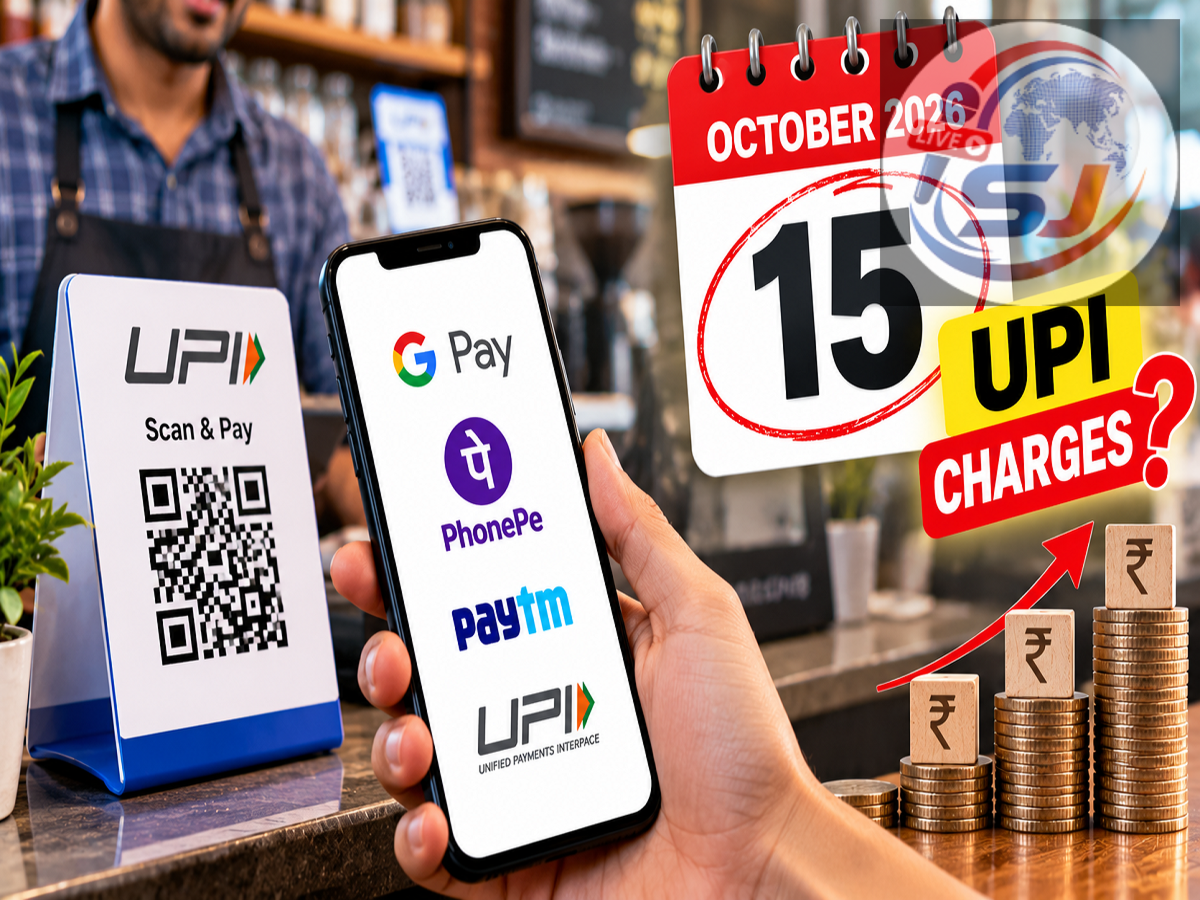
UPI MDR Charges October 2026: Millions of Indians rely on Unified Payments Interface (UPI) services for everyday transactions, including grocery shopping, restaurant bills, online purchases, and money transfers. Apps such as Google Pay, PhonePe, and Paytm have made digital payments a convenient part of daily life.
However, recent reports about a possible Merchant Discount Rate (MDR) on certain UPI transactions from October 15, 2026, have raised concerns among users.
Many people are wondering whether sending money through UPI will become expensive and whether payment apps will start deducting additional charges from their bank accounts.
According to the reported proposal, a 0.4% MDR could apply to certain merchant UPI transactions exceeding ₹2,000, with a maximum charge of ₹300. Importantly, the proposed fee would be payable by eligible merchants rather than ordinary customers.
There is no confirmed basis in the supplied report to conclude that Google Pay, PhonePe, or Paytm users will automatically be charged for regular UPI payments from October 15. The reported MDR arrangement should not be treated as an officially implemented rule without confirmation from the relevant authorities.
Here is what UPI users and merchants should know about the proposed charges, how MDR works, and the latest reported transaction trends.
What Is MDR in UPI Payments?
Merchant Discount Rate, commonly called MDR, is a fee associated with accepting digital payments.
In payment systems where MDR applies, merchants generally pay the charge to the institutions or payment service providers involved in processing transactions.
For example, when a customer purchases an item using an eligible digital payment method, the merchant may receive the payment after applicable processing charges are deducted.
MDR is therefore different from a fee directly charged to a customer for transferring money.
The reported discussion about introducing MDR on selected UPI merchant transactions has attracted attention because UPI has traditionally been promoted as a low-cost digital payment system.
Currently, the treatment of MDR depends on the payment instrument and applicable regulatory rules. Ordinary bank-account-based UPI transactions have generally operated under a zero-MDR framework.
Will Google Pay, PhonePe and Paytm Start Charging Customers?
The biggest question among UPI users is whether they will have to pay additional money when making payments through popular applications.
According to the October 2026 report, the discussed MDR arrangement does not involve introducing a direct platform fee for ordinary customers using Google Pay, PhonePe, or Paytm for standard UPI payments.
Instead, the proposed charge would apply to certain merchant transactions.
This means that a customer paying a shopkeeper through a regular bank-account-linked UPI transaction should not assume that an additional fee will automatically be deducted.
However, payment charges can differ depending on the payment method, including certain wallet-funded or other specialised transactions.
Users should therefore distinguish between ordinary UPI payments and services that may carry separately disclosed charges.
UPI MDR From October 15: What Is the Reported Proposal?
The report discusses the possibility of introducing MDR on selected merchant transactions beginning October 15, 2026.
The reported structure includes the following details:
| Proposed Feature |
Reported Details |
|---|---|
| Possible implementation date |
October 15, 2026 |
| Transaction category |
Certain merchant UPI payments |
| Reported transaction threshold |
Above ₹2,000 |
| Proposed MDR rate |
0.4% |
| Reported maximum charge |
₹300 |
| Who would pay MDR? |
Eligible merchants |
| Direct customer charge |
Not proposed for ordinary UPI payments |
These details are based on the supplied news report. They should be regarded as reported proposals rather than confirmed nationwide rules unless supported by an official notification.
How Much MDR Could Merchants Pay?
If a 0.4% MDR were introduced under the reported arrangement, the amount would depend on the value of the eligible transaction.
Here are some illustrative calculations.
| Merchant Transaction Value |
MDR at 0.4% |
|---|---|
| ₹2,000 |
₹8 |
| ₹5,000 |
₹20 |
| ₹10,000 |
₹40 |
| ₹25,000 |
₹100 |
| ₹50,000 |
₹200 |
| ₹75,000 |
₹300 |
| ₹1,00,000 |
₹300, assuming the reported cap applies |
The calculations demonstrate the potential merchant-side cost of the proposed rate.
The report specifies transactions exceeding ₹2,000, so the ₹2,000 example is included only to illustrate the percentage calculation, not to indicate that the threshold amount itself would be chargeable.
The reported ₹300 cap would limit the MDR under this hypothetical structure.
These examples do not establish that the fee has been approved or implemented.
Will a ₹10 or ₹100 UPI Payment Become More Expensive?
For customers using UPI to buy tea, vegetables, groceries, or other everyday products, the reported proposal does not indicate any direct additional payment fee.
For example, if a customer purchases tea costing ₹10 and pays through a standard UPI transaction, the reported merchant MDR arrangement does not mean the payment app will automatically deduct an extra amount.
Similarly, a ₹100 payment to a local shopkeeper would not automatically become ₹100.40 because of the discussed proposal.
The reported threshold concerns selected merchant transactions exceeding ₹2,000, not every payment made through UPI.
Customers should nevertheless review the final payment amount displayed in their application before authorising any transaction.
UPI Transactions Declined in September 2026: What Do the Numbers Show?
The report also highlights a month-on-month decline in UPI transaction volume and value during September 2026.
According to the cited National Payments Corporation of India (NPCI) figures, UPI recorded approximately 2,407 crore transactions in September, compared with 2,450 crore transactions in August.
This represents a decline of around 1.8%.
The total value of transactions also reportedly decreased from ₹29.82 lakh crore in August to ₹29.37 lakh crore in September.
That represents a decline of approximately 1.5%.
| UPI Transaction Indicator |
August 2026 |
September 2026 |
|---|---|---|
| Total transactions |
2,450 crore |
2,407 crore |
| Total transaction value |
₹29.82 lakh crore |
₹29.37 lakh crore |
| Number of days |
31 |
30 |
However, these monthly figures require careful interpretation.
August has 31 days, while September has only 30.
As a result, comparing total monthly transactions without considering the number of days can create a misleading impression.
Did Average Daily UPI Transactions Actually Fall?
Based on the figures provided, average daily UPI transaction volumes were approximately:
-
August 2026: 79.03 crore transactions per day.
-
September 2026: 80.23 crore transactions per day.
This means average daily transaction volumes actually increased by around 1.5%, despite the decline in total monthly transactions.
A similar pattern appears in transaction value.
The average daily value rose from approximately ₹0.962 lakh crore in August to ₹0.979 lakh crore in September.
Therefore, the reported monthly decline does not necessarily indicate weaker daily UPI usage.
The difference in the number of calendar days explains much of the apparent reduction.
What Did the RBI Governor Say About UPI Charges?
The report attributes comments to Reserve Bank of India Governor Sanjay Malhotra regarding the potential impact of a small MDR on UPI transactions.
According to the report, he indicated that a modest charge was not expected to cause a major reduction in UPI transaction volumes.
The report also stated that there were no clear signs of a substantial decline in transaction activity.
However, these reported remarks should not be interpreted as confirmation that the proposed October 15 MDR arrangement has received regulatory approval.
An official announcement would be necessary to establish the precise scope, implementation date, exemptions, and applicable charges.
What Could MDR Mean for Small and Large Businesses?
If merchant-side MDR were introduced, its financial impact would depend on the categories of businesses covered.
Large merchants processing high-value digital transactions could face additional payment acceptance costs.
Small retailers might be unaffected if exemptions or transaction thresholds were included in the final framework.
However, the supplied report does not establish which merchant categories would qualify or whether small businesses would receive specific exemptions.
Businesses should therefore avoid making accounting or pricing changes based solely on unconfirmed reports.
Any future policy would need to clarify the covered transactions, merchant categories, settlement procedures, and applicable fee limits.
What Should UPI Users Do Before October 15?
Ordinary UPI users do not need to change their payment habits simply because of reports about a possible MDR arrangement.
However, they should remain alert to misleading messages claiming that all UPI payments will become chargeable.
Scammers sometimes exploit confusion surrounding banking and payment regulations to circulate fraudulent links or fake instructions.
Customers should never share their UPI PIN, OTP, or banking password with anyone claiming to help them avoid payment charges.
It is also advisable to verify payment-related announcements through official banking and payment-system communications.
Final Takeaway
Reports about possible UPI MDR charges from October 15, 2026, have created uncertainty among Google Pay, PhonePe, and Paytm users.
The discussed arrangement involves a proposed 0.4% merchant-side charge on certain UPI transactions exceeding ₹2,000, with a reported maximum fee of ₹300.
The key point is that MDR is generally a merchant-side payment acceptance charge, not automatically a fee imposed on customers.
There is no confirmed indication in the supplied report that ordinary users will have to pay extra for standard bank-account-based UPI transactions from October 15.
Until the relevant authorities issue an official notification confirming any changes, users and businesses should treat the reported implementation date and fee structure as unverified.
Disclaimer: The October 15 MDR proposal and related figures are based on the supplied news report. They have not been independently confirmed through an official RBI, NPCI, or government notification. Existing rules should not be considered changed solely on the basis of these reports.