
TV, AC, Fridge Prices May Rise Before Diwali: Check Which Appliances Could Cost More From October
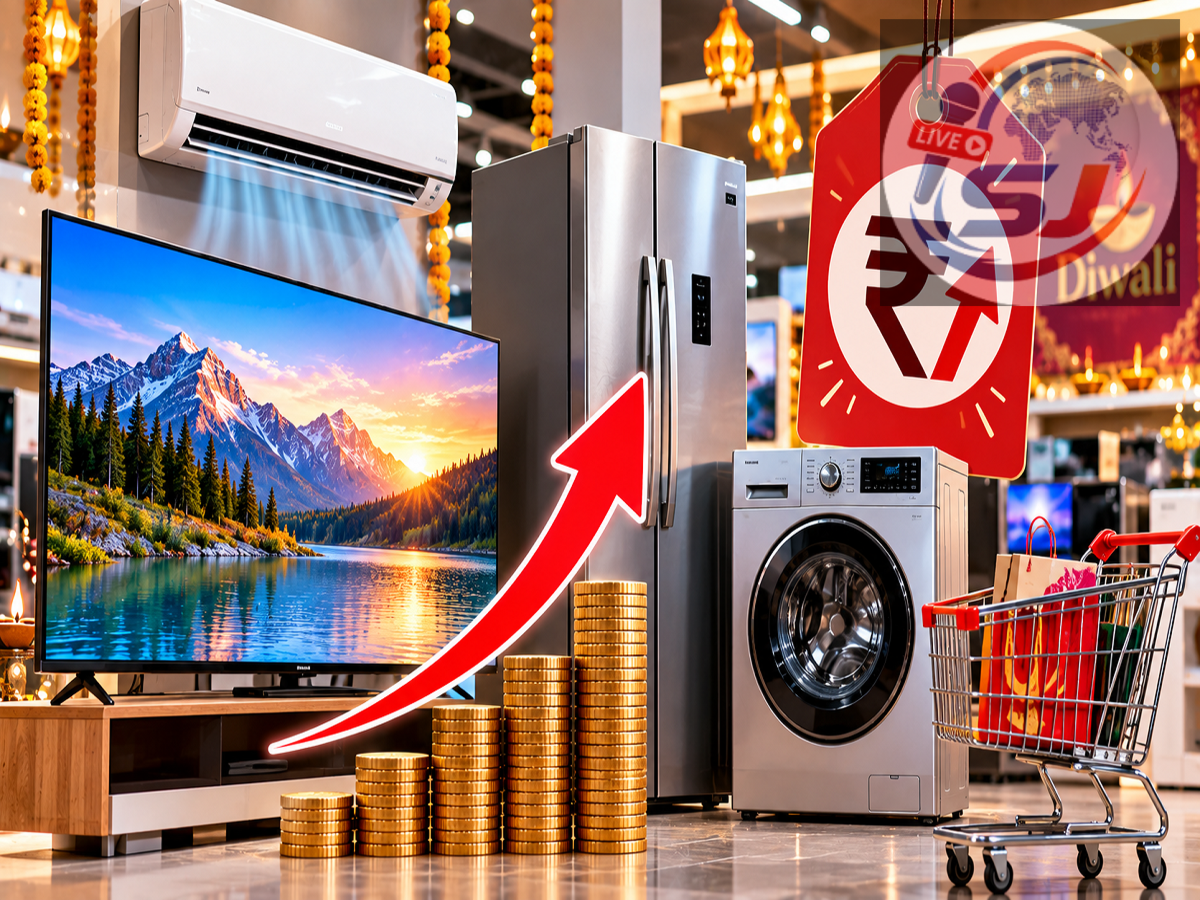
Consumers planning to buy a new television, air conditioner, refrigerator or washing machine during the Diwali and Dhanteras shopping season may need to reconsider their budgets.
Prices of several major home appliances are expected to rise as the festive season approaches, according to reports from the consumer-electronics market. The reported increases could begin from October 1, 2026, with manufacturers facing pressure from higher raw-material, component and logistics costs.
Depending on the product category, the expected increase ranges from around 3% to 8%.
However, this does not necessarily mean every appliance in every store will suddenly become costlier by the same percentage on October 1. Existing inventory, festive discounts, bank offers and individual company pricing decisions could influence the actual price paid by customers.
Here's what buyers should know before making a festive-season purchase.
AC Prices Could Rise by Up to 8%
Air conditioners could see the biggest increase among the major appliances mentioned in the report.
AC prices are expected to rise by approximately 5% to 8%, depending on the manufacturer and model.
If a particular AC currently costs ₹40,000, a 5% increase would mathematically add ₹2,000 to its price.
An 8% increase would equal ₹3,200.
That means the same ₹40,000 appliance could theoretically move to between ₹42,000 and ₹43,200 before discounts, assuming the entire increase is passed on to consumers.
Actual retail prices, however, can differ because manufacturers and sellers may offer promotional discounts during the festive season.
Smart TVs May Become 3% to 4% More Expensive
Consumers waiting for Diwali sales to purchase a new television should also keep an eye on prices.
LED and smart TV prices are reportedly expected to increase by around 3% to 4%.
For a television currently priced at ₹50,000, a 3% increase would be ₹1,500, while a 4% increase would amount to ₹2,000.
The revised theoretical price would therefore be around ₹51,500–₹52,000 before any sale discount or bank offer.
Premium televisions could see a larger increase in rupee terms even if the percentage increase remains the same.
Washing Machine Prices Could Also Increase
Washing machines are another household appliance category that may become more expensive.
According to the report, manufacturers are preparing for a price increase of approximately 3% to 4%.
For a washing machine costing ₹30,000, that would translate into an increase of approximately ₹900–₹1,200 if the full reported hike is reflected in the retail price.
Consumers considering premium front-load or high-capacity washing machines could experience a larger absolute increase because of the higher base price.
Refrigerators Could Cost More Before Diwali
Refrigerators are also expected to be affected.
The reported price increase for refrigerators is around 3% to 4%, although the actual change could vary across manufacturers, models and categories.
Entry-level single-door refrigerators may see a smaller increase in rupee terms, while premium double-door, side-by-side and smart refrigerators could see a more noticeable difference.
For example, a refrigerator priced at ₹40,000 would cost ₹1,200 more after a 3% increase and ₹1,600 more after a 4% rise, assuming the entire increase is passed on.
Expected Price Increase at a Glance
| Appliance | Reported Expected Increase |
|---|---|
| Air Conditioners | 5%–8% |
| LED/Smart TVs | 3%–4% |
| Washing Machines | 3%–4% |
| Refrigerators | 3%–4% |
These figures represent reported expected increases. Actual changes may differ depending on the brand, model, retailer and promotional offers.
Why Are Electronics Becoming More Expensive?
One of the main reasons cited for the expected price increase is the rising cost of raw materials.
Consumer appliances require substantial quantities of metals such as copper, steel and aluminium.
These materials are used in compressors, motors, cooling systems, electrical components, wiring, cabinets and several other parts.
When global commodity prices increase, manufacturers face higher production costs.
Companies can absorb some of these expenses temporarily, but persistent increases can eventually result in higher product prices.
Copper Prices Are an Important Factor
Copper is particularly important for the consumer-durables industry.
It is widely used in electrical wiring, motors, compressors and cooling equipment.
The source report points to a sharp rise in copper costs compared with the previous year, which has contributed to manufacturing pressure.
However, the precise impact of commodity-price movements differs across companies because manufacturers have different procurement contracts, inventories, hedging strategies and product designs.
A rise in copper prices therefore does not automatically translate into an identical increase across every appliance.
Rupee-Dollar Movement Can Affect Imported Components
Currency fluctuations are another important factor.
Many electronic appliances contain components that are imported or whose prices are linked to international markets.
If the rupee weakens against the US dollar, importing these components can become more expensive for Indian manufacturers.
This can increase production costs even when the quantity of components required remains unchanged.
Currency movements can therefore indirectly influence the price customers ultimately pay for televisions, air conditioners and other electronic products.
Higher Freight Costs Add More Pressure
Transportation and international freight costs can also influence appliance prices.
Electronic manufacturers operate complex supply chains in which components may travel between multiple countries before the finished product reaches consumers.
Higher shipping, logistics and transportation expenses increase the total cost of manufacturing and distribution.
When raw materials, imported components and freight costs rise simultaneously, manufacturers face greater pressure to revise product prices.
Will Everything Become Expensive Exactly on October 1?
Not necessarily.
October 1 is being reported as the date from which companies could begin implementing revised prices, but retail markets do not always change overnight.
Dealers and retailers may already have inventory purchased at older prices.
This means two units of the same appliance could theoretically be available at different effective prices depending on when the retailer acquired the stock and what promotional offers are being provided.
The source report suggests that some existing inventory could remain in the market for around one to one-and-a-half months.
If so, consumers may continue finding older-priced stock during part of the festive season.
Availability will depend on the individual product, model, retailer and city.
Festive Discounts Could Offset Part of the Increase
Diwali and Dhanteras are among India's biggest shopping periods for consumer electronics.
Retailers and e-commerce platforms typically compete aggressively through discounts, exchange offers, credit-card deals and EMI promotions.
As a result, even if the official or listed price of an appliance increases, the final effective purchase price could still be lower during a promotional sale.
For example, a product whose price rises by 4% but receives a larger festive discount may still cost less than its previous regular retail price.
Consumers should therefore compare the final payable price, not just the MRP or advertised discount percentage.
Don't Rush to Buy Only Because Prices May Increase
Reports of a possible price hike can create pressure to purchase immediately, but consumers should avoid making an expensive decision solely because of a deadline.
If you genuinely need a refrigerator, washing machine, television or AC, comparing current prices with festive offers could be useful.
But buying an unnecessary appliance simply to avoid a possible 3%–8% increase may not result in real savings.
Also consider electricity consumption, warranty coverage, installation costs and after-sales service.
For appliances used for many years, these factors can sometimes matter more than a small difference in the initial purchase price.
Check the Manufacturing Year and Model When Buying Old Stock
Older inventory can provide an opportunity to obtain a lower price, but buyers should check the product carefully.
Make sure the unit is unused and verify the exact model number, manufacturing details and warranty terms.
An older model offered at a large discount may still be a good deal, but only if its features and energy efficiency meet your requirements.
Consumers should also obtain a proper invoice because warranty coverage can depend on proof of purchase.
Diwali Buyers Should Compare the Final Deal
The festive season of 2026 could bring an unusual situation for electronics buyers: manufacturers may raise prices while retailers simultaneously offer large Diwali discounts.
According to the report, air conditioners could become 5%–8% more expensive, while TVs, refrigerators and washing machines may see increases of around 3%–4%.
Higher raw-material costs, expensive components, freight expenses and currency fluctuations are among the factors being cited for the expected increases.
Still, consumers may have some protection from older inventory and festive promotional offers.
Instead of focusing solely on whether prices officially rise from October 1, buyers should compare the final price after discounts, bank offers, exchange benefits, installation costs and warranty terms.
That will provide a much clearer picture of whether buying before or during the Diwali sales actually saves money.
Disclaimer: The price increases mentioned above are based on reported market expectations and should not be treated as a confirmed uniform increase across every manufacturer or product. Actual prices can vary by brand, model, retailer, location, inventory and promotional offers. Consumers should verify the latest price before purchasing.