
Truecaller Scam Checker: Check Suspicious Phone Numbers, Links and Messages Before You Respond
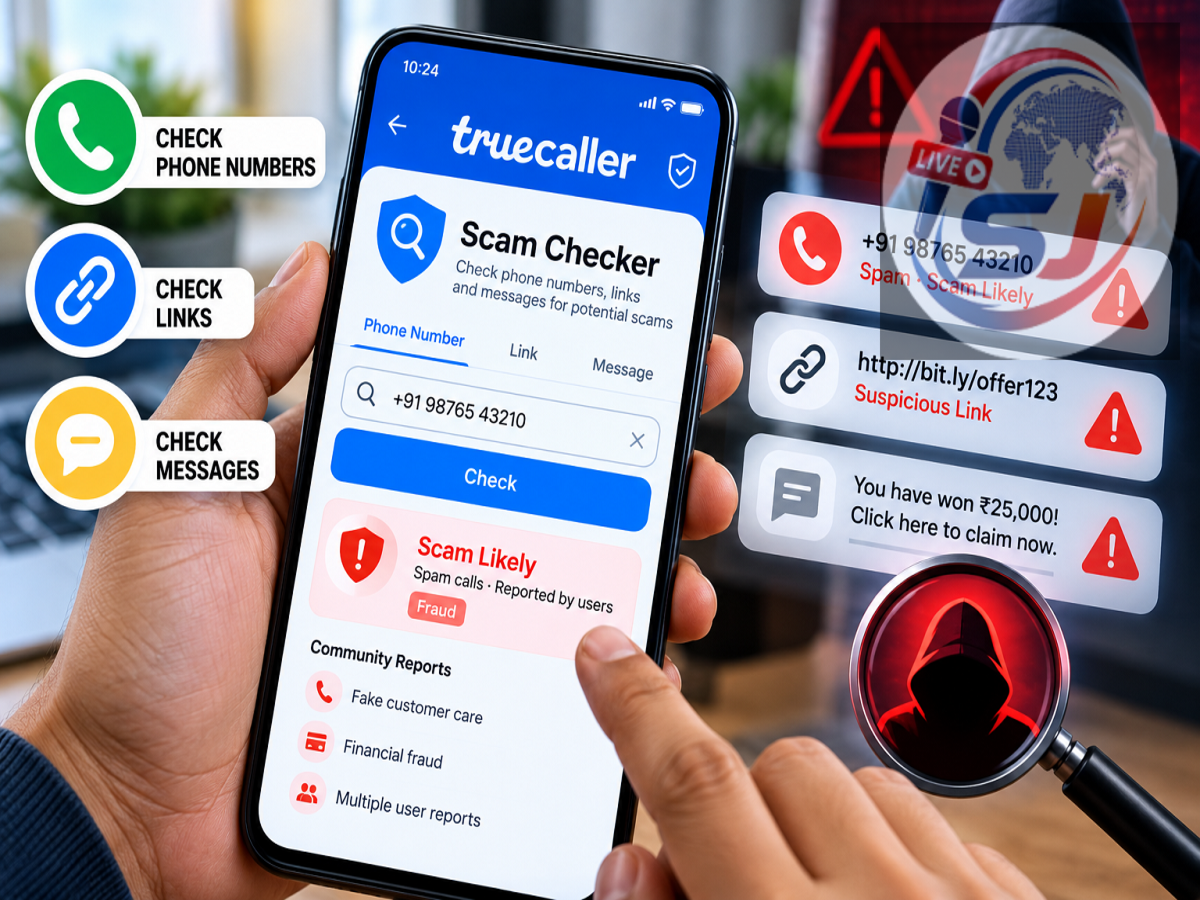
Online scams are becoming increasingly difficult to identify as fraudsters use phone calls, text messages and suspicious links to target users. Truecaller has now introduced a new feature called Scam Checker, designed to help users assess potentially suspicious content before they interact with it.
According to the supplied information, the new tool can be used to check phone numbers, links and messages that appear suspicious. Scam Checker uses available scam-related data and reports submitted by users to provide information about potential risks.
The feature could be particularly useful when someone receives an unexpected call, a message asking for money, or a link that they are unsure about.
However, users should remember that an automated scam check cannot guarantee that something is completely safe or fraudulent. New scams may not yet have been reported, while risk assessments can depend on the information available to the service.
What Is Truecaller Scam Checker?
Scam Checker is a security-focused feature introduced by Truecaller to help people evaluate suspicious digital communication.
Instead of immediately responding to an unknown caller or opening an unfamiliar link, users can check the information through Scam Checker.
According to the supplied report, the tool supports three major types of checks:
-
Suspicious phone numbers
-
Potentially risky links
-
Questionable messages
The system can then provide information about possible scam risks using available data and community reports.
How Can Scam Checker Help With Unknown Phone Numbers?
Unknown calls are a common route used in attempted fraud.
Scammers may pretend to represent a bank, delivery company, government department, customer-care service or another organisation to persuade a victim to reveal sensitive information or transfer money.
With Scam Checker, users can examine a suspicious phone number before deciding how to respond.
If the number has previously been associated with scam activity in available data or has attracted relevant user reports, the tool may provide a warning or other risk information.
A lack of a warning, however, should not be treated as proof that an unknown caller is trustworthy.
Suspicious Links Can Also Be Checked
Fraudulent links are another common element in online scams.
A message may claim that a bank account needs verification, a parcel is waiting for delivery, a payment has failed or a prize has been won. The user may then be encouraged to tap a link.
Scam Checker is designed to allow users to examine suspicious links as part of its risk-checking functionality, according to the supplied information.
This gives users an additional opportunity to assess a link before interacting with it.
Even with such tools, people should avoid entering passwords, card details, banking credentials, UPI PINs or other sensitive information on unfamiliar websites.
You Can Check Suspicious Messages Too
The new feature is not limited to phone numbers and web links.
According to the supplied report, messages can also be checked.
This can be helpful because scam messages are often written to create urgency. A message may pressure the recipient to act immediately by claiming that an account will be blocked, a payment is pending or urgent verification is required.
Checking a suspicious message before responding can provide another layer of caution.
Users should still independently verify unexpected financial or account-related requests through the organisation's official communication channels.
How Does Truecaller Scam Checker Identify Potential Risk?
The supplied information says Scam Checker relies on available scam-related data and user reports to provide information about potential threats.
Community reporting can help identify phone numbers or other content that has previously been associated with suspicious behaviour.
The usefulness of such a system, however, depends partly on the information available at the time of the check.
A newly created scam number or recently launched phishing link may not yet have accumulated enough reports to trigger an obvious warning.
For this reason, Scam Checker should be viewed as an additional safety tool rather than a replacement for personal caution.
What Should You Do When Something Is Flagged as Suspicious?
If a phone number, message or link appears suspicious, avoid rushing into any action requested by the sender.
Do not share sensitive information such as:
-
OTPs
-
UPI PINs
-
Debit or credit card PINs
-
Internet-banking passwords
-
Account login credentials
If a caller claims to represent a bank or another organisation, users can independently contact that organisation through its verified official channel instead of relying on contact information supplied in the suspicious message.
No Warning Doesn't Automatically Mean Safe
This is one of the most important points when using any scam-detection service.
Scam databases and community reports can provide useful indicators, but they cannot necessarily identify every new fraud attempt immediately.
Scammers can use new numbers, newly registered websites and constantly changing messages.
Therefore, users should remain cautious even when a number, link or message does not produce a strong warning.
Unexpected requests involving money, passwords, OTPs or urgent account verification deserve additional scrutiny.
Scam Checker Could Add Another Layer of Protection
Truecaller's new Scam Checker arrives at a time when users regularly receive calls, messages and links from unfamiliar sources.
By bringing checks for phone numbers, links and messages into one scam-focused tool, the feature could make it easier for users to investigate suspicious communication before responding.
Its usefulness may be particularly relevant for people who frequently receive unknown calls or messages containing links.
But technology alone cannot eliminate fraud risk.
Users should combine scam-checking tools with basic digital-security practices, including avoiding unknown links, protecting authentication credentials and independently verifying unusual financial requests.
Truecaller Scam Checker: Key Takeaway
Truecaller has launched Scam Checker, a feature intended to help users investigate suspicious phone numbers, links and messages.
According to the supplied information, the tool uses available scam-related data and reports from users to provide information about possible threats.
The feature can offer another layer of protection before someone responds to an unknown caller, opens an unfamiliar link or acts on a suspicious message.
However, a Scam Checker result should be treated as a risk indicator rather than an absolute guarantee. New scams may not yet appear in existing datasets or user reports.
The safest approach is to combine such tools with careful verification and never share an OTP, UPI PIN, password or other sensitive financial information simply because a caller or message asks for it.
Note: The supplied source excerpt confirms the launch of Scam Checker and states that it can examine suspicious phone numbers, links and messages using available scam data and user reports. It does not provide the detailed step-by-step interface, supported platforms, rollout availability or exact menu path. Those details have therefore not been invented.