
Social Media Fake Profile Scam 2026: Fraudsters Can Misuse Your Name and Photos, Rajasthan Government Issues Warning
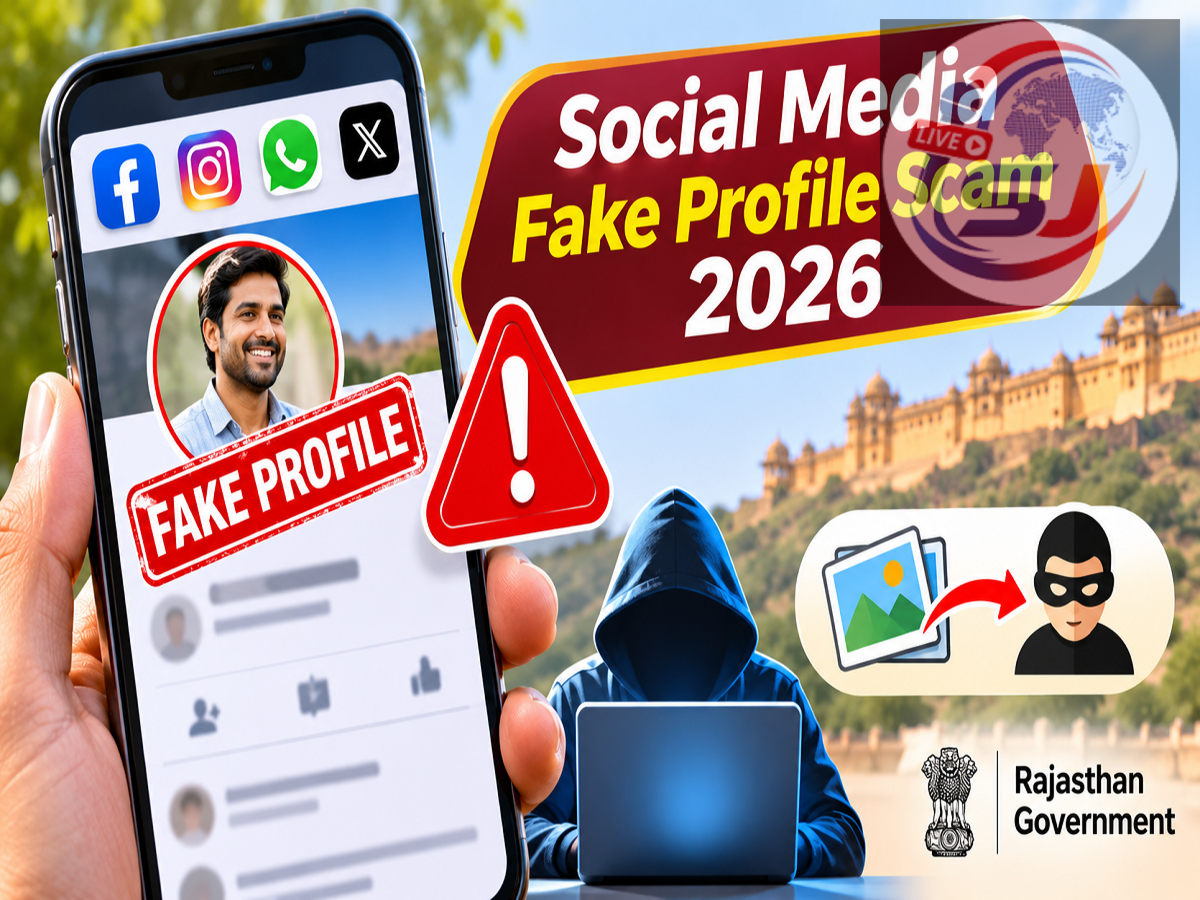
Social Media Cyber Fraud Alert 2026: Social media platforms such as Facebook, Instagram and WhatsApp have become important tools for communication, networking and sharing information. However, cybercriminals are increasingly exploiting these platforms by creating fake profiles using the names, photographs and personal details of genuine users. Such accounts can be used to impersonate friends, relatives, colleagues or other trusted individuals and deceive people into sharing money or sensitive information.
The Rajasthan government's Department of Information Technology and Communication (DoIT&C) has shared an important cyber safety message, warning users about fake social media profiles and online impersonation scams.
The advisory encourages people to verify unusual requests through trusted communication channels and report suspicious accounts to prevent potential financial losses and identity misuse.
Rajasthan Government Warns Against Fake Social Media Accounts
Online impersonation is a common technique used by cybercriminals to gain the trust of unsuspecting users.
Fraudsters may copy photographs, names and other publicly available details from genuine social media accounts to create convincing fake profiles.
These accounts may closely resemble the original profiles, making it difficult for friends and family members to identify the difference immediately.
Once a fake account is created, scammers may send friend requests or direct messages to people connected with the genuine user.
They may then attempt to obtain money, personal information or account credentials by pretending to be someone the recipient already knows.
The Rajasthan government's awareness message highlights the importance of independently verifying suspicious requests before responding.
How Do Scammers Create Fake Facebook and Instagram Profiles?
Creating an impersonation account does not necessarily require access to the original user's social media password.
Fraudsters can sometimes collect publicly visible information, including profile pictures, names and photographs, and use these details to create a separate account.
They may also copy profile descriptions or other information to make the account appear authentic.
After creating the fake profile, scammers can approach people who are likely to recognise the impersonated individual.
For example, a fraudster may create an account using someone's photograph and send messages to that person's friends, claiming to need urgent financial assistance.
Because the message appears to come from a familiar person, the recipient may be more likely to trust the request.
This misuse of another person's identity is commonly known as social media impersonation.
Fake Profile Scam: How Fraudsters Ask for Money
One common form of social media impersonation fraud involves emergency payment requests.
A scammer may send a message claiming that the account holder has been involved in an accident, is facing a medical emergency or urgently needs financial help.
The message may ask the recipient to transfer money immediately through UPI or another payment method.
Fraudsters may also claim that their usual phone number is unavailable and insist that the conversation remain within the social media application.
Such explanations can be used to discourage independent verification.
The safest response is to contact the genuine person through a phone number or communication channel that was already known and trusted before the suspicious message arrived.
Users should not rely solely on the profile photograph or displayed account name to establish someone's identity.
Warning Signs That a Social Media Profile May Be Fake
A fraudulent account can sometimes be identified through unusual activity or inconsistencies in its profile information.
Users should remain cautious when they notice the following signs:
-
A friend or relative sends another friend request despite already being connected.
-
A familiar person unexpectedly asks for money through a new account.
-
The profile contains very few posts, photographs or genuine interactions.
-
The account uses a slightly different username from the person's original profile.
-
Messages contain unusual language, urgent demands or pressure to act immediately.
-
The account asks for OTPs, passwords, banking details or other confidential information.
-
The sender refuses to confirm their identity through a phone call or another trusted channel.
These warning signs do not automatically prove that an account is fraudulent, but they provide reasons to verify its authenticity before interacting further.
What Should You Do If Someone Requests Money From a Familiar Profile?
If a social media contact unexpectedly asks for financial assistance, users should avoid transferring money immediately.
Even if the profile contains the correct name and photograph, the account may have been created by an impersonator.
Contact the person using a previously saved phone number or another established communication method.
Ask whether they actually sent the message.
If the individual confirms that they did not make the request, avoid responding further to the suspicious account.
It is also advisable to warn mutual friends or family members who may receive similar messages.
Independent verification can prevent fraudsters from exploiting personal relationships.
How to Report a Fake Facebook or Instagram Account
Most major social media platforms provide reporting features for impersonation and suspicious activity.
On Facebook, users can generally open the suspicious profile, select the reporting option from the profile menu and indicate that the account is pretending to be someone else.
On Instagram, users can open the relevant profile, access the menu and choose the option to report impersonation.
The exact menu labels may differ depending on the application version.
People whose photographs or names have been misused should consider reporting the account directly and asking affected contacts to do the same.
Reporting does not guarantee immediate removal, but it allows the platform to review the suspected violation.
What If Someone Creates a Fake Account Using Your Photos?
Discovering a fake profile using your identity can be concerning, particularly if the account is contacting friends or requesting money.
The first step is to preserve relevant evidence.
Screenshots of the fake profile, its username, messages and any fraudulent payment requests may be useful when submitting a complaint.
Next, report the impersonating account through the social media platform.
Users should also inform their friends and relatives that the suspicious profile is not genuine.
If financial fraud, threats or other criminal activity is involved, the matter can be reported to the appropriate cybercrime authorities.
Changing privacy settings can help limit the information visible to strangers, although it may not prevent the misuse of photographs that are already publicly accessible.
How to Protect Your Social Media Account From Impersonation
While it may not be possible to prevent every attempt to copy publicly available information, several precautions can reduce the risks associated with online identity misuse.
Users should review who can see their photographs, friend lists and personal details.
Limiting unnecessary public exposure can make it more difficult for fraudsters to gather information.
Enabling two-factor authentication can also help protect genuine accounts from unauthorised access.
Strong, unique passwords should be used for social media accounts, and login credentials should never be shared with unknown individuals.
Users should avoid clicking suspicious links received through direct messages, even when the sender appears familiar.
It is also important to review account login activity periodically and remove unfamiliar sessions.
Fake Profile vs Hacked Account: What Is the Difference?
A fake profile and a hacked social media account are not the same thing.
| Fake Profile |
Hacked Account |
|---|---|
| A separate account is created using someone else's identity |
An attacker gains unauthorised access to an existing account |
| The genuine account may remain secure |
The genuine account itself may be compromised |
| Scammers may copy publicly available photos and details |
Scammers may access existing messages or account information |
| Users should report impersonation |
Users should secure and recover the compromised account |
| Friends may receive requests from a new profile |
Friends may receive suspicious messages from the original account |
Understanding this distinction helps users take the appropriate action.
If someone has created a duplicate account, reporting impersonation is important.
If the original account has been compromised, the owner should immediately use the platform's official recovery process, change passwords where possible and review account security.
Where Can Victims Report Social Media Cyber Fraud in India?
People affected by social media impersonation involving financial fraud or other cybercrime can report the incident through India's official cybercrime reporting system.
The National Cyber Crime Reporting Portal is available at cybercrime.gov.in.
Victims of financial cyber fraud can also contact the national helpline 1930.
When filing a complaint, users should provide available information such as the suspicious account link, screenshots, messages and transaction details.
Prompt reporting may help authorities and financial institutions take timely action.
However, the recovery of money or removal of a fraudulent profile cannot be guaranteed.
Why Social Media Awareness Is Important in 2026
Social media impersonation scams exploit the trust that people place in familiar names and photographs.
As digital communication becomes increasingly common, users may receive messages from numerous accounts without carefully checking their authenticity.
Fraudsters take advantage of this behaviour by creating convincing profiles and presenting urgent requests.
Awareness is particularly important for individuals who frequently use social media for personal communication, professional networking or business transactions.
Families can also help protect elderly relatives and first-time internet users by explaining how impersonation scams operate.
Recognising suspicious behaviour and verifying unexpected requests can significantly reduce the chances of becoming a victim.
Final Takeaway: Verify Before You Trust a Social Media Profile
The Rajasthan government's latest cyber safety message reminds users that a familiar name or photograph does not necessarily mean a social media account is genuine.
Cybercriminals can create duplicate profiles and impersonate trusted individuals to obtain money or sensitive information.
Before responding to an unusual request, users should independently confirm the sender's identity through a reliable communication channel.
Suspicious accounts should be reported to the relevant platform, and financial fraud should be reported promptly to the appropriate authorities.
The most important safety rule is simple: Never trust a social media profile solely because it displays the name and photograph of someone you know.
Source Credit: Rajasthan Government Department of Information Technology and Communication (DoIT&C) — Public cyber safety awareness message shared under #DOITC, #CyberSafety, #SocialMediaSafety, #CyberAwareness and #Rajasthan. Additional information on impersonation scams, account reporting and cybercrime complaint procedures has been included for public awareness.