
SBI Fraud Alert 2026: Received Unexpected Money in Your Bank Account? Beware of This New UPI Scam
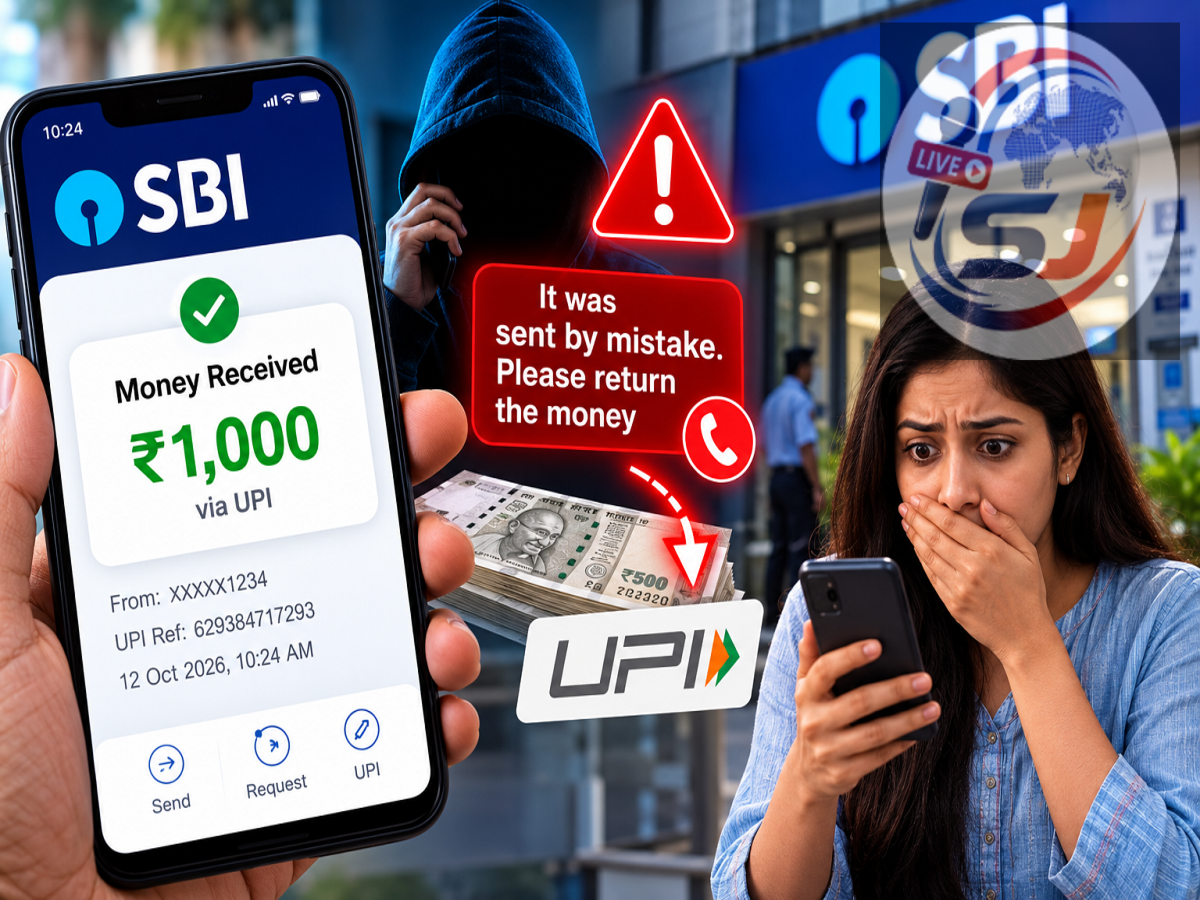
SBI Jumped Deposit Scam Alert 2026: Receiving unexpected money in your bank account might initially seem like good news. However, the State Bank of India (SBI) has warned customers that an unfamiliar deposit followed by a suspicious phone call could be part of an online banking fraud.
According to a report published on October 12, 2026, SBI has cautioned customers about a fraudulent technique commonly described as the Jumped Deposit Scam. In this scheme, cybercriminals may initially transfer a small amount into a person's bank account and then contact the recipient, claiming that the money was sent accidentally.
The fraudsters may request an immediate refund and create a sense of urgency. Their actual objective, however, may be to trick the recipient into approving a UPI payment request for a much larger amount.
The bank has reportedly highlighted this threat as part of its National Cyber Security Month Special Campaign 6.0.
Customers are advised to verify unfamiliar transactions through official banking channels and avoid transferring money based solely on instructions from unknown callers.
What Is the Jumped Deposit Scam?
The Jumped Deposit Scam is a type of financial fraud in which criminals use an unexpected bank transfer to gain the victim's trust.
The process may begin when a small amount of money suddenly appears in someone's bank account.
Shortly afterward, the account holder receives a call or message from an unfamiliar person.
The caller claims that the money was transferred by mistake and asks for it to be returned immediately.
To make the situation appear genuine, the fraudster may mention an emergency or claim that the money is urgently needed.
The victim may believe that returning the amount is simply the right thing to do.
However, the scam can take a dangerous turn when the caller sends a UPI collect request or asks the recipient to approve a payment without carefully checking the amount.
If the victim authorises a larger payment, money may be debited from their account.
The critical point is that receiving an unexpected deposit does not itself authorise anyone to withdraw funds. The fraud generally depends on the victim being deceived into approving a transaction or sharing sensitive information.
How Does the SBI Jumped Deposit Scam Work?
Cybercriminals may use a series of steps to carry out this type of fraud.
Step 1: A small amount is transferred
The scammer sends a relatively small sum to the victim's bank account or UPI-linked account.
This transaction may appear genuine in the banking application or transaction history.
Step 2: The fraudster contacts the account holder
The victim receives a phone call or message claiming that the money was sent to the wrong account.
The caller may apologise and request an immediate refund.
Step 3: Pressure is created
The scammer may claim to be facing an emergency or repeatedly ask the victim to act quickly.
This pressure is intended to prevent the account holder from carefully examining the transaction.
Step 4: A UPI payment request is sent
Instead of following an official bank reversal process, the fraudster may send a payment request through a UPI application.
The requested amount could be significantly higher than the original deposit.
Step 5: The victim authorises the payment
If the account holder approves the request and completes the required payment authentication, money may be transferred from their account.
This is why checking the payment amount and recipient details is essential before approving any UPI transaction.
Example: How a Small Deposit Could Lead to a Bigger Loss
Consider a hypothetical situation in which ₹500 unexpectedly arrives in your bank account.
A few minutes later, someone calls and says they accidentally transferred the money.
The caller asks you to return it immediately and sends a payment request.
However, the request is actually for ₹5,000 rather than ₹500.
If you fail to check the amount and authorise the payment, you could lose ₹5,000.
The scammer may then stop responding to your calls or messages.
This example illustrates how a seemingly harmless transaction can be used to manipulate an account holder.
The exact amounts and methods can vary, and not every unexpected deposit is fraudulent.
SBI's Warning During Cyber Security Month
According to the supplied report, SBI has issued the warning as part of its National Cyber Security Month Special Campaign 6.0.
The initiative aims to increase awareness of online banking fraud and encourage customers to follow safer digital payment practices.
The bank has advised customers not to return unfamiliar deposits simply because an unknown person requests a refund.
Instead, account holders should contact their bank and verify the transaction through authorised channels.
Customers should also avoid approving unfamiliar UPI payment requests.
The warning is especially relevant as digital payments become increasingly common across India.
UPI has made transferring money convenient, but fraudsters may exploit users' unfamiliarity with payment authorisation procedures.
Unexpected Money in Your Bank Account? Follow These Safety Steps
If money arrives in your bank account from an unknown source, take the following precautions.
1. Verify the Transaction With Your Bank
Check the deposit through your bank's official mobile application, internet banking service, or account statement.
If you cannot identify the sender, contact your bank using its official customer care number or visit a branch.
Explain that you have received an unfamiliar credit and ask how the transaction should be handled.
Do not rely on a phone number provided by the person claiming to have transferred the money.
2. Do Not Immediately Return the Money
Avoid sending the amount to another bank account or UPI ID merely because an unknown caller asks you to do so.
Even if the person claims to have made a genuine mistake, the safest approach is to seek guidance from the bank.
A bank-assisted resolution can help reduce the risk of sending money to the wrong person or becoming involved in a fraudulent transaction.
3. Never Approve an Unknown UPI Request
If you receive a UPI collect request from an unfamiliar person, do not approve it without independently verifying its purpose.
Check the recipient's identity, payment amount, and transaction details.
Remember that entering your UPI PIN generally authorises a debit from your account.
You do not need to enter your UPI PIN simply to receive money.
4. Do Not Share Your Banking Credentials
Never disclose your UPI PIN, OTP, internet banking password, debit card PIN, or other confidential credentials.
Fraudsters may pretend to be bank employees or payment service representatives.
Legitimate banking assistance does not require you to reveal your secret authentication details to an unknown caller.
5. Report Suspicious Calls and Messages
If someone pressures you to refund an unfamiliar deposit or sends a suspicious payment request, report the incident to your bank.
You can also block the number after preserving any relevant evidence.
Keep screenshots of messages, transaction references, and other information that may help with an investigation.
Can Someone Withdraw Money Just by Sending You ₹1 or ₹100?
No. Merely depositing ₹1, ₹100, or another small amount into your account does not automatically give the sender permission to withdraw money.
A normal UPI debit generally requires the account holder to authorise the transaction through the applicable authentication process.
The risk in the Jumped Deposit Scam arises when the victim is tricked into approving a payment, disclosing credentials, or completing another unsafe action.
Therefore, customers should not panic simply because an unfamiliar deposit appears.
Instead, they should remain cautious and verify the transaction before taking any action.
What Should You Do If You Have Already Lost Money?
If you have accidentally approved a fraudulent payment, act immediately.
Contact your bank through its official fraud-reporting channel and provide the transaction details.
Ask the bank to register a complaint and explain the available dispute or recovery process.
In India, victims of financial cybercrime can report incidents through the national cybercrime helpline 1930.
Complaints can also be submitted through the National Cyber Crime Reporting Portal at cybercrime.gov.in.
Prompt reporting may improve the chances of funds being traced or frozen, although recovery is not guaranteed.
You should also change compromised passwords and review the security of your banking and UPI accounts if you suspect that your credentials have been exposed.
How to Identify a Suspicious UPI Refund Request
A genuine mistaken transfer and a fraudulent request may initially look similar.
However, certain warning signs should make you particularly cautious.
These include repeated calls demanding an immediate refund, requests to transfer money to an unrelated account, threats of legal action, or instructions to enter your UPI PIN to receive a payment.
Another warning sign is a collect request for an amount different from the deposit you received.
Be careful if the caller asks you to install a screen-sharing application or follow a link to an unfamiliar website.
These actions may expose your banking information or device to additional security risks.
SBI Jumped Deposit Scam Alert 2026: Final Takeaway
SBI's reported warning highlights how cybercriminals can misuse the convenience of digital payments to deceive unsuspecting customers.
A small, unexpected bank deposit may be used to create trust before a fraudster requests a larger payment.
The safest response is to verify the transaction with your bank and avoid sending money based on instructions from unknown callers.
Remember: Receiving money does not require your UPI PIN, and you should never authorise an unfamiliar payment request without checking its details.
If you suspect fraud, contact your bank immediately and report any financial loss through the official cybercrime reporting channels.
Disclaimer: This article is based on the supplied October 12, 2026 report concerning SBI's fraud awareness warning. Scam methods may vary, and an unexpected bank credit does not necessarily indicate fraud. Customers should follow their bank's official procedures for disputed or mistaken transactions.
Tighten repetitive scam explanationsMake the SBI warning more prominent