
SBI Data Leak Alert 2026: Can Hackers Take Fake Loans in Your Name? Check Credit Report and Safety Tips
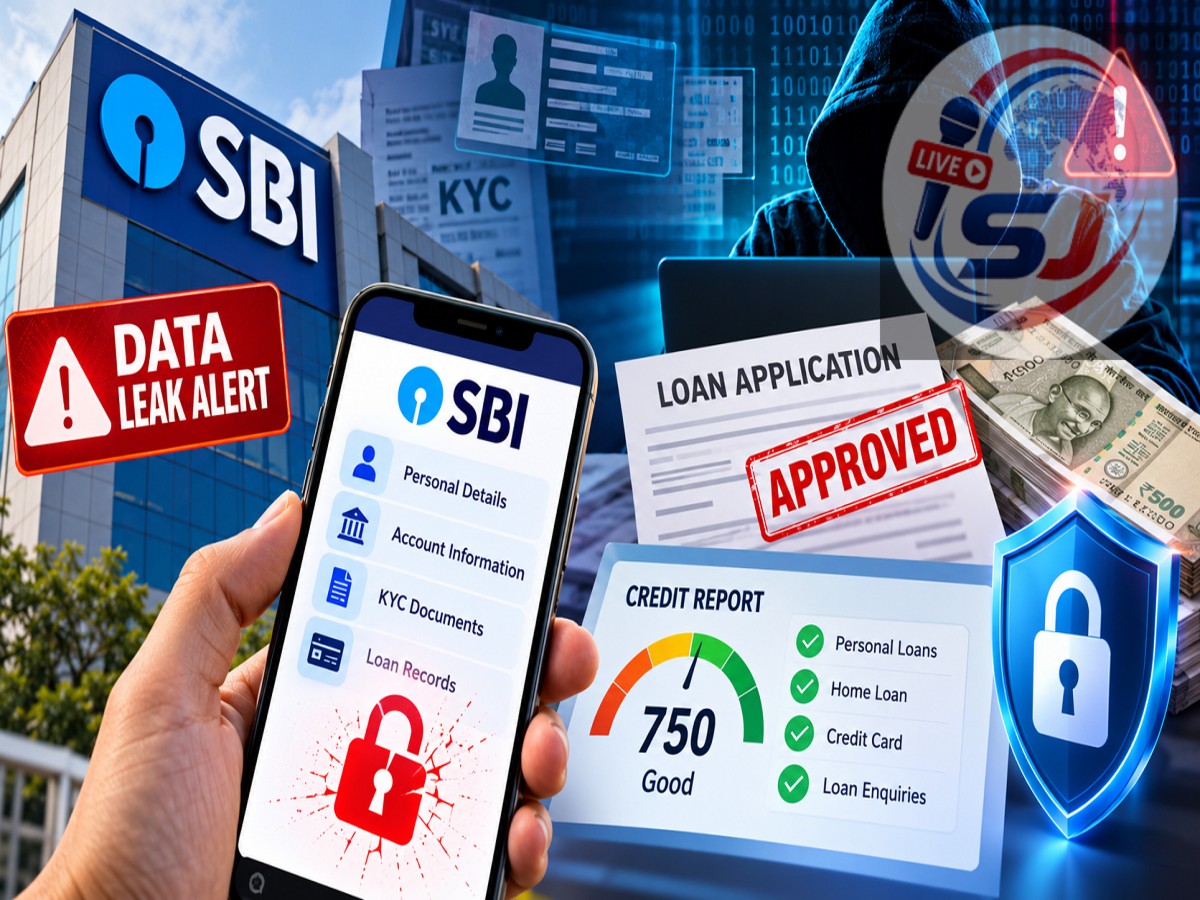
SBI Data Leak 2026: State Bank of India (SBI) customers have been advised to remain alert following reports of a suspected data exposure involving sensitive customer information. The incident has raised concerns about identity theft, fraudulent loan applications, phishing calls and other forms of financial cybercrime.
According to a report dated October 21, 2026, an initial examination of approximately 3.75 lakh records identified 3,897 records containing personally identifiable information (PII). However, the full extent of the suspected exposure and its potential impact on customers remain under investigation.
One of the biggest concerns is whether criminals could use stolen personal information to apply for loans or credit cards in someone else's name.
While a data leak does not automatically allow fraudsters to obtain a loan, access to personal details can make identity-based fraud attempts more convincing.
Customers should therefore monitor their credit reports, check bank transactions regularly and remain cautious about unexpected calls requesting KYC updates or confidential banking information.
Here is a detailed explanation of the reported SBI data incident, how fraudulent loans can occur and what customers can do to protect themselves.
SBI Data Leak 2026: What Happened?
The reported cybersecurity incident involves claims that customer-related information associated with SBI appeared on the dark web.
According to the October 21 report, approximately 3.75 lakh records were examined during an initial assessment.
Of these, 3,897 records were reportedly identified as containing personally identifiable information.
PII refers to information that can identify or help identify an individual.
Depending on the type of records involved, such information may include names, contact details, addresses, dates of birth or other personal identifiers.
However, the presence of customer information in a suspected data exposure does not, by itself, establish that every record belongs to a different customer or that every affected individual has suffered financial fraud.
The precise nature, origin and scope of the reported exposure require further investigation.
SBI Data Leak: Important Details
| Particulars |
Reported Information |
|---|---|
| Bank |
State Bank of India |
| Incident |
Suspected customer data exposure |
| Date of reported alert |
October 16, 2026 |
| Records mentioned |
Approximately 3.75 lakh |
| Records reportedly containing PII |
3,897 |
| Main concerns |
Identity theft, phishing and fraudulent loan applications |
| Investigation |
Reportedly ongoing |
| Independent cybersecurity review |
Reportedly initiated |
| Report date |
October 21, 2026 |
| Cybercrime helpline |
1930 |
The reported figures should not be interpreted as confirmation that 3.75 lakh individual SBI customers have suffered identity theft or financial losses.
When Did SBI Learn About the Suspected Data Exposure?
According to the report, SBI became aware of the suspected incident on October 16, 2026.
The bank reportedly received alerts from its threat intelligence service provider, the Defence Cyber Agency and the Indian Computer Emergency Response Team (CERT-In).
Following the alert, SBI reportedly activated its cybersecurity response procedures.
The report also states that an independent cybersecurity agency was appointed to examine the incident.
According to the bank's reported position, the matter has not materially affected its routine operations, financial performance or business continuity.
However, an operationally functioning banking system does not necessarily mean that individual customers face no risk from possible misuse of personal information.
The investigation's findings will be important in determining the actual extent of any exposure.
Can Hackers Take a Loan in Your Name?
A suspected data leak does not mean that criminals can automatically obtain loans using another person's identity.
Banks and regulated lending institutions generally have identity verification, KYC and other checks before approving credit.
However, criminals may attempt to exploit exposed information to impersonate customers.
For example, a fraudster who knows a person's name, mobile number, date of birth, address and previous loan details may try to use those details in a fraudulent application.
Whether such an attempt succeeds depends on the information available to the criminal and the effectiveness of the lender's verification systems.
In some cases, criminals may also try to obtain additional information directly from the victim through phishing or social engineering.
Therefore, the risk is not limited to the exposed records themselves.
The information can potentially be used as a starting point for further fraud attempts.
How Criminals Can Misuse Personal Information
Cybercriminals may use exposed customer information in several ways.
1. Fraudulent Loan Applications
A criminal may attempt to apply for a loan or credit product using another person's identity.
Such attempts can involve stolen personal information, forged documents or other forms of impersonation.
Successful fraud is not guaranteed, but unauthorised applications can create problems for affected individuals.
2. Fake Bank Verification Calls
Fraudsters may contact customers while pretending to be SBI officials.
They might mention genuine personal details to appear credible.
For example, a caller who knows the customer's name and previous loan information may claim that an urgent verification is required.
The caller may then request an OTP, banking password or other confidential information.
3. KYC Update Scams
Another common tactic involves messages claiming that the customer's bank account will be blocked unless KYC details are updated immediately.
These messages may contain links to fraudulent websites designed to collect sensitive information.
Customers should avoid opening unfamiliar links and instead verify any request through the bank's official channels.
4. Identity Theft
Exposed information may also be used to impersonate a person in other financial or digital transactions.
The risk depends on the type and completeness of the information available to the criminal.
How to Check Whether Someone Has Taken a Loan in Your Name
One of the most useful precautions is to review your credit report.
A credit report contains information about credit accounts and repayment history reported by participating lenders.
It may show loans, credit cards and credit enquiries associated with your identity.
If a loan appears that you never applied for, it may indicate an error or possible identity misuse.
Similarly, an unfamiliar credit enquiry may require investigation.
However, not every unknown enquiry necessarily indicates fraud. It may also result from an application you forgot about, a lender-related process or a reporting error.
The important step is to investigate anything you cannot recognise.
Check These Details in Your Credit Report
| Credit Report Item |
What to Look For |
|---|---|
| Active loans |
Loans you never applied for |
| Credit cards |
Unfamiliar card accounts |
| Credit enquiries |
Lenders you did not approach |
| Outstanding balances |
Amounts you do not recognise |
| Repayment history |
Missed payments on unknown accounts |
| Personal details |
Incorrect addresses or contact information |
Consumers can obtain their credit reports through recognised credit information companies, including TransUnion CIBIL, Experian, Equifax and CRIF High Mark.
Eligible individuals are entitled to a free full credit report once a calendar year from each credit information company under the applicable RBI framework.
Checking reports from more than one bureau can be useful because lenders may not report identical information to every bureau.
What Should You Do If You Find an Unknown Loan?
If an unfamiliar loan or credit card appears in your credit report, act promptly.
First, save a copy of the relevant credit report.
Identify the lender associated with the account and contact the institution through its official customer support or grievance channel.
Explain that you do not recognise the loan or credit application and request an investigation.
You should also raise a dispute with the credit information company displaying the incorrect information.
Maintain copies of your complaints, reference numbers and supporting documents.
If you suspect deliberate identity theft, report the matter to the appropriate cybercrime authorities.
Do not assume that ignoring an unfamiliar loan will make it disappear.
Incorrect credit information can affect future borrowing opportunities and may require formal correction.
SBI Customers Should Monitor Bank Transactions
Customers should regularly review their bank account statements and transaction alerts.
Look for withdrawals, transfers or payments that you did not authorise.
Even small unfamiliar transactions deserve attention.
Some fraudulent activity may begin with a small transaction before larger amounts are attempted.
Customers should also ensure that their registered mobile number and email address are correct so they can receive relevant account notifications.
If any unauthorised activity appears, report it immediately through SBI's official channels.
Prompt reporting is important because liability for unauthorised electronic banking transactions can depend on the circumstances and timing of notification under applicable RBI rules.
Never Share OTP, PIN or Banking Passwords
SBI customers should follow basic banking security precautions regardless of whether their information has been exposed.
Never disclose an OTP, ATM PIN, UPI PIN, internet banking password or other confidential authentication details to an unknown person.
A caller claiming to be a bank employee should not be trusted simply because they know your name or account-related information.
Fraudsters can use personal details to make fraudulent calls appear legitimate.
Customers should independently contact the bank using the official website, banking application or verified customer support details.
Do not use a phone number supplied in a suspicious message.
Beware of Remote Access App Scams
Some criminals ask victims to install remote access or screen-sharing applications.
They may claim that the software is needed to resolve a banking problem, update KYC or reverse a transaction.
Such applications can allow another person to view or control parts of the device, depending on the permissions granted.
This can expose sensitive banking information.
Customers should never install remote access software at the direction of an unexpected caller claiming to represent the bank.
If suspicious software has already been installed, disconnect the device from the internet, remove the application safely and secure banking credentials using a trusted device.
What to Do If Money Is Stolen From Your Account
If you discover an unauthorised banking transaction, contact SBI immediately through an official reporting channel.
Ask the bank to register a fraud complaint and take appropriate steps to secure the account.
You can also report suspected cyber-enabled financial fraud through the national cybercrime helpline.
National Cybercrime Helpline: 1930
Official complaint portal: National Cyber Crime Reporting Portal
SBI official website: State Bank of India
Provide the relevant transaction details and preserve any messages or evidence connected with the incident.
Reporting quickly may improve the chances of authorities taking timely action, although recovery of funds is not guaranteed.
Should SBI Customers Change Their Passwords?
Changing passwords can be a sensible precaution if customers suspect that their login credentials have been compromised.
Use strong, unique passwords for internet banking and related accounts.
Avoid reusing the same password across multiple websites.
If you receive a suspicious message claiming that SBI requires an immediate password reset, do not click the included link.
Instead, open the official SBI website or banking application directly.
Customers should also ensure that their devices and applications are updated with current security patches.
Does the Suspected Data Leak Mean SBI Accounts Are Unsafe?
The reported exposure should not be confused with confirmation that criminals have gained access to all affected customers' bank accounts.
Personal information, account access credentials and successful unauthorised transactions are different categories of risk.
The October 21 report does not establish that all the records mentioned were used for fraud.
It also does not establish that the bank's core banking services have been disrupted.
However, potentially exposed personal information can still increase the risk of targeted scams.
Customers should remain alert without assuming that their accounts have already been compromised.
SBI Data Leak 2026: Final Update
The suspected SBI customer data exposure has raised concerns about identity theft, fraudulent loans and financial scams.
According to the October 21 report, an initial examination of approximately 3.75 lakh records identified 3,897 records containing personally identifiable information.
The incident is reportedly under investigation, and the complete extent of the exposure has not yet been established.
The most important precaution for customers is to check their credit reports for unfamiliar loans or credit enquiries, monitor bank transactions and avoid sharing OTPs, passwords or PINs with anyone.
If suspicious financial activity is detected, customers should contact SBI immediately and report cyber-enabled fraud through the 1930 helpline or the official cybercrime portal.
Disclaimer: This article is based on reported information about an ongoing suspected cybersecurity incident. The number of records mentioned does not establish the number of affected customers or confirmed fraudulent transactions. Customers should refer to official SBI communications for verified updates.