
SBI Cyber Fraud Alert 2026: Meet Captain Y, the Cyber Rakshak Helping Customers Stay Safe From Online Scams
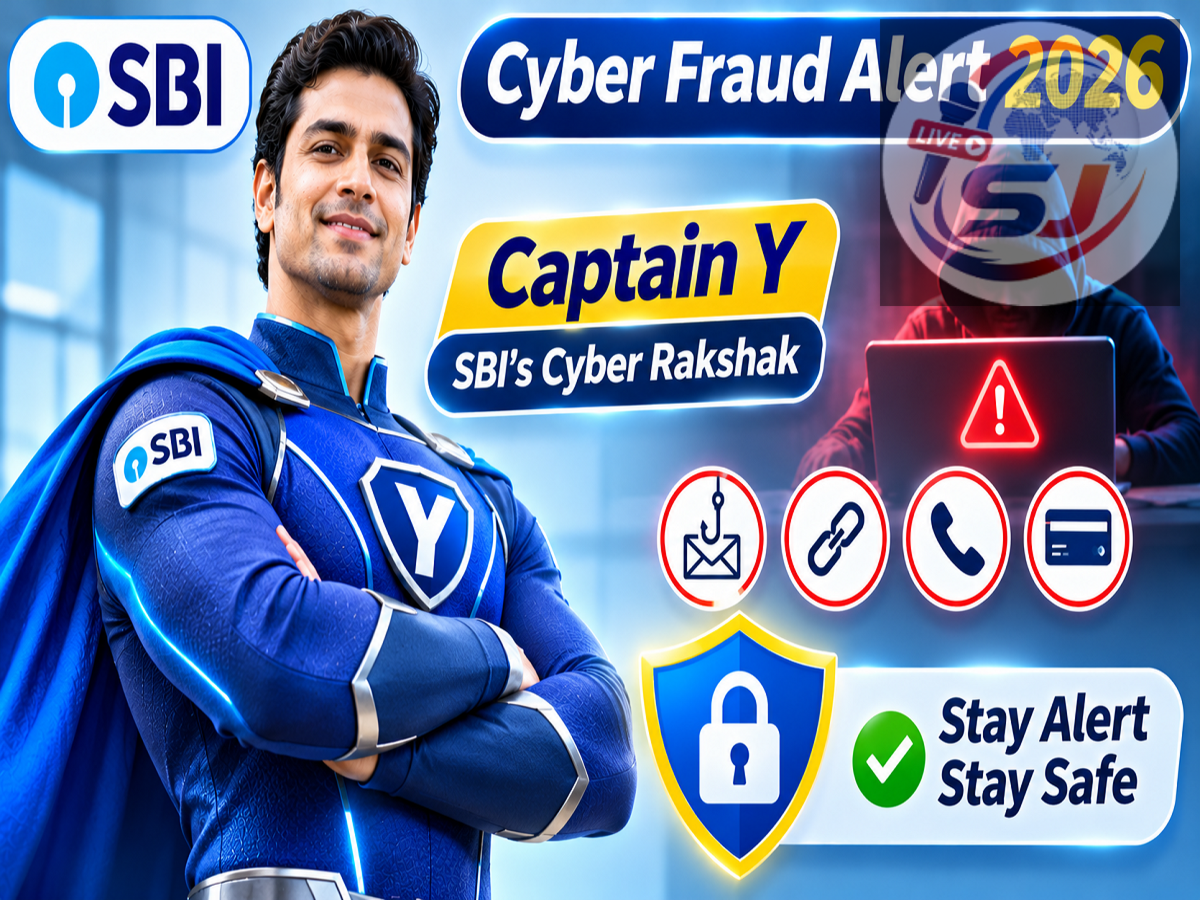
SBI Cyber Security Awareness 2026: As cybercriminals develop new methods to deceive banking customers, the State Bank of India (SBI) is promoting digital safety awareness through a character called Captain Y, introduced as Aapka Cyber Rakshak. The initiative encourages people to question suspicious messages, recognise fraudulent activities and remain cautious while using online banking and digital payment services.
With the message “Hamesha Poocho Why” (Always Ask Why), SBI is highlighting the importance of questioning unexpected requests before sharing information or carrying out financial transactions.
The campaign presents awareness as a powerful defence against cyber fraud, encouraging customers to understand how criminals operate and avoid becoming victims of digital scams.
Who Is Captain Y, SBI's Cyber Rakshak?
Captain Y is a cyber awareness character introduced in SBI's promotional communication to help educate people about online financial fraud.
The character is presented as a protector whose primary strength is knowledge and awareness rather than physical power.
Through this concept, SBI aims to make cybersecurity information easier to understand and more engaging for banking customers.
The campaign focuses on exposing common fraud techniques, explaining suspicious activities and encouraging safer online behaviour.
The message is particularly relevant as digital transactions increasingly involve mobile banking applications, UPI payments, debit cards, credit cards and internet banking platforms.
By presenting cybersecurity awareness through a relatable character, the campaign seeks to encourage people to think carefully before responding to suspicious requests.
What Does 'Hamesha Poocho Why' Mean?
The central message of SBI's Captain Y campaign is simple: always question unexpected financial instructions.
The phrase Hamesha Poocho Why encourages customers to ask why someone needs their personal information, why a payment must be completed urgently or why a stranger is requesting access to their device.
For example, if an unknown caller claims that a bank account will be blocked unless an OTP is shared immediately, customers should question the request.
Similarly, if a message promises a reward but asks for banking credentials, users should verify its authenticity.
This approach helps people identify situations where criminals may be using pressure, fear or attractive offers to manipulate them.
Common Cyber Frauds Banking Customers Should Know About
Cybercriminals use different techniques to obtain confidential information or convince victims to transfer money.
| Type of Cyber Fraud |
How It Commonly Works |
|---|---|
| OTP Fraud |
Criminals trick users into revealing one-time passwords |
| Phishing Scam |
Fake websites or messages collect passwords and financial details |
| Fake KYC Update |
Fraudsters threaten account restrictions to obtain sensitive information |
| UPI Fraud |
Victims are manipulated into approving payment requests |
| Fake Customer Care |
Criminals impersonate bank representatives |
| Investment Scam |
Fraudulent platforms promise unusually high returns |
| Malicious App Scam |
Users are persuaded to install applications that may compromise their devices |
| Digital Arrest Scam |
Criminals impersonate authorities and threaten victims to extort money |
Understanding these techniques can help customers recognise suspicious situations before financial damage occurs.
How Can Captain Y's Awareness Message Help Prevent Fraud?
The Captain Y campaign encourages customers to develop a habit of verifying information before acting.
Fraudsters frequently depend on emotional manipulation.
Some create fear by claiming that a bank account is under investigation. Others offer rewards, cashback or investment opportunities to attract victims.
The common objective is to convince the person to act without checking whether the request is genuine.
SBI's awareness message encourages users to remain alert and question such situations.
For example, customers should independently verify whether a bank has actually requested an account update.
They should also avoid transferring money based solely on instructions received from an unfamiliar caller.
Awareness can help interrupt the sequence of actions that criminals rely upon to complete a scam.
Five Questions to Ask Before Trusting a Financial Message
The campaign's central idea can be applied through a few practical questions.
-
Why is this person asking for my OTP or PIN? Confidential authentication information should never be disclosed to callers.
-
Why must I act immediately? Fraudsters often use artificial urgency to prevent verification.
-
Why am I being asked to open an unfamiliar link? The link could lead to a fraudulent website.
-
Why is someone asking me to install an application? Unknown software may expose sensitive information or provide unauthorised device access.
-
Why am I being asked to transfer money to a different account? Unexpected payment instructions should always be independently verified.
Asking these questions can help customers recognise warning signs and avoid impulsive decisions.
SBI Customers Should Never Share These Banking Details
Certain banking credentials must remain private regardless of who requests them.
Customers should never disclose their ATM PIN, UPI PIN, internet banking password, card CVV or OTP.
Even when a caller claims to be an SBI employee, such information should not be shared.
Fraudsters may use the names of banks, government departments or well-known organisations to appear trustworthy.
Customers should verify unexpected requests using SBI's official website, banking application or published customer service channels.
The official SBI website is sbi.co.in.
How to Stay Safe While Using UPI and Mobile Banking
Digital payments offer convenience, but customers must understand basic security practices.
A UPI PIN is used to authorise payments and certain other sensitive actions. It is generally not required simply to receive money.
Users should verify the recipient's name and payment amount before approving a transaction.
Unexpected collect requests should not be accepted without confirming their purpose.
Customers should also avoid sharing their mobile screens or allowing unknown individuals to remotely control their devices.
Banking applications should be installed only from trusted sources.
Enabling transaction alerts can help users identify suspicious account activity quickly.
Beware of Fake SBI Customer Care Calls
One common fraud technique involves impersonating a bank employee.
A criminal may claim that a debit card has been blocked, an account requires verification or a suspicious transaction has been detected.
The caller may then request confidential information or ask the customer to complete an unauthorised payment.
Customers should not assume that a call is genuine simply because the person knows their name or basic account-related information.
If a banking issue appears urgent, disconnect the call and contact SBI independently through an official channel.
Never rely exclusively on a phone number supplied by an unknown caller.
What Should You Do If You Become a Victim of Cyber Fraud?
Anyone who suspects an unauthorised financial transaction should act immediately.
First, contact the bank and report the incident.
Request appropriate measures to secure the affected account or payment instrument.
Next, call India's national cybercrime helpline at 1930 to report cyber-enabled financial fraud.
Victims can also submit complaints through the National Cyber Crime Reporting Portal at cybercrime.gov.in.
Keep relevant transaction records, screenshots, suspicious messages and phone numbers available for reporting.
Early reporting may improve the chances of timely intervention, although recovery of funds cannot be guaranteed.
Why Cyber Awareness Is Important in 2026
As financial services become more digital, criminals continue to adapt their methods.
Fraud attempts may involve fake websites, impersonation calls, deceptive payment requests or misleading investment advertisements.
Technology-based security measures are important, but customers also play a significant role in protecting their accounts.
Recognising suspicious behaviour, questioning unusual instructions and verifying information independently can reduce exposure to common scams.
SBI's Captain Y initiative highlights this connection between customer awareness and financial security.
The campaign communicates that cybersecurity is not limited to technical experts. Every digital banking user can adopt safer habits.
Conclusion
SBI's Captain Y, introduced as Aapka Cyber Rakshak, represents a cybersecurity awareness initiative focused on helping customers recognise online fraud and protect their financial information.
The campaign's message, “Hamesha Poocho Why,” encourages people to question suspicious requests instead of blindly trusting unexpected calls, messages or payment instructions.
Customers should never share confidential banking credentials, should verify financial requests independently and should report suspected fraud without delay.
Stay alert, ask questions and protect your digital banking information. Awareness remains one of the strongest defences against cybercrime.
Source Credit: State Bank of India (SBI) public awareness communication introducing Captain Y, Aapka Cyber Rakshak, and the “Hamesha Poocho Why” cybersecurity campaign. Additional references: SBI Official Website and National Cyber Crime Reporting Portal, Government of India.