
SBI Cyber Fraud Alert 2026: Fake Arrest Calls Can Empty Your Bank Account, Know How to Stay Safe
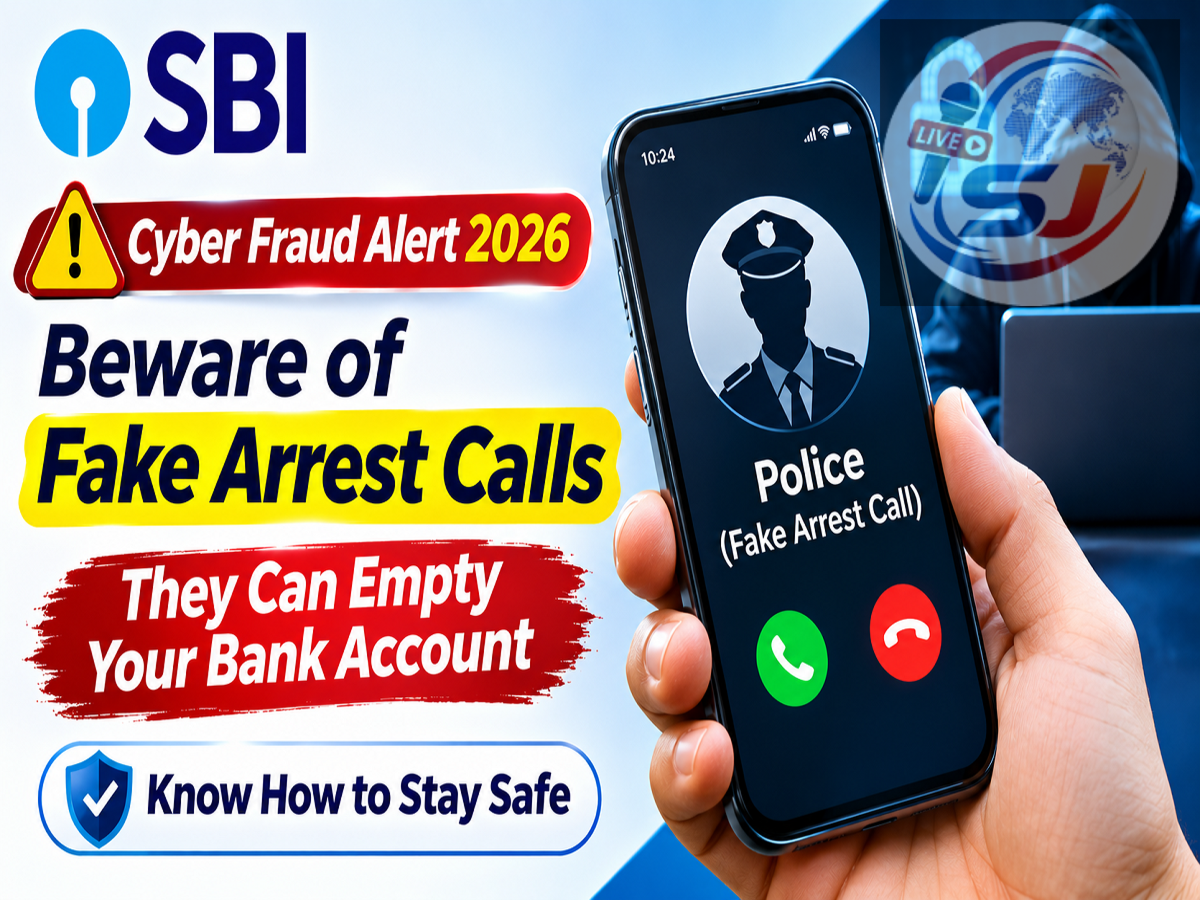
SBI Cyber Security Warning 2026: A phone call threatening immediate arrest could be part of a dangerous cyber fraud. The State Bank of India (SBI) has warned customers against criminals who impersonate police officers, government officials or law enforcement agencies to frighten people into transferring money.
As part of National Cyber Security Awareness Month and Special Campaign 6.0, SBI has highlighted how fraudsters use fear and intimidation to manipulate unsuspecting individuals.
According to the bank's awareness message, anyone receiving a call claiming they will be arrested unless they make an immediate payment should treat it as a warning sign of fraud.
The bank has advised people to remain calm, verify suspicious claims and avoid sharing personal or financial information with unknown callers.
What Is a Fake Arrest Call Scam?
A fake arrest call scam is a form of cybercrime in which criminals pretend to be officials from police departments, investigation agencies or other government organisations.
The caller may claim that the recipient is involved in an illegal activity, financial crime or suspicious transaction.
In some cases, fraudsters falsely allege that the victim's Aadhaar number, mobile connection or bank account has been linked to criminal activity.
They may then threaten immediate arrest or legal action unless a payment is made.
The main objective is to create panic and prevent the victim from checking whether the allegations are genuine.
Such scams are often associated with a broader fraud technique commonly known as a digital arrest scam.
How Do Criminals Use Fear to Steal Money?
Fraudsters frequently rely on psychological pressure rather than sophisticated technical methods.
They may begin a conversation by introducing themselves as police officers or representatives of a government agency.
The caller may then claim that a criminal case has been registered against the recipient.
To make the threat appear convincing, scammers sometimes use official-looking documents, fabricated case numbers or video calls featuring people dressed as law enforcement personnel.
The victim may be told that immediate payment is necessary to avoid arrest, cancel a case or complete a supposed investigation.
Some criminals also instruct victims not to discuss the matter with family members.
This secrecy allows scammers to maintain pressure and reduce the chances of the victim seeking advice.
A demand to transfer money to avoid arrest is a major warning sign of fraud.
What Is a Digital Arrest Scam?
Digital arrest is a fraudulent term used by cybercriminals to convince people that they can be detained or placed under investigation through a phone or video call.
Scammers may instruct victims to remain connected on a video call for several hours and prohibit them from contacting anyone else.
They sometimes claim that the victim is under official surveillance and must follow their instructions.
In reality, India does not have a lawful procedure that allows an unknown caller to place someone under a so-called digital arrest through a video call.
Legitimate law enforcement procedures are governed by applicable laws and cannot be replaced by an arbitrary demand for money over the telephone.
People should not assume that a caller is genuine simply because they display an official-looking identification card or use the name of a government agency.
Common Warning Signs of Fake Police and Arrest Calls
SBI's awareness message encourages people to recognise suspicious behaviour before responding to threats.
Some common warning signs include:
-
A caller claiming that you will be arrested immediately unless you transfer money.
-
Someone pretending to represent the police, CBI, ED or another investigation agency.
-
Demands for payment to settle a supposed criminal case.
-
Instructions to keep the conversation secret from family members.
-
Threats involving Aadhaar misuse, money laundering or suspicious parcels.
-
Requests to remain connected on a video call for an extended period.
-
Pressure to disclose OTPs, banking passwords or other confidential details.
-
Instructions to transfer money into a so-called safe account for verification.
These tactics are intended to create fear and discourage independent verification.
What Should You Do If Someone Threatens Arrest Over the Phone?
If you receive a suspicious call, avoid making any payment or sharing confidential information.
Follow these precautions:
-
Stay calm: Do not allow threats or urgent demands to influence your decision.
-
Do not transfer money: Never send funds to an unknown account to avoid a supposed arrest.
-
Avoid sharing personal details: Protect banking credentials, OTPs, Aadhaar information and other sensitive data.
-
End the suspicious conversation: You are not required to remain connected to an unknown caller making threats.
-
Verify independently: Contact the relevant government department or police station using publicly available official contact details.
-
Inform someone you trust: Discuss the incident with a family member or another trusted person.
-
Report the attempted fraud: Use the government's official cybercrime reporting channels.
Do not rely on telephone numbers or websites provided by the suspicious caller for verification.
How to Report Fake Arrest Calls in India
People who receive threatening fraud calls can report the incident through the National Cyber Crime Reporting Portal.
Cyber Financial Fraud Helpline
1930
National helpline for reporting cyber financial fraud
Official Cybercrime Reporting Website
If money has already been transferred, victims should immediately inform their bank and contact the cybercrime helpline.
Prompt reporting may help authorities take action, although the recovery of stolen funds cannot be guaranteed.
Victims should preserve call recordings where lawfully available, screenshots, transaction details, phone numbers and other evidence that may assist an investigation.
Why Are Senior Citizens Particularly Vulnerable to Such Scams?
Fake arrest scams can affect people of any age or educational background.
However, elderly individuals may face additional difficulties when criminals use complicated legal terminology or impersonate senior government officials.
A person unfamiliar with digital fraud techniques may believe that a threatening caller has genuine legal authority.
Fraudsters may exploit this uncertainty by demanding immediate action and discouraging communication with relatives.
Families can reduce these risks by discussing common cyber fraud methods and encouraging older members to verify unexpected legal or financial demands.
No one should feel pressured to make a payment merely because a caller claims to represent an official authority.
What If You Have Already Transferred Money?
Anyone who has transferred money following a fake arrest threat should act quickly.
Contact the bank through its official customer service number and report the suspected fraudulent transaction.
Request guidance on available account protection measures and the transaction dispute process.
The incident should also be reported to the national cybercrime helpline at 1930 and through the official reporting portal.
Avoid making further payments, even if the fraudster claims that an additional transfer is necessary to release the original amount.
Scammers sometimes continue contacting victims after an initial payment to demand more money.
SBI Promotes Cyber Awareness Through Special Campaign 6.0
Through its National Cyber Security Awareness Month message, SBI is encouraging customers to recognise fraud attempts involving fear, threats and impersonation.
As digital banking becomes increasingly common, criminals may use phone calls, messaging applications and video conferencing platforms to target individuals.
Cybersecurity awareness is therefore not limited to protecting passwords or avoiding suspicious websites.
It also involves recognising manipulation, verifying unexpected claims and refusing to act under pressure.
The bank's message reinforces the importance of thinking carefully before responding to threatening calls.
Stay Alert and Protect Your Money From Fake Arrest Scams
A genuine legal matter should be addressed through proper official procedures, not through an unexpected caller demanding money to prevent arrest.
SBI's latest awareness campaign reminds customers that fraudsters often use fear as their strongest weapon.
If someone threatens arrest and demands an immediate payment, do not transfer money or disclose sensitive information.
Verify the claim independently and report suspected fraud through authorised channels.
Source Credit: State Bank of India (SBI), National Cyber Security Awareness Month — Special Campaign 6.0 public awareness message on fake arrest calls and cyber fraud prevention. Additional reporting information: National Cyber Crime Reporting Portal, Government of India and SBI Official Website.