
Sanchar Saathi Cyber Alert 2026: Beware of Unknown Calls, Follow These Safety Tips to Avoid Fraud
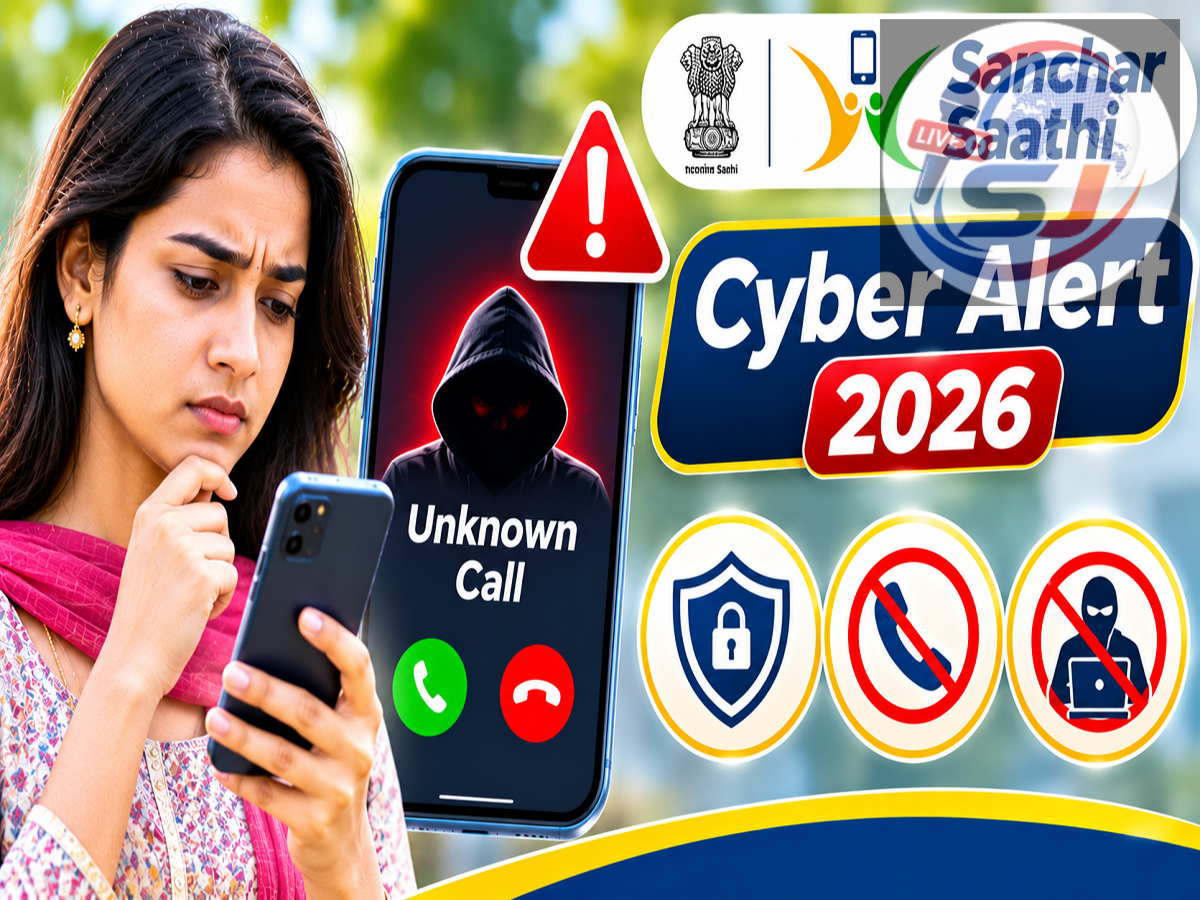
Cyber Fraud Alert 2026: The Department of Telecommunications (DoT) has issued an important cyber safety awareness message encouraging mobile users to remain cautious while answering calls from unknown numbers. The advisory highlights that not every incoming call has a genuine purpose and urges citizens to verify suspicious callers before sharing personal or financial information.
Through its Sanchar Saathi initiative, the department is encouraging people to identify potentially fraudulent communications and report suspicious calls through official channels.
The message emphasizes a simple precaution: think before responding, verify the caller's identity, and avoid disclosing confidential information to unknown individuals.
With mobile phones increasingly used for banking, payments, government services, and personal communication, protecting sensitive information has become an important part of everyday digital safety.
Government Warns Mobile Users About Suspicious Calls
Unknown calls are a common part of daily life. Some may come from legitimate businesses, delivery services, financial institutions, or people attempting to contact the recipient for genuine reasons.
However, cybercriminals may also use phone calls to impersonate trusted organizations and obtain confidential information.
Fraudsters sometimes claim to represent banks, telecom companies, courier services, government departments, or law enforcement agencies.
Their objective may be to collect personal details, steal banking credentials, or persuade victims to transfer money.
The DoT's awareness message encourages users to exercise caution rather than immediately trusting an unfamiliar caller.
What Is the Sanchar Saathi Cyber Safety Advisory?
The latest awareness communication focuses on safe behaviour when receiving unexpected phone calls.
It advises users to avoid rushing into conversations with unknown callers and to verify their identity before responding to sensitive requests.
The message also encourages citizens to report suspicious calls through the Sanchar Saathi platform.
The official campaign reinforces three important precautions:
-
Think carefully before responding to an unfamiliar caller.
-
Verify the caller's identity independently before sharing information.
-
Report suspected fraudulent communications through authorized channels.
These steps can help reduce exposure to impersonation scams and other telephone-based fraud attempts.
How Do Fraudsters Use Unknown Calls to Target Victims?
Phone-based scams often begin with an unexpected call from an unfamiliar number.
The caller may introduce themselves as an employee of a bank, telecom operator, government department, or another recognized organization.
They may claim that an urgent problem has occurred with the recipient's bank account, mobile connection, Aadhaar details, or financial transaction.
Some fraudsters attempt to frighten victims by threatening account suspension, legal action, or financial penalties.
Others offer rewards, refunds, or financial benefits to encourage cooperation.
Once the victim begins trusting the caller, the fraudster may request sensitive information or instruct them to complete a payment.
Common Types of Suspicious Phone Calls
| Scam Type | Typical Fraudulent Claim | Safety Precaution |
|---|---|---|
| Fake bank call | Your account will be blocked unless you verify details | Contact the bank using its official number |
| Fake telecom call | Your SIM will be disconnected immediately | Verify through the telecom operator |
| KYC fraud | Your identity documents need urgent updating | Use authorized service channels |
| Fake police call | You are involved in a criminal investigation | Independently verify the claim |
| Lottery scam | You have won a prize but must pay a fee | Never pay to claim an unexpected reward |
| OTP scam | Share a verification code to complete a service request | Never disclose OTPs |
| Remote-access scam | Install an app to fix a technical problem | Avoid installing unknown applications |
Understanding these warning signs can help users recognize suspicious communications.
1. Do Not Trust Every Unknown Caller
The first precaution is to avoid assuming that every caller is genuine.
An unfamiliar number does not automatically indicate fraud, but it is sensible to remain cautious.
Users should listen carefully and avoid providing personal information until the caller's identity and purpose have been established.
If someone claims to represent a bank or government organization, ask for details and verify them independently.
Do not rely solely on the caller's statements or the phone number displayed on the screen.
Caller identification information can sometimes be manipulated or misused.
2. Never Share OTPs, UPI PINs or Banking Passwords
One of the most important cyber safety rules is to keep authentication credentials confidential.
Fraudsters frequently attempt to obtain one-time passwords, card details, internet banking passwords, and UPI PINs.
These details may be used to authorize financial transactions or gain unauthorized access to accounts.
Legitimate banking institutions do not require customers to disclose secret PINs or passwords over the phone.
If a caller requests such information, end the conversation and contact the relevant institution through an official channel.
3. Beware of Threats About SIM Disconnection
Some cybercriminals impersonate telecom officials and claim that a mobile number will be disconnected unless the user completes an urgent verification process.
The caller may request Aadhaar information, banking details, or payment through an unfamiliar link.
Such claims should be verified directly with the mobile service provider.
Users should not transfer money or install applications merely because an unknown caller threatens immediate SIM deactivation.
The Department of Telecommunications has repeatedly emphasized the importance of identifying and reporting suspicious telecom-related communications.
4. Be Careful With Fake Police and Legal Calls
Fraudsters may impersonate police officers, investigative agencies, or other government authorities.
They sometimes claim that a parcel, bank account, or mobile number is linked to illegal activity.
The victim may be pressured to transfer money or disclose sensitive information to avoid supposed legal consequences.
These tactics are designed to create fear and urgency.
Users should not make payments or provide confidential information based solely on such calls.
Any genuine legal communication should be independently verified through appropriate official channels.
5. Never Install Unknown Apps on a Caller's Instructions
Another common fraud technique involves persuading victims to install screen-sharing or remote-access applications.
The caller may claim that the software is needed to resolve a banking issue, complete KYC, or process a refund.
Such applications can expose sensitive information if misused.
Users should never install unfamiliar software or grant remote access to their smartphones on the instructions of an unverified caller.
If technical assistance is required, it should be obtained through the official support channels of the relevant service provider.
What Is Sanchar Saathi?
Sanchar Saathi is a citizen-focused digital initiative of the Department of Telecommunications, Government of India.
The platform offers services intended to improve telecom security and help citizens protect themselves against misuse of mobile connections.
It also provides facilities for reporting suspected fraudulent communications.
One important feature is Chakshu, which allows users to report suspicious calls, SMS messages, and supported messaging communications that appear to involve fraud.
The official Sanchar Saathi website is:
Citizens should use the genuine government portal rather than unofficial websites claiming to provide similar services.
How to Report a Suspicious Call on Sanchar Saathi
Users who receive a suspected fraudulent call can report it through the Chakshu facility.
Step 1: Open the official Sanchar Saathi website at https://sancharsaathi.gov.in.
Step 2: Find the Chakshu option for reporting suspected fraudulent communications.
Step 3: Select the appropriate category for the suspicious communication.
Step 4: Enter the relevant details, including the caller's number and other information requested by the portal.
Step 5: Describe the suspicious activity and provide supporting evidence where required.
Step 6: Complete the verification process and submit the report.
The exact reporting options and information requirements may change according to the portal's current procedures.
What If You Have Already Lost Money to a Phone Scam?
If a suspicious call has resulted in financial fraud, immediate action is important.
Victims should contact their bank or payment service provider and report the fraudulent transaction.
They can also call India's national cybercrime helpline at 1930.
A formal complaint can be filed through the National Cyber Crime Reporting Portal at https://cybercrime.gov.in.
Victims should preserve call details, screenshots, transaction reference numbers, and other relevant evidence.
Quick reporting may improve the possibility of action against fraudulent transactions, although recovery of lost money is not guaranteed.
Sanchar Saathi's suspicious communication reporting facility should not be treated as a replacement for reporting financial cybercrime through the appropriate channels.
Important Safety Tips for Mobile Users
Mobile users should develop a habit of verifying unexpected requests before taking action.
If a caller claims to represent a bank, government department, or telecom company, contact the organization through its officially published customer service number.
Avoid clicking suspicious links sent during or after a phone conversation.
Never share OTPs, passwords, card PINs, or UPI credentials.
Do not approve unexpected payment requests or transfer money because someone threatens immediate consequences.
If a call appears fraudulent, disconnect and report it through the appropriate official platform.
Why Cyber Awareness Matters in 2026
As digital services become more widely used, criminals continue to develop sophisticated methods of impersonation.
Fraudulent callers may use familiar organizational names, convincing language, and urgent warnings to gain trust.
Even experienced smartphone users can become targets of carefully designed scams.
The best protection is to verify important claims independently and avoid sharing sensitive information under pressure.
Public awareness initiatives such as Sanchar Saathi encourage citizens to take an active role in identifying and reporting suspicious communications.
Conclusion
The Department of Telecommunications' latest cyber safety message reminds mobile users to remain alert when receiving unknown calls.
Not every unfamiliar call is fraudulent, but unexpected requests for money, passwords, OTPs, or personal information should always be treated cautiously.
Users should independently verify callers, avoid responding to threats or pressure tactics, and report suspected fraudulent communications through Sanchar Saathi.
Anyone who has already suffered financial cyber fraud should immediately contact their bank, call 1930, and file a complaint through the official cybercrime portal.
Source Credit: Department of Telecommunications (DoT), Government of India, Sanchar Saathi cyber safety awareness communication. Official references: Sanchar Saathi — https://sancharsaathi.gov.in and National Cyber Crime Reporting Portal — https://cybercrime.gov.in.