
RBI's New 6-Hour Cyber Fraud Reporting Rule: What Bank Customers Need to Know About Digital Payment Safety
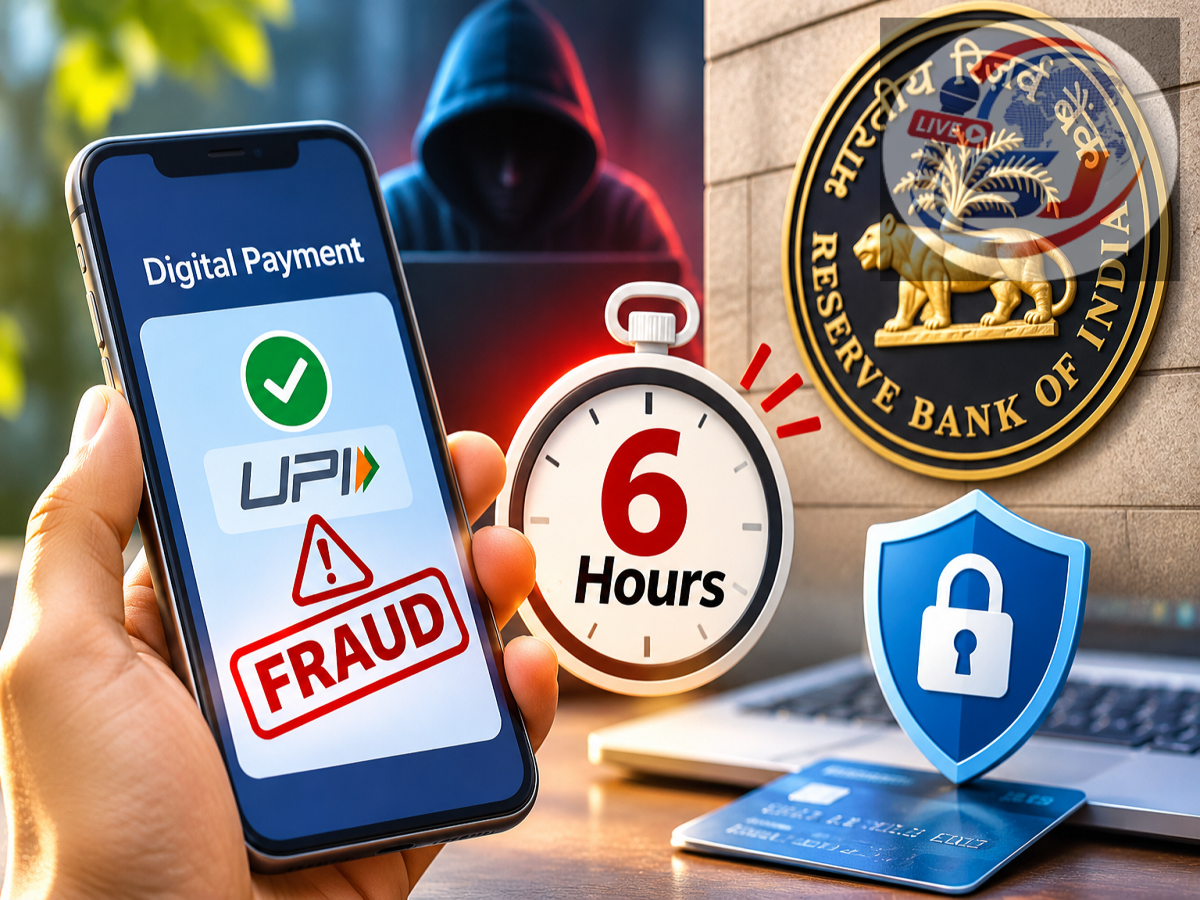
RBI New Banking Rules 2026: The Reserve Bank of India (RBI) is strengthening its approach to cybersecurity as digital payment fraud continues to pose risks to banking customers. A new six-hour reporting requirement, highlighted in a recent report, is intended to improve the speed at which banks and other regulated institutions communicate information about cyber incidents.
With millions of Indians relying on UPI, internet banking, mobile applications and electronic fund transfers, timely detection and reporting of suspicious activities have become increasingly important.
According to an Aaj Tak report published on November 15, 2026, the RBI's latest initiative focuses on reducing cyber threats and improving safeguards within the banking system. The six-hour requirement is particularly significant because delays in reporting security incidents can make it harder for financial institutions to respond effectively.
However, customers should understand that a six-hour institutional reporting requirement is different from the rules governing how quickly an individual must report an unauthorised banking transaction.
What Is RBI's New 6-Hour Reporting Rule?
The six-hour reporting framework concerns the prompt communication of specified cyber incidents by regulated financial institutions to the relevant authorities.
Its purpose is to ensure that serious cybersecurity threats are identified, escalated and addressed without unnecessary delays.
Cyber incidents can involve unauthorised access to banking systems, malware infections, data breaches, ransomware attacks or disruptions affecting digital financial services.
When such incidents occur, rapid reporting can help authorities and financial institutions assess the potential impact and coordinate appropriate responses.
The precise reporting deadline, covered institutions and triggering conditions depend on the applicable RBI directions. The six-hour requirement should not be interpreted as a universal deadline for customers to report every fraudulent transaction.
Why Is Faster Cyber Incident Reporting Important?
Digital banking has made financial transactions more convenient, but it has also created opportunities for criminals to target customers through sophisticated fraud techniques.
Fraudsters frequently use phishing links, fake customer-care numbers, malicious applications, impersonation and social engineering to obtain sensitive banking information.
A delay in identifying or escalating a cybersecurity incident can increase the potential impact on customers and financial institutions.
Faster reporting can support the following objectives:
-
Earlier identification of cybersecurity threats.
-
Better coordination between banks and relevant authorities.
-
Quicker implementation of protective measures.
-
Improved monitoring of potentially affected systems.
-
More effective investigation of significant cyber incidents.
Although reporting requirements can improve incident response, they do not guarantee that every fraudulent transaction will be prevented or that stolen funds will automatically be recovered.
Which Payment Companies Must Follow the New RBI Rules?
According to the Aaj Tak report, the revised cybersecurity framework covers several categories of non-bank payment system operators and payment infrastructure participants.
These include the National Payments Corporation of India (NPCI), card networks, payment aggregators, prepaid payment instrument issuers and white-label ATM operators, subject to the scope of the applicable directions.
The requirements address not only cyberattack reporting but also broader areas of digital payment security.
| Area |
Main Objective |
|---|---|
| Cyber incident reporting |
Notify authorities within the prescribed timeframe |
| Digital transaction security |
Reduce vulnerabilities in payment processing |
| Software security |
Strengthen application and system safeguards |
| System audits |
Identify weaknesses and compliance gaps |
| Third-party service providers |
Improve oversight of outsourced technology |
| Disaster recovery |
Maintain payment services during major disruptions |
When Will the New RBI Cybersecurity Rules Apply?
The report states that the revised requirements are already applicable to large and medium-sized non-bank payment system operators.
Smaller operators have been given additional time to meet the requirements, with a compliance deadline of April 1, 2028.
This phased implementation is intended to give smaller organisations sufficient time to upgrade their cybersecurity infrastructure, monitoring systems and internal processes.
Cyberattacks Must Also Be Reported to CERT-In
The new framework highlights the importance of reporting relevant cybersecurity incidents to the Indian Computer Emergency Response Team (CERT-In).
CERT-In is India's national agency responsible for responding to cybersecurity incidents and issuing technical advisories.
According to the report, payment companies must report applicable cybersecurity incidents within six hours of detection.
This requirement is designed to improve coordination and help authorities monitor threats that may affect multiple organisations.
Importantly, the deadline applies to the relevant regulated entities, not directly to ordinary bank customers.
RBI Strengthens Disaster Recovery Requirements
The cybersecurity measures extend beyond incident reporting.
The Aaj Tak report states that payment operators must maintain disaster recovery arrangements in a seismic zone different from the location of their primary data centre.
Operators are also required to conduct recovery drills at least twice a year.
These measures are intended to help payment systems continue functioning or recover more quickly when technical failures, cyberattacks or other major disruptions occur.
AajTak
What Should Customers Do If Money Is Stolen Through Cyber Fraud?
Customers should not wait six hours to report a suspicious transaction. Immediate reporting remains important.
If an unauthorised transaction occurs, customers should contact their bank through official channels and report the incident as soon as possible.
They can also call India's national cybercrime helpline at 1930 or submit a complaint through the National Cyber Crime Reporting Portal.
Customers should preserve transaction details, complaint reference numbers, messages and other relevant evidence.
The RBI's customer liability framework separately considers how quickly unauthorised electronic transactions are reported, along with the circumstances of the fraud. Therefore, the new six-hour institutional reporting requirement should not be confused with customer liability rules.
How to Protect Your Bank Account From Digital Fraud
While the RBI is strengthening cybersecurity requirements for payment companies, customers also have an important role in protecting their accounts.
Avoid sharing OTPs, UPI PINs, passwords or card security details. Do not install unfamiliar applications at the request of callers claiming to represent banks or government departments.
Remember that a UPI PIN is generally required to authorise a payment, not to receive money.
Customers should also enable transaction notifications, review account statements regularly and use official banking applications.
Will the Six-Hour Rule Make Digital Payments Safer?
The revised framework is intended to improve cybersecurity preparedness and accountability across India's payment ecosystem.
Faster incident reporting may help regulators identify emerging threats, while stronger audits, software controls and disaster recovery arrangements can support operational resilience.
However, no cybersecurity framework can completely eliminate online fraud. The effectiveness of these measures will depend on implementation, monitoring and enforcement.
In conclusion, the RBI's six-hour cyber incident reporting requirement is an important development for India's digital payment infrastructure. It requires covered payment operators to report specified security incidents promptly and introduces broader safeguards to improve system resilience.
For customers, the key message is that the new rule is primarily directed at payment companies. Anyone experiencing unauthorised banking activity should report it immediately rather than waiting for a six-hour period.