
RBI Banking Security Update 2026: Stop Switch and Trusted Person Approval Proposed to Prevent Digital Fraud
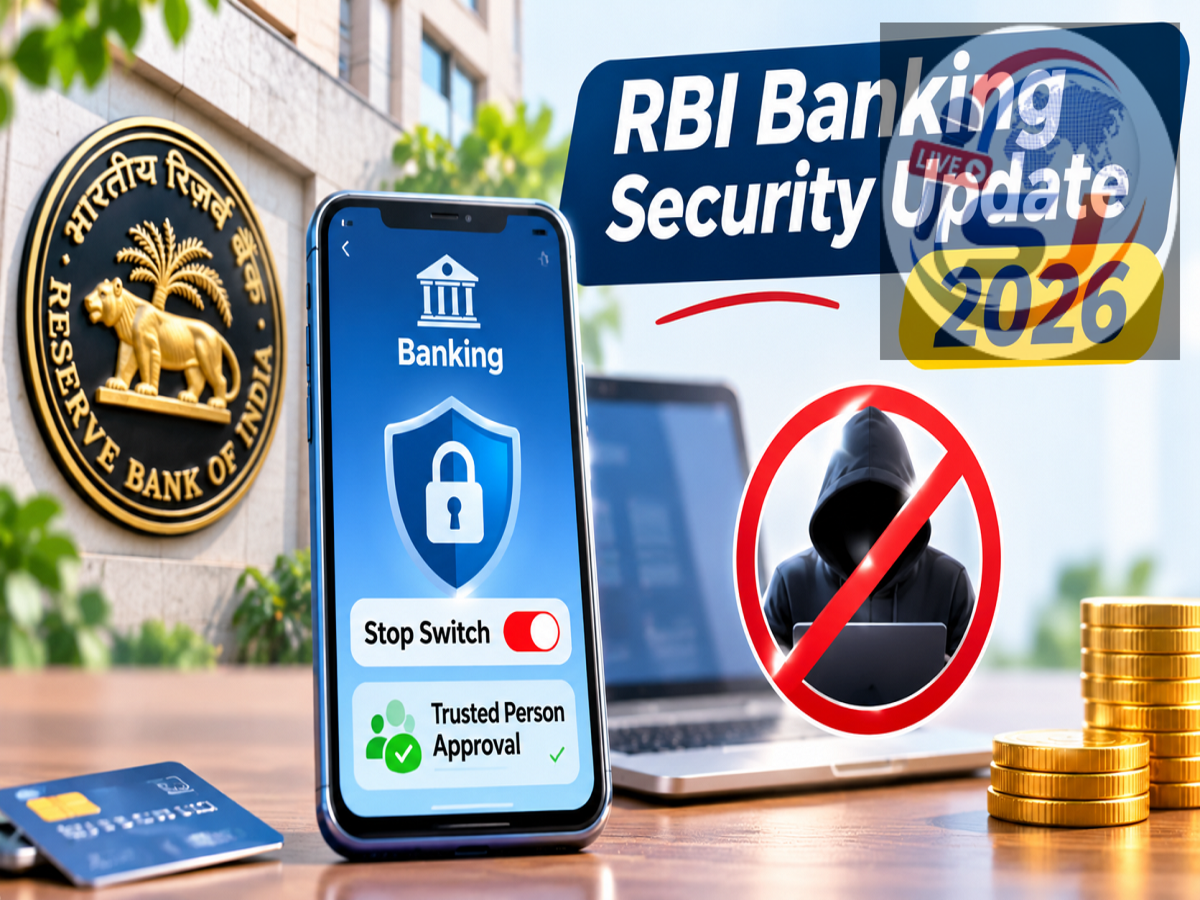
RBI New Banking Rules 2026: Bank customers across India could soon receive additional security features to protect their savings from cybercriminals. The Reserve Bank of India (RBI) has proposed two new safeguards aimed at reducing digital banking fraud and preventing unauthorised financial transactions.
The proposed features, known as the Stop Switch and Trusted Person Mechanism, would give customers greater control over outgoing payments and introduce an additional layer of verification for certain high-value money transfers.
With online banking, UPI payments and electronic fund transfers becoming increasingly popular, financial fraud has emerged as a major concern. Cybercriminals frequently use fraudulent links, fake customer care numbers, malicious applications and impersonation techniques to target unsuspecting individuals.
The proposed RBI measures could be particularly beneficial for senior citizens, individuals unfamiliar with digital banking and customers who suspect their bank accounts have been compromised.
What Is the RBI Stop Switch Facility?
The proposed Stop Switch would function as an emergency security control for bank accounts. Customers who suspect unauthorised access or fraudulent activity would be able to activate this facility to restrict outgoing transactions immediately.
Instead of waiting for individual payment channels to be blocked, account holders could use a centralised mechanism to prevent further digital debits covered by the proposed framework.
For example, if a customer notices an unexpected transaction or suspects that banking credentials have been stolen, activating the Stop Switch could help prevent additional financial losses.
The facility is intended to provide customers with a rapid response mechanism during suspected cybersecurity incidents.
Which Banking Activities Will Be Restricted?
Once the proposed Stop Switch is activated, several digital banking activities would be restricted.
These include:
-
New outgoing digital transactions.
-
Creation of new payment mandates.
-
Registration of fresh standing instructions.
-
New UPI registrations through third-party applications.
-
Other outgoing debits covered under the proposed security mechanism.
By restricting multiple payment channels simultaneously, the facility could reduce opportunities for criminals to initiate further unauthorised transactions.
However, activating the Stop Switch would not automatically recover money that has already been transferred fraudulently.
Customers May Activate the Stop Switch Through Multiple Channels
One of the important aspects of the RBI proposal is that customers would not necessarily require a smartphone to access the emergency banking facility.
The proposed activation and deactivation channels include mobile banking applications, internet banking platforms, ATMs, bank branches and customer care services.
This multi-channel approach could help customers who have lost their smartphones, experienced device theft or are unable to access their banking applications.
It could also improve accessibility for senior citizens and customers who prefer traditional banking services.
Strict Verification Required to Restore Banking Services
The proposed framework also addresses concerns regarding criminals attempting to disable the security feature after gaining access to a customer's smartphone or banking credentials.
Deactivating the Stop Switch would involve enhanced customer verification procedures. Banks would conduct multiple security checks before restoring the restricted services.
Additionally, a mandatory cooling-off period would apply after a deactivation request is submitted.
This waiting period is intended to reduce the possibility of fraudsters immediately reversing the security restrictions and transferring money from compromised accounts.
RBI Trusted Person Mechanism: Additional Security for Large Transactions
Alongside the Stop Switch, the central bank has proposed another security arrangement called the Trusted Person Mechanism.
Under this voluntary facility, customers would be able to nominate a family member or another trusted individual aged 18 years or above to provide additional approval for certain high-value transactions.
Account holders would also be allowed to determine a transaction threshold according to their individual requirements.
If an NEFT or RTGS transaction exceeds the specified limit, the nominated individual would receive an alert seeking approval.
According to the reported proposal, the transaction would proceed only after the trusted person provides approval within one hour.
For instance, if a customer sets a transaction threshold of ₹1 lakh, an eligible transfer of ₹1.5 lakh would require additional authorisation from the nominated person.
Stop Switch vs Trusted Person Mechanism
| Security Feature |
Stop Switch |
Trusted Person Mechanism |
|---|---|---|
| Primary purpose |
Prevent further unauthorised debits |
Provide additional approval for large transfers |
| Activation |
Initiated by the account holder |
Voluntary registration by the customer |
| Transaction coverage |
Specified outgoing digital transactions |
Eligible NEFT and RTGS transfers |
| Additional approval |
Enhanced verification for deactivation |
Approval from the nominated individual |
| Security provision |
Mandatory cooling-off period |
One-hour approval window |
| Major beneficiaries |
Customers facing suspected fraud |
Senior citizens and vulnerable customers |
How Could These Features Help Senior Citizens?
Cybercriminals often target elderly individuals through fake investment opportunities, fraudulent government notices, impersonation calls and digital arrest scams.
Victims may be pressured into transferring substantial amounts before they have an opportunity to consult family members.
The Trusted Person Mechanism could introduce an additional checkpoint, allowing a nominated individual to identify suspicious payment requests before an eligible transaction is completed.
Similarly, the Stop Switch could help customers restrict further outgoing payments when they suspect fraudulent activity.
Although these safeguards could strengthen banking security, they cannot eliminate every type of financial fraud.
What Should Customers Do If They Experience Cyber Fraud?
Customers should immediately contact their bank through its official customer care number if they notice suspicious transactions. Financial cybercrime can also be reported through the national cybercrime helpline 1930 or the official portal at cybercrime.gov.in.
Banking users should never disclose OTPs, UPI PINs, passwords or debit card credentials to unknown individuals. They should also avoid installing applications or opening payment links received from suspicious sources.
When Will the New RBI Banking Security Features Become Available?
Customers should note that the Stop Switch and Trusted Person Mechanism are currently reported as proposals. Their final implementation timeline, operational requirements and detailed conditions will depend on the RBI's official directions.
Until these facilities become operational, customers should continue using existing banking security controls and remain alert against emerging cybercrime techniques.
The proposed measures represent an effort to strengthen customer protection while making India's expanding digital banking ecosystem more secure.