
Ration Card Rule: Face Authentication Can Help When Fingerprint Verification Fails
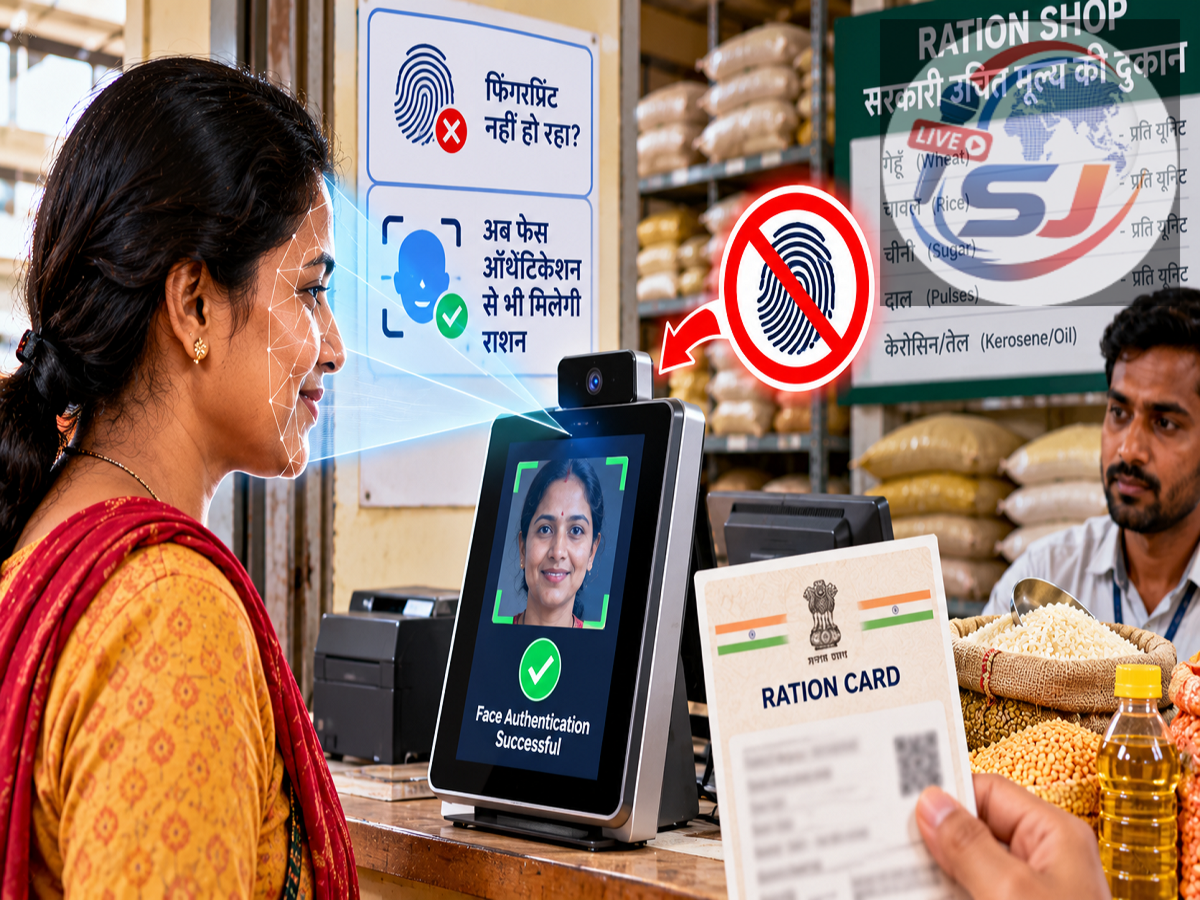
Ration card beneficiaries who frequently face problems with fingerprint verification may now have another way to complete their identity check. From October 1, 2026, face authentication has been introduced as an alternative verification method in the ration distribution system, according to the supplied report.
The facility is intended to help beneficiaries whose fingerprints cannot be successfully authenticated because of worn fingerprints, technical problems or other difficulties.
Instead of repeatedly trying to verify identity using a thumb or finger impression, eligible beneficiaries may be able to complete authentication by having their face scanned and matched with the required identity records.
However, the facility may not immediately be available at every ration shop. It depends on whether the Fair Price Shop has the necessary updated technical system and equipment to support face authentication.
What Has Changed in Ration Verification?
Until now, fingerprint-based biometric authentication through an electronic Point of Sale (e-POS) system has commonly been used to verify beneficiaries before distributing subsidised food grains.
For many people, this process works without difficulty.
However, fingerprint authentication can sometimes fail. A person's fingerprints may become difficult for a biometric scanner to read, or technical and connectivity issues may interfere with the authentication process.
The face-authentication facility is intended to provide an additional method in such situations.
According to the supplied information, the new arrangement took effect from October 1, 2026.
Does This Mean Fingerprints Are No Longer Required?
No. The introduction of face authentication should not be understood as the complete replacement of fingerprint verification at ration shops.
Fingerprint-based authentication may continue to be used in the normal process.
Face authentication is particularly relevant when fingerprint verification cannot be completed successfully.
This means a beneficiary may first go through the existing biometric authentication process. If the fingerprint does not match or cannot be read, the face-authentication option may be used where the required technology is available.
How Will Face Authentication Work?
The process is intended to provide another way of verifying the beneficiary's identity.
According to the supplied report, the process can work broadly as follows.
A beneficiary visits the ration shop and the usual authentication process is initiated through the e-POS system.
If fingerprint authentication is unsuccessful, face authentication can be selected where supported.
The beneficiary's face is then captured using the available camera or compatible authentication system.
The captured facial information is used for identity verification against the relevant Aadhaar-linked authentication records.
Once authentication is successfully completed and other eligibility conditions are satisfied, the ration transaction can proceed.
The exact interface and procedure may differ depending on the technical system being used by the ration shop.
Why Do Fingerprints Sometimes Fail?
Fingerprint authentication can fail for several reasons.
One common problem affects elderly people.
As people age, fingerprint ridges can become less distinct, which can make it more difficult for some scanners to capture a clear fingerprint.
The issue can also affect people involved in manual labour.
Workers who regularly perform construction, farming, cleaning or other physically demanding work may experience wear or changes in the skin of their hands. This can sometimes make fingerprint-based biometric verification more difficult.
Technical issues involving the biometric scanner or authentication system can also contribute to failed attempts.
Face authentication can provide an additional route when fingerprint recognition does not work as expected.
Elderly Beneficiaries Could Find the Process Easier
Senior citizens could be among the beneficiaries who find the additional authentication method particularly useful.
Repeated fingerprint failures can create difficulties for elderly people trying to collect their food-grain entitlement.
If a supported ration shop can verify identity using face authentication, beneficiaries may not have to repeatedly place their fingers on the biometric scanner.
This could make the process more convenient, particularly for people whose fingerprints have become difficult for the machine to recognise.
Manual Workers May Also Benefit
The system may also help people engaged in regular physical labour.
Repeated contact with rough surfaces, chemicals, soil or construction materials can affect the skin on a person's hands.
Farm workers, construction workers and people engaged in other forms of manual work may therefore sometimes face difficulties with fingerprint scanners.
Providing another biometric authentication option can reduce dependence on readable fingerprints in such cases.
Will Face Authentication Be Available at Every Ration Shop?
Not necessarily.
This is an important limitation of the new arrangement.
According to the supplied report, face authentication can be used only at ration shops where the necessary technical system has been updated.
Therefore, a beneficiary should not assume that every Fair Price Shop will immediately provide the facility from the rollout date.
Availability may depend on the equipment, software and authentication infrastructure installed at the individual shop or in the relevant area.
The rollout could therefore differ from one location to another.
What If a Ration Shop Does Not Have the Facility?
If the local Fair Price Shop has not yet received the required technical upgrade, face authentication may not be available there.
Beneficiaries experiencing repeated authentication problems should ask the ration dealer about the verification options currently supported at that location.
They may also contact the relevant food and civil supplies authorities if they need information about alternative authentication procedures or grievance mechanisms available in their state.
Beneficiaries should avoid paying unofficial charges to anyone promising to activate biometric or face authentication.
Is a New Ration Card Required?
The introduction of another authentication method should not automatically be interpreted as a requirement for every beneficiary to obtain a new ration card.
The change described in the supplied report relates primarily to the method used to verify a beneficiary's identity while receiving ration.
Beneficiaries should follow official instructions if any update to their Aadhaar, ration card or beneficiary records is required in their individual case.
They should also make sure that their existing records contain accurate information to reduce the possibility of authentication or entitlement-related problems.
Face Authentication Does Not Change Ration Eligibility
Face authentication is a verification mechanism. It does not by itself create a new ration entitlement.
A person must still meet the applicable eligibility requirements under the relevant food-security or ration scheme.
Successful face verification establishes identity for the transaction where the system is supported, but ration entitlement continues to depend on the beneficiary's valid records and applicable government rules.
This distinction is important because biometric authentication and eligibility are two separate issues.
Be Careful With Aadhaar and OTP Scams
As digital verification becomes more common, beneficiaries should remain alert to fraud.
Do not share Aadhaar-related OTPs, banking passwords, UPI PINs or other sensitive financial information with unknown people claiming that they can activate face authentication.
Beneficiaries should rely on authorised ration shops and official government channels for updates.
They should also be cautious about links received through WhatsApp, SMS or social media claiming that a payment is required to enable the new facility.
A Useful Alternative When Fingerprints Don't Work
The face-authentication facility introduced from October 1, 2026, according to the supplied report, is designed to reduce difficulties faced by ration beneficiaries when fingerprint verification fails.
The system can be particularly useful for elderly people and manual workers whose fingerprints may be difficult for biometric scanners to recognise.
Fingerprint authentication has not necessarily been removed from the ration-distribution process. Instead, face authentication provides an additional verification option in supported cases.
The biggest limitation is availability. Beneficiaries will be able to use the facility only at ration shops equipped with the necessary updated technical system.
Therefore, people who regularly experience fingerprint failures should check with their local Fair Price Shop to find out whether face authentication has been enabled there.
Note: Availability and the exact authentication procedure may vary by state, ration shop and technical infrastructure. Beneficiaries should verify the latest process with their local food and civil supplies authority or authorised Fair Price Shop.