
RailMadad May Get Smarter: 5 Proposed Changes Could Improve Railway Complaint Handling
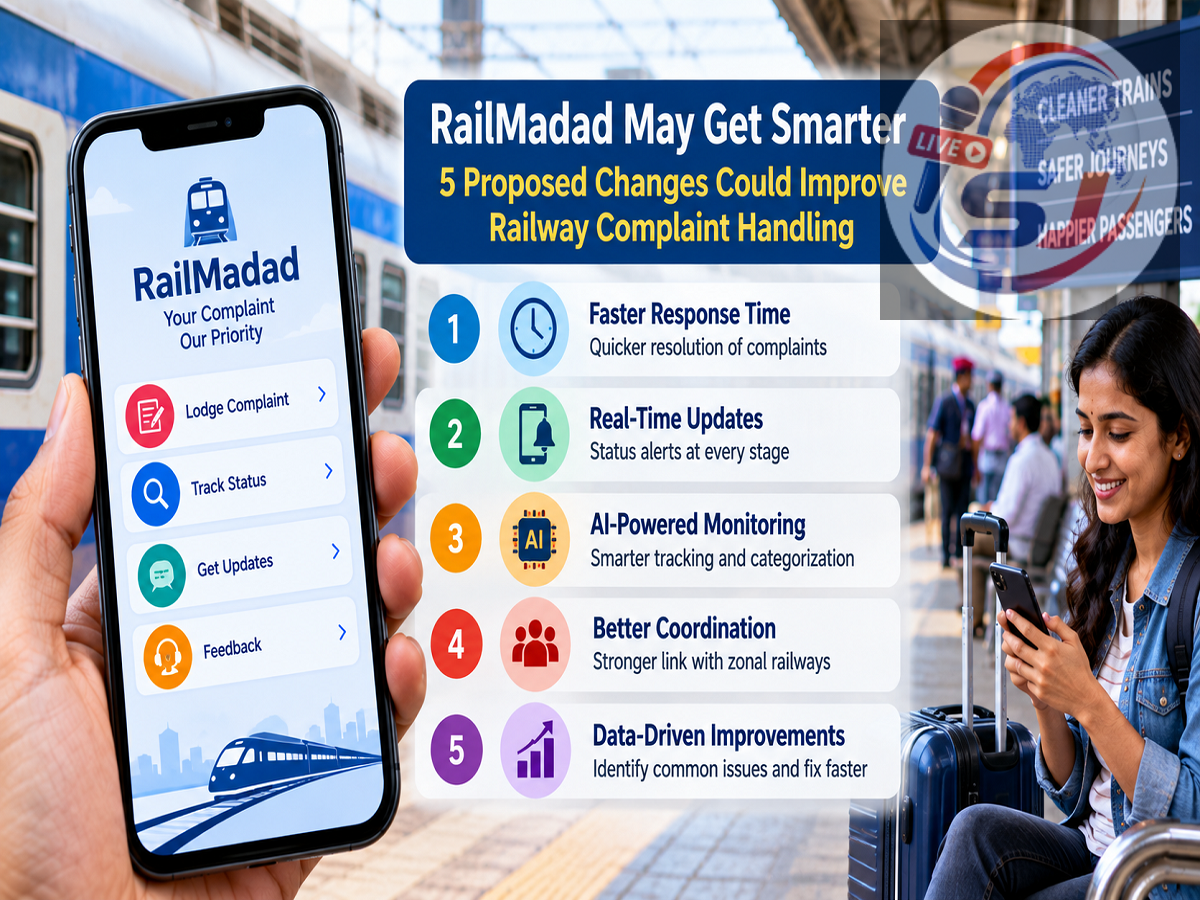
Indian Railways passengers may see significant improvements in the way complaints are registered, monitored and resolved through RailMadad. The grievance-redressal service is expected to become smarter, with proposed changes aimed at ensuring that passenger complaints reach the appropriate railway team or agency more efficiently.
RailMadad is already one of the channels available to passengers for reporting problems experienced during a train journey or at a railway station. These can include issues involving water, food, cleanliness and other passenger facilities.
The upcoming changes, as described in the source report, are intended to improve complaint monitoring, identify repeated grievances and help route issues to the right department. However, these measures should currently be understood as planned changes rather than rules that have already been fully implemented.
Why Could RailMadad Be Changed?
A major focus of the proposed upgrade is better analysis of passenger complaints.
If the same type of problem is repeatedly reported on a particular train, route or station, improved monitoring could help railway authorities identify the pattern instead of treating every complaint as an isolated case.
The source says the system is being prepared to track recurring complaints more effectively, with greater attention expected to be given to grievances reported by passengers.
This could potentially help authorities identify persistent service problems and take corrective action.
1. Water Complaints Could Reach the Right Team Faster
Water-related problems are among the areas expected to receive additional attention.
Passengers can encounter issues involving water availability during train journeys. Under the proposed improvement, greater emphasis could be placed on routing a water-related complaint to the appropriate station or railway team.
The objective would be to ensure that the responsible staff receive information about the problem at the appropriate time and can take action accordingly.
Better complaint routing could be particularly useful when the solution depends on action being taken at an upcoming station.
2. Food Quality Complaints May Be Tracked More Closely
Food served on trains is another area where complaint handling could be strengthened.
According to the report, complaints about food quality, including those raised by passengers travelling on premium services such as Vande Bharat trains, could be routed more efficiently to the agency responsible for catering.
This could make it easier to identify the relevant service provider and address food-quality concerns without unnecessary delays.
If similar complaints repeatedly emerge against a particular service, better monitoring could also help authorities recognise recurring quality issues.
3. OTP Requirement for Closing Complaints Could Change
Another proposed change relates to OTP verification during complaint closure.
The source reports that the Railways is working towards removing the existing OTP-related step associated with closing certain complaints.
However, passengers should not interpret this as confirmation that OTP verification has already been removed everywhere.
Until an updated process is formally implemented, users should continue following the instructions displayed by RailMadad when registering or managing a complaint.
Any revised system would need to balance convenience with the need to ensure that grievances are not incorrectly marked as resolved.
4. Train and Station Complaints May Be Monitored Separately
Not every railway complaint concerns the same department.
A problem occurring inside a train can require action from a different team than an issue involving facilities at a railway station. Treating these grievances differently could therefore improve complaint routing.
Under the changes described in the source, train-related and station-related complaints may be recorded and monitored separately so that a grievance can reach the appropriate department at the right time.
This could make the complaint-management system more organised and help reduce cases where grievances are sent to the wrong team.
5. PNR and QR-Based Complaint Process Could Be Improved
RailMadad may also make greater use of PNR and QR-based mechanisms.
One issue authorities may seek to address is repeated complaints being submitted using the same PNR or device. According to the source, the proposed system could make legitimate complaint registration easier through PNR or QR-based identification while potentially restricting repeated submissions from the same PNR or device.
The objective would be to reduce duplicate or potentially fake complaints while keeping the grievance process accessible to genuine passengers.
The precise restrictions and verification mechanism would depend on how the proposed changes are ultimately implemented.
RailMadad Is Designed for Passenger Grievances
RailMadad gives passengers a channel to report problems related to railway journeys and services.
A more intelligent grievance system could do more than simply record a complaint. It could help determine what type of problem has occurred, where it occurred and which team should handle it.
For example, a water-related complaint might require action at a specific station, while a catering complaint may need to be routed to the agency responsible for food service. Separating these categories more effectively could potentially shorten the time between registration and action.
Repeated Complaints Could Become Easier to Identify
Another important aspect of the proposed upgrade is the ability to distinguish between a genuine recurring service problem and duplicate submissions.
Repeated complaints about the same facility can sometimes reveal a larger operational issue. At the same time, multiple identical submissions relating to a single incident can make complaint management more difficult.
A smarter system could potentially help authorities distinguish between these situations by examining the complaint category, train or station information, PNR and other relevant data.
The source specifically indicates that preventing fake and repeatedly submitted complaints is one objective behind the possible PNR and device-related restrictions.
Passengers Should Wait for Formal Implementation Details
The proposed changes indicate that RailMadad's grievance-management system could become more targeted and technology-driven. Water and food complaints may be routed more efficiently, train and station grievances could be monitored separately, OTP-related procedures may change, and PNR or QR-based complaint handling could be strengthened.
However, passengers should note an important point: the source describes several of these measures using terms such as “may,” “could” and “work is underway.” They should therefore not be presented as universally implemented RailMadad rules yet.
Until the revised system is formally rolled out, passengers should continue following the complaint and verification process currently shown on RailMadad.
If implemented as described, the changes could make the platform more efficient by helping genuine complaints reach the appropriate department while improving the detection of duplicate or repeated submissions.