
PUC Expired? Know How Long You Can Drive, Penalty Rules and Certificate Validity
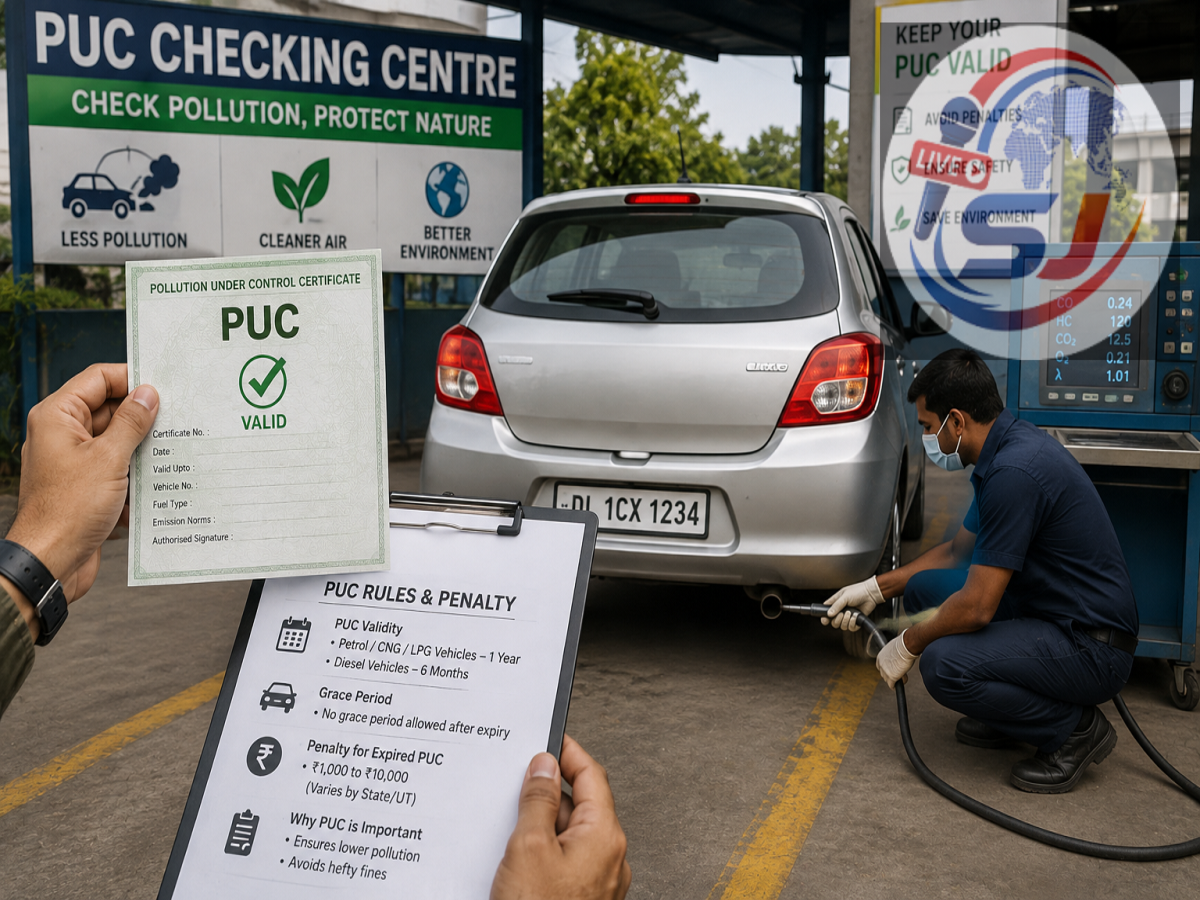
A valid Pollution Under Control (PUC) certificate is an important requirement for vehicle owners in India. Just like a driving licence, vehicle registration and insurance, motorists are expected to keep their pollution certificate valid while using their vehicle on public roads.
However, many car and two-wheeler owners forget to renew their PUC certificate before it expires. This raises an important question: Can you continue driving for a few days after your PUC expires, or is there a grace period?
Vehicle owners should know that they should not assume they have extra time after the validity date ends. Once the PUC certificate expires, the vehicle no longer has a valid pollution certificate, and continuing to drive can expose the owner to enforcement action.
Is There a Grace Period After PUC Expiry?
Vehicle owners should get their pollution certificate renewed before its validity ends. There is generally no automatic grace period that allows motorists to continue driving normally after the certificate has expired.
For example, if the PUC certificate is valid until August 18, the vehicle owner should not assume that they can continue using the vehicle for another week or even a few days without renewal.
From the point the certificate is no longer valid, driving the vehicle without the required pollution documentation can result in action under applicable motor vehicle and pollution-control rules.
Therefore, it is better to check the expiry date periodically rather than wait until traffic authorities flag the vehicle.
What Is a PUC Certificate?
PUC stands for Pollution Under Control. The certificate is issued after a vehicle undergoes an emission test at an authorised testing centre.
During the test, the vehicle's exhaust emissions are checked against the prescribed pollution limits. If the emissions are within the permitted standards, a PUC certificate is issued with a specified validity period.
The system is designed to identify vehicles producing excessive emissions and encourage owners to maintain their cars and two-wheelers properly.
What Can Happen If You Drive Without a Valid PUC?
Driving without a valid pollution certificate can lead to significant consequences.
Depending on the applicable provision and circumstances, authorities may initiate action against motorists who fail to comply with pollution-related requirements. Reports commonly cite penalties that can extend to ₹10,000 under relevant provisions, along with other legal consequences in applicable cases.
Enforcement may also affect the driver's licence in certain circumstances.
Because penalties and enforcement practices can depend on the relevant legal provision and local authorities, motorists should not treat an expired PUC as a minor paperwork issue.
Renewing the certificate on time is considerably easier and cheaper than dealing with a traffic challan or other proceedings.
Can You Receive a Challan Without Being Stopped?
Technology is increasingly being used for traffic enforcement in Indian cities.
Vehicle information, including registration and compliance details, can be linked with government transport databases. Automated Number Plate Recognition (ANPR) cameras and other digital enforcement systems can identify vehicle registration numbers.
As a result, motorists should not assume they are safe from enforcement simply because a traffic police officer has not stopped them on the road.
Where automated enforcement for PUC violations is operational, vehicle details can potentially be checked electronically and an e-challan may be generated according to the system and rules followed by the concerned authority.
How Long Is a PUC Certificate Valid?
PUC validity can depend on factors such as the vehicle's age, category, emission norms and applicable rules.
For a new vehicle, the initial pollution certification requirements generally provide a longer validity period, commonly around one year from the date of registration.
After the initial period, vehicles are required to undergo pollution testing periodically. A PUC certificate is commonly issued for a specified period based on the applicable rules and the vehicle's emission performance.
Owners should therefore rely on the expiry date printed or digitally recorded on their own PUC certificate rather than assuming that every vehicle has the same renewal cycle.
How Can You Check Your PUC Expiry Date?
The simplest method is to check the existing PUC certificate, where the issue and expiry details are mentioned.
Vehicle owners may also be able to check pollution certificate information through official transport-related online services using their vehicle registration details.
Setting a reminder a few days before the expiry date can help avoid accidental non-compliance.
What If Your PUC Has Already Expired?
If the certificate has already expired, the safest approach is to get the vehicle tested at an authorised PUC testing centre as soon as possible.
During the test, the vehicle's emissions are measured. If the vehicle meets the required standards, a fresh certificate is issued.
If emission levels are above the permissible limit, the vehicle may need servicing or repairs before it can satisfy the pollution standards.
Don't Wait Until the Last Day
PUC renewal is a relatively straightforward process, but forgetting the expiry date can create unnecessary problems.
Vehicle owners should periodically check their PUC status along with other important documents such as insurance, registration and driving licence validity.
Most importantly, motorists should not assume that an expired PUC comes with a few extra days to renew it. Once the certificate is no longer valid, continuing to drive can put you at risk of a challan and other enforcement action.
Checking the expiry date in advance and completing the emission test on time is the simplest way to stay compliant and avoid penalties.