
OTP Fraud Alert 2026: Never Share Your OTP With Anyone, Rajasthan Government Issues Cyber Safety Warning
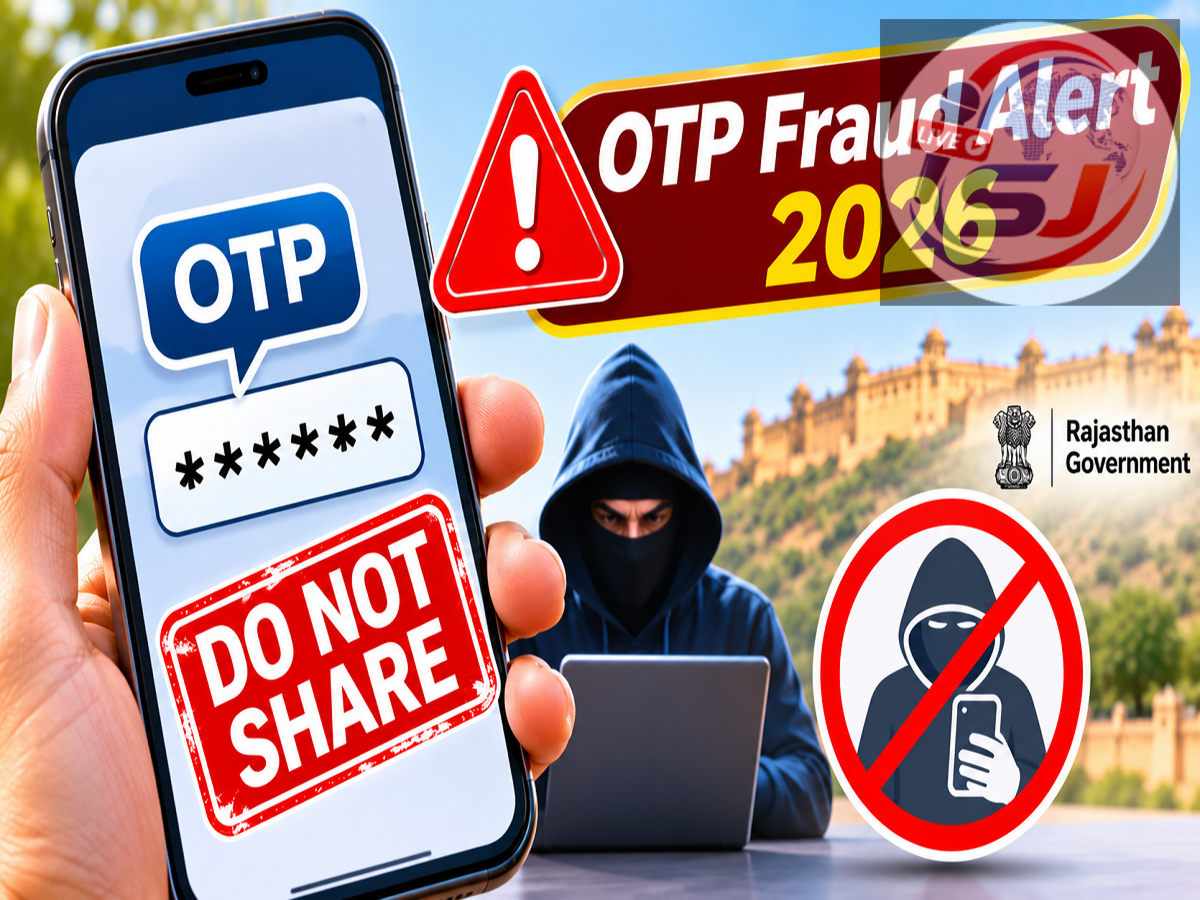
OTP Fraud Alert 2026: One-Time Passwords (OTPs) play an important role in protecting bank accounts, digital payments and online services. However, cybercriminals often exploit people's trust by pretending to be bank officials, government representatives or customer support executives and asking them to disclose confidential OTPs.
The Rajasthan government's Department of Information Technology and Communication (DoIT&C) has shared an important cyber safety advisory reminding citizens that OTPs are meant to protect their accounts, not provide access to strangers.
The department has urged people to never share OTPs with anyone, even if the person claims to represent a bank, government department or another trusted organisation.
The warning comes as a reminder that protecting authentication details is one of the simplest ways to reduce the risk of online financial fraud and unauthorised account access.
Rajasthan Government Warns Citizens About OTP Fraud
The Rajasthan government's cyber awareness message highlights the dangers of disclosing OTPs to unknown individuals.
An OTP is a temporary security code commonly used to verify transactions, confirm account access or authenticate certain online activities.
These codes are generally valid for a limited period and are intended to be entered only through the appropriate official verification process.
Fraudsters may attempt to obtain them by creating false emergencies or impersonating trusted organisations.
For example, a caller might claim that a customer's bank account will be suspended unless an OTP is shared immediately.
Another scammer may pretend to be a government employee and say that an OTP is required to complete a pending verification.
Such requests should be treated with suspicion.
What Is an OTP and Why Is It Important?
An OTP, or One-Time Password, is a temporary authentication code generated for a particular verification process.
Banks, payment services, online shopping platforms and other digital service providers use OTPs as an additional security measure.
Depending on the service, an OTP may be required to confirm account registration, reset a password, authorise a transaction or verify a login attempt.
Because OTPs are often linked to sensitive account activities, sharing them with another person can create serious security risks.
For example, if a criminal already knows certain account details, obtaining the correct OTP may help them complete an unauthorised action.
However, an OTP alone does not necessarily provide access to every account. The risk depends on the service, the verification process and what other information the fraudster possesses.
How Do Cybercriminals Steal Money Through OTP Scams?
OTP fraud commonly involves social engineering, where criminals manipulate individuals into revealing confidential information.
A scammer may contact a potential victim through a phone call, text message, email or messaging application.
The fraudster then creates a convincing explanation for why the OTP is supposedly required.
In some cases, the victim may receive a genuine OTP from their bank or another service because the scammer has initiated a login, password reset or transaction attempt.
The scammer then asks the victim to read out the code.
If the victim shares it, the criminal may be able to complete the activity for which the OTP was generated.
This is why users should never disclose OTPs received on their registered mobile numbers or email accounts.
Common OTP Fraud Tricks You Should Know
Cybercriminals use different stories to convince people to reveal authentication codes.
Some common examples include:
-
Fake bank verification: A caller claims that the customer's account needs urgent verification.
-
KYC update scam: The fraudster warns that banking services will stop unless an OTP is shared.
-
UPI and payment fraud: A scammer asks for an OTP to process a refund or resolve a transaction issue.
-
Government scheme impersonation: The caller claims that an OTP is required to release a benefit or complete registration.
-
Fake delivery confirmation: A fraudster pretends to be a courier representative and requests a verification code.
-
Customer care scam: Someone posing as a support executive asks for an OTP to fix an account problem.
-
Prize or cashback fraud: The victim is told that a reward can be claimed only after sharing an OTP.
These are examples of common cyber fraud methods, not individual cases identified in the Rajasthan government's brief advisory.
Can Bank Employees Ask Customers to Share OTPs?
Customers should never disclose OTPs to someone claiming to represent a bank.
A legitimate banking representative should not require customers to read out confidential transaction or login OTPs over an unsolicited phone call.
If a caller requests an OTP, the safest response is to end the conversation and contact the bank through its official website, mobile application or verified customer support number.
Fraudsters may use familiar bank names, professional language and urgent warnings to make their requests sound authentic.
However, the identity claimed by a caller does not establish that the person is authorised to receive sensitive information.
Beware of Fake Government Officials Asking for OTPs
Cybercriminals may also impersonate representatives of government departments or public service organisations.
They may claim that a government scheme application is incomplete, a subsidy is pending or a document requires urgent verification.
The caller may then ask for an OTP received on the user's mobile phone.
Citizens should avoid sharing such codes with unknown callers.
When accessing government services, authentication should be completed only through the relevant official portal or authorised process.
Users should independently verify unexpected requests through official government contact channels.
What Should You Do If You Receive an OTP Without Requesting It?
Receiving an unexpected OTP may indicate that someone has entered your mobile number or email address into a verification process.
It does not automatically mean that your account has been compromised.
However, users should remain cautious.
Do not share the code with anyone, and avoid clicking suspicious links accompanying the message.
Read the OTP notification carefully to identify the service and the activity mentioned.
If the message relates to an account you use, review recent account activity through the official application or website.
If you notice unfamiliar login attempts or transactions, contact the service provider and secure the account.
OTP Fraud vs UPI PIN Fraud: Understand the Difference
OTPs and UPI PINs are both used for security, but they serve different purposes.
| Security Feature |
OTP |
UPI PIN |
|---|---|---|
| Meaning |
One-Time Password |
Unified Payments Interface Personal Identification Number |
| Main purpose |
Verifies specified account activities |
Authorises UPI transactions and certain account functions |
| Validity |
Usually temporary |
Remains valid until changed or reset |
| How it is used |
Entered during an authorised verification process |
Entered securely within the relevant UPI flow |
| Should it be shared? |
No |
No |
| Main fraud risk |
Unauthorised verification or account activity |
Unauthorised financial transactions |
Both types of credentials must be kept confidential.
Users should also remember that receiving a normal UPI transfer does not require entering a UPI PIN.
What Happens If You Accidentally Share an OTP?
If an OTP has been disclosed to a suspicious person, immediate action is important.
First, identify which account or transaction the OTP was associated with.
If it relates to banking or financial services, contact the bank through its official channels.
Review recent transactions and report any unauthorised activity.
If the OTP was connected to a login or password reset, change the affected account's password from a trusted device.
Users should also review active sessions and sign out unfamiliar devices where the service provides that option.
Enabling additional account security measures can help reduce the risk of further misuse.
If financial fraud has occurred, the incident should be reported promptly.
How to Report OTP Fraud in India
Victims of financial cyber fraud can contact the national cybercrime helpline 1930.
Complaints can also be submitted through the official National Cyber Crime Reporting Portal.
Affected individuals should also notify their bank or payment service provider immediately.
When reporting an incident, users should preserve relevant evidence, including suspicious phone numbers, messages, transaction references and screenshots.
Quick reporting may help authorities and financial institutions take timely action, although recovery of lost funds cannot be guaranteed.
Important Safety Tips to Protect Yourself From OTP Fraud
Protecting OTPs requires careful attention whenever an authentication message is received.
Users should enter OTPs only when they have personally initiated a legitimate activity and are using the appropriate official application or website.
Never read out an OTP to a caller or forward it through messaging applications.
Avoid entering OTPs on unfamiliar websites reached through suspicious links.
Do not trust callers who claim that an OTP is necessary to receive a refund, prize or government benefit without independent verification.
Users should also keep their mobile devices secure and avoid granting unnecessary access to SMS messages or notifications.
Families can help elderly relatives and first-time digital banking users understand why OTP confidentiality is important.
Why OTP Awareness Matters in 2026
As more banking, shopping and government services become available online, authentication codes are increasingly used in everyday activities.
This convenience also creates opportunities for criminals who rely on deception rather than technical attacks.
Many OTP scams begin with a simple phone call or message.
The attacker attempts to create urgency, fear or excitement so that the victim shares a code without checking its purpose.
Understanding that an OTP is a confidential security credential can help users recognise these attempts.
A few seconds spent verifying a request may prevent serious financial or personal information losses.
Final Takeaway: Your OTP Is for Your Security, Not for Sharing
The Rajasthan government's cyber safety message delivers a clear warning to digital service users.
Never share your OTP with anyone, even if they claim to be a bank employee, government official or representative of a trusted organisation.
OTPs are designed to verify authorised activities and protect accounts from unauthorised access.
If someone unexpectedly asks for an OTP, users should stop the interaction and independently verify the request through official channels.
Anyone who suspects financial fraud should immediately contact their bank and report the incident through the national cybercrime reporting system.
Source Credit: Rajasthan Government Department of Information Technology and Communication (DoIT&C) — Public cyber awareness advisory shared under #DOITC, #CyberSafety, #OTPFraud, #CyberAwareness and #Rajasthan. Additional information about OTP scams, account protection and cybercrime reporting has been included for public awareness.