
Online Fraud Refund: Recover Frozen Money Through I4C Money Restoration Module, Check Online Application Process
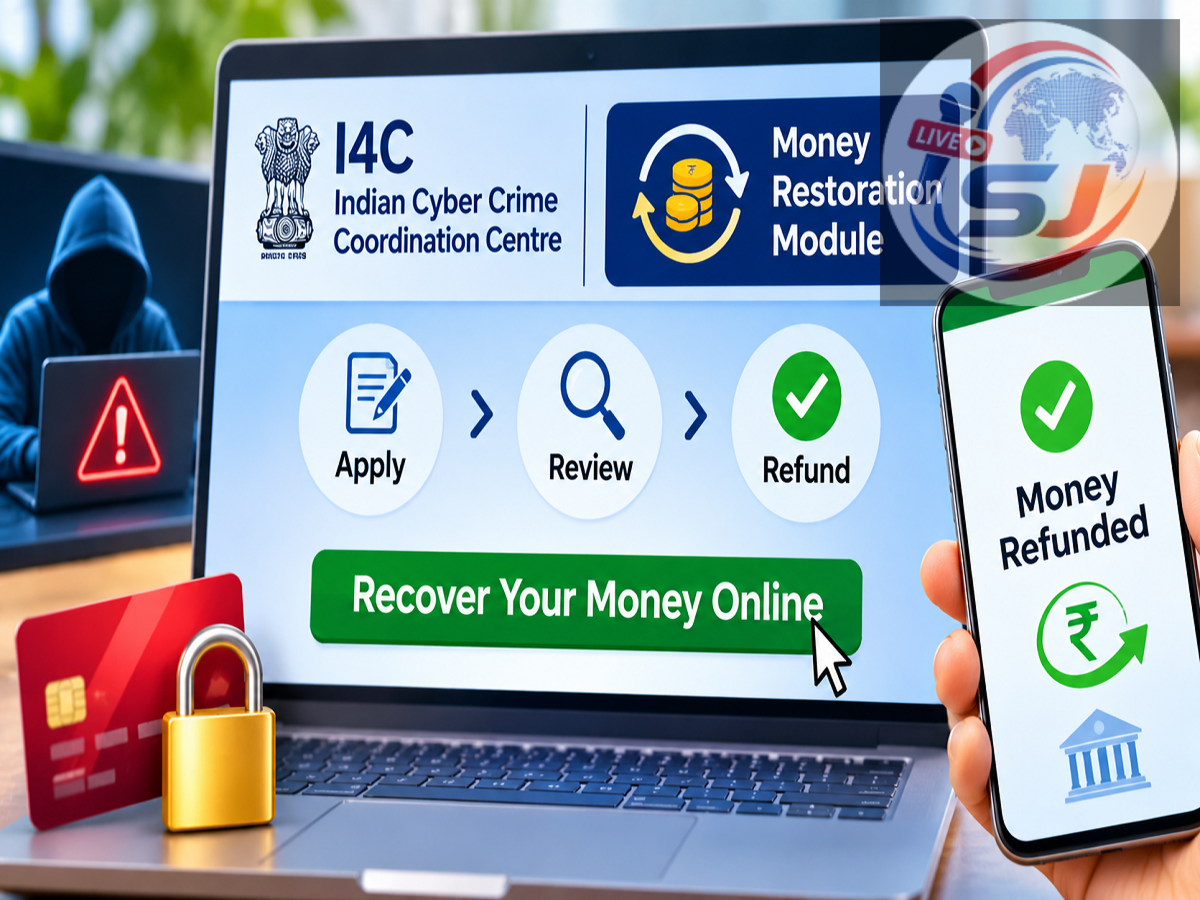
Cyber Fraud Money Recovery Guide: With the rapid expansion of digital banking and UPI payments in India, incidents of online financial fraud have also become a major concern. Cybercriminals frequently use fraudulent links, fake customer care numbers, phishing websites, investment scams and digital arrest threats to steal money from unsuspecting individuals.
For victims of financial cybercrime, recovering stolen money can be a challenging experience. To simplify the recovery process, the Indian Cyber Crime Coordination Centre (I4C), operating under the Ministry of Home Affairs, has introduced the Money Restoration Module (MRM), according to a report by Live Hindustan.
The online facility allows eligible cyber fraud victims to submit a request for the restoration of funds that have already been traced and frozen by the authorities.
Victims can initiate the refund application from home without necessarily visiting a bank branch.
What Is the I4C Money Restoration Module?
The Money Restoration Module is a digital facility designed to streamline the process of returning frozen funds to eligible victims of financial cybercrime.
When a cyber fraud complaint is registered, investigating authorities may coordinate with banks and financial institutions to trace suspicious transactions and freeze the available funds in the recipient's account.
Once the fraudulent amount has been successfully identified and placed on hold, eligible victims can submit a restoration request through the designated online facility.
However, the module does not guarantee a refund for every cybercrime complaint. Recovery depends on the availability of frozen funds, verification of ownership, investigation findings and applicable legal procedures.
Who Can Apply for a Cyber Fraud Refund Online?
Individuals whose stolen money has been successfully traced and frozen following a registered cybercrime complaint may be eligible to use the Money Restoration Module.
Applicants should generally have a valid cybercrime complaint acknowledgement number, registered mobile number, relevant bank account information and supporting identity documents.
If the stolen money has already been withdrawn or transferred and cannot be recovered, submitting a restoration request alone may not result in a refund.
How to Apply for an Online Fraud Refund Through I4C
Eligible cybercrime victims can follow these six steps to submit a money restoration request online.
Step 1: Access the Official Money Restoration Portal
Visit the official I4C Money Restoration Module through authorised government channels using a smartphone or computer.
Locate the Raise Refund Request option and proceed with the application.
Users should avoid unofficial websites claiming to provide cyber fraud recovery services.
Step 2: Enter the 14-Digit Cybercrime Complaint Number
Enter the 14-digit NCRP acknowledgement number received while registering the original cybercrime complaint.
Complete the OTP-based verification process using the registered mobile number.
This step helps authenticate the applicant and connect the restoration request with the existing complaint.
Step 3: Verify Your Bank Account Information
After completing verification, navigate to the Refund Account Details section.
Enter or verify the bank account information where the recovered amount should be credited.
Ensure that the account number and other requested banking details are accurate. Incorrect information could delay processing or result in the rejection of the application.
Step 4: Upload PAN Card and Supporting Documents
Applicants are required to upload a copy of their PAN card, according to the source report.
If a relevant court order has already been issued in connection with the cybercrime case, applicants can upload it through the available court order section.
Additional documentation may be requested depending on the circumstances of the case.
Step 5: Review and Submit the Refund Application
Carefully review the information entered in the application, including banking details and uploaded documents.
Complete the CAPTCHA verification and submit the refund request.
Submitting an application does not automatically authorise the release of frozen funds.
Step 6: Save the 14-Digit Refund Request ID
After successful submission, applicants will receive a 14-digit Request ID, according to the report.
The reference number may also be sent to the registered mobile number and email address.
Applicants should retain this number for future communication and tracking the progress of their restoration request.
Documents and Information Required for Cyber Fraud Money Recovery
| Particulars |
Requirement |
|---|---|
| Cybercrime complaint number |
14-digit NCRP acknowledgement number |
| Registered mobile number |
Required for OTP verification |
| Bank account details |
Required for refund processing |
| PAN card |
Copy to be uploaded |
| Court order |
Where applicable |
| Refund Request ID |
Generated after application submission |
| Application mode |
Online |
| Refund eligibility |
Subject to availability of frozen funds and verification |
What Should You Do Immediately After Experiencing Online Fraud?
Quick action is extremely important when dealing with financial cybercrime. Reporting fraudulent transactions immediately can improve the possibility of authorities tracing and freezing the stolen amount before it is transferred further.
Victims should take the following steps:
-
Immediately call the national cybercrime helpline at 1930.
-
Register a complaint through the National Cyber Crime Reporting Portal.
-
Inform the concerned bank or payment service provider without delay.
-
Preserve transaction IDs, UPI details, bank statements and payment receipts.
-
Save screenshots of suspicious messages, emails and fraudulent communications.
-
Keep the 14-digit cybercrime complaint acknowledgement number safe.
-
Follow instructions issued by investigating authorities.
Victims should also request their bank to secure affected accounts, cards or digital banking services if there is a possibility of further unauthorised transactions.
Can You Recover the Entire Amount Lost in Cyber Fraud?
The amount that can be restored depends on how much money has been successfully traced and frozen during the investigation.
For example, if a victim loses ₹1 lakh in an online scam but authorities manage to freeze only ₹60,000, the available amount for restoration may be limited to the recovered funds, subject to verification and legal approval.
The Money Restoration Module facilitates the application process but does not guarantee full compensation for financial losses.
There is also no universal refund processing timeline, as each case may involve different investigation and legal requirements.
Beware of Fake Cyber Fraud Recovery Services
Cybercriminals sometimes target existing fraud victims by promising to recover their stolen money in exchange for advance payments.
Fraudsters may impersonate government officials, police officers, bank representatives or cybercrime investigators to obtain sensitive financial information.
Never share your UPI PIN, ATM PIN, internet banking password or OTP with anyone claiming to process a refund. Receiving money through UPI does not require entering a UPI PIN.
Always access cybercrime reporting and recovery services through official government websites.
Cyber Fraud Reporting: Important Government Contacts
| Service |
Official Contact |
|---|---|
| National Cybercrime Helpline |
1930 |
| National Cyber Crime Reporting Portal |
|
| Indian Cyber Crime Coordination Centre |
|
| Financial Fraud Money Restoration |
I4C Money Restoration Module |
| Unauthorised Banking Transactions |
Your bank's official customer care service |
The introduction of the Money Restoration Module could make the recovery application process more accessible for eligible cybercrime victims. Nevertheless, immediate fraud reporting, accurate documentation and cooperation with investigating authorities remain essential for improving the chances of recovering stolen money.