
Online Banking Fraud 2026: Bank Ordered to Refund ₹70,084 and Pay ₹25,000 Compensation, Know RBI Rules
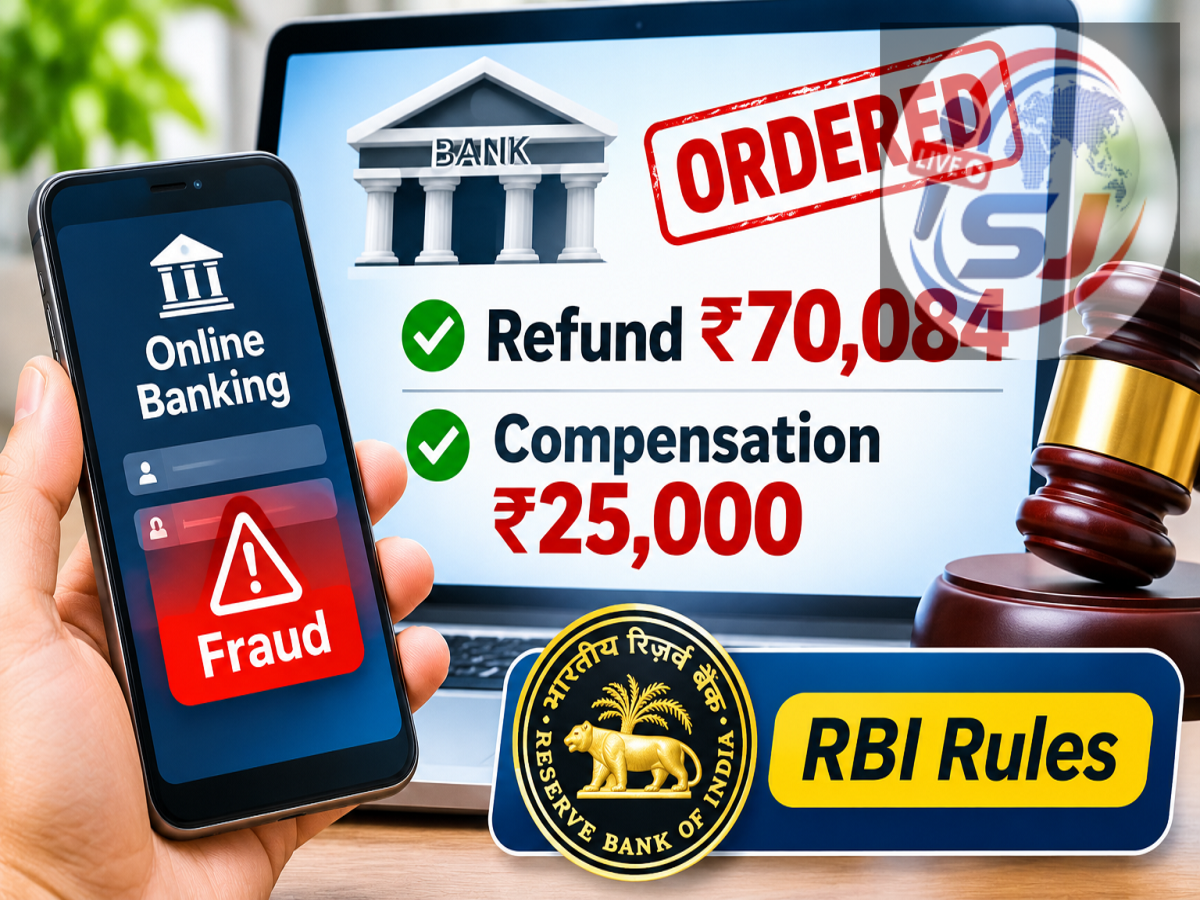
Online Banking Fraud Refund Rules: Losing money through an unauthorised online banking transaction can be financially stressful, but customers may be entitled to a refund under certain circumstances. A recent decision by a Delhi consumer commission has highlighted the importance of reporting suspicious transactions promptly and preserving evidence of the complaint.
In this case, the consumer commission directed a private-sector bank to refund ₹70,084 to a woman whose savings account had been debited through disputed online transactions. The bank was also ordered to pay ₹25,000 towards compensation and litigation expenses.
According to a Live Hindustan report published on November 15, 2026, the commission considered the woman's prompt complaint and the bank's inability to establish negligence on her part.
The decision is particularly relevant for customers who use internet banking, debit cards, mobile banking applications and other digital payment services.
However, a refund is not automatic in every online fraud case. Customer liability depends on the circumstances of the transaction, the cause of the security breach and how quickly the incident is reported.
What Happened in the ₹70,084 Online Banking Fraud Case?
The dispute involved a woman who maintained a savings account with a private bank.
Her account was linked to her registered mobile number for banking alerts and transaction-related communication.
In July 2016, several online transactions were carried out through her account without her authorisation, according to her complaint.
The disputed transactions resulted in a financial loss of ₹70,084 on July 9, 2016.
The woman stated that her mobile phone was experiencing technical problems during that period, preventing her from receiving transaction alerts and one-time passwords promptly.
After discovering the suspicious activity, she contacted the bank's customer support department by email on July 10, 2016.
She requested that her card be blocked immediately and that further unauthorised transactions be prevented.
She also lodged a complaint with the police.
Despite these actions, the disputed amount was not refunded, prompting her to seek relief through the consumer dispute redressal mechanism.
Why Did the Consumer Commission Rule Against the Bank?
During the proceedings, the commission examined the circumstances surrounding the unauthorised transactions and the customer's response.
A significant factor was that the woman had informed the bank promptly after becoming aware of the disputed activity.
The commission also found that the bank had not established that the customer was responsible for the transactions through negligence.
The ruling referred to the Reserve Bank of India's framework governing customer liability in unauthorised electronic banking transactions.
Under this framework, customers may have zero liability in specified situations, particularly when the fraud is attributable to a bank-related deficiency or a third-party breach reported within the prescribed period.
Considering the circumstances, the commission ordered the bank to refund the disputed amount and provide additional compensation.
RBI Rules: When Can Customers Get a Refund for Online Banking Fraud?
The RBI's customer protection framework explains when a bank account holder may have zero, limited or greater liability for an unauthorised electronic transaction.
For a third-party breach where neither the bank nor the customer is responsible, the reporting timeline plays a crucial role.
| Reporting Period |
Customer Liability |
|---|---|
| Within 3 working days of receiving the bank's transaction communication |
Zero liability |
| Within 4–7 working days |
Limited liability, subject to prescribed caps |
| After 7 working days |
As per the bank's approved customer liability policy |
If the loss results from fraud, negligence or a deficiency on the bank's part, the customer may have zero liability regardless of when the transaction is reported.
However, if a customer negligently shares sensitive payment credentials, the customer may bear losses occurring before the bank is informed. Losses occurring after notification must be borne by the bank under the applicable framework.
The RBI also places the burden of proving customer liability on the bank.
Reserve Bank of India+1
Important clarification: The disputed transactions in the Delhi case occurred in July 2016, before the RBI's July 2017 customer-liability circular. The later regulatory framework helps explain present-day customer protections, but its application to the historical dispute should not be assumed solely from the news report.
How Quickly Must a Bank Refund Unauthorised Transactions?
Under the RBI's applicable customer-protection directions, banks must provide a provisional credit, commonly called a shadow reversal, within 10 working days after receiving notification of an unauthorised electronic transaction.
The bank must also determine customer liability and resolve the complaint within the prescribed period, which cannot exceed 90 days.
A provisional credit does not mean that every disputed transaction is automatically eligible for a permanent refund. The final outcome depends on the investigation and applicable liability rules.
Reserve Bank of India
What Should You Do If Money Is Stolen From Your Bank Account?
Customers should act immediately after discovering any suspicious transaction.
-
Notify the bank: Contact the bank through its official customer care number, mobile application or branch. Report the unauthorised transaction and request a complaint reference number.
-
Block compromised services: If a debit card, credit card or banking credential may have been compromised, request an immediate block or other protective measures.
-
Preserve evidence: Save transaction alerts, bank statements, emails, complaint acknowledgements and relevant screenshots.
-
Report the cybercrime: Call India's national cybercrime helpline at 1930 or submit a complaint through National Cyber Crime Reporting Portal.
-
Monitor the account: Review recent transactions and report any further suspicious activity.
Customers should never share their OTP, PIN, password or other confidential banking credentials with callers claiming to help recover stolen money.
What If the Bank Refuses to Refund the Money?
If a bank rejects a legitimate complaint or fails to respond satisfactorily, customers can escalate the matter through its internal grievance redressal system.
If the complaint remains unresolved for 30 days, or the customer is dissatisfied with the bank's response, they may be eligible to approach the RBI Ombudsman through the RBI Complaint Management System.
Consumers may also have access to other legal remedies, depending on the circumstances and applicable rules.
Maintaining a complete record of the original complaint and subsequent communication can help establish the timeline of events.
Why Is Reporting Fraud Immediately So Important?
The Delhi case demonstrates the value of acting quickly when an unauthorised transaction is discovered.
The woman reported the disputed activity the day after the transactions occurred and requested that her card be blocked.
Her prompt response became an important consideration during the consumer dispute proceedings.
For today's banking customers, early reporting can also help prevent additional losses and strengthen their position under the RBI's liability framework.
Final Takeaway
A Delhi consumer commission has ordered a private bank to refund ₹70,084 lost through disputed online transactions and pay an additional ₹25,000 towards compensation and litigation expenses.
The decision highlights the importance of timely complaints and the bank's responsibility to establish customer negligence when disputing liability.
Customers who experience unauthorised banking transactions should report them immediately, retain evidence and pursue the available grievance redressal process.
While every fraud case is different, RBI regulations provide important protections that may help eligible customers recover their money.