
NPS Tatkal Launched: Open NPS Account Through BHIM UPI, Check How the New Digital Facility Works
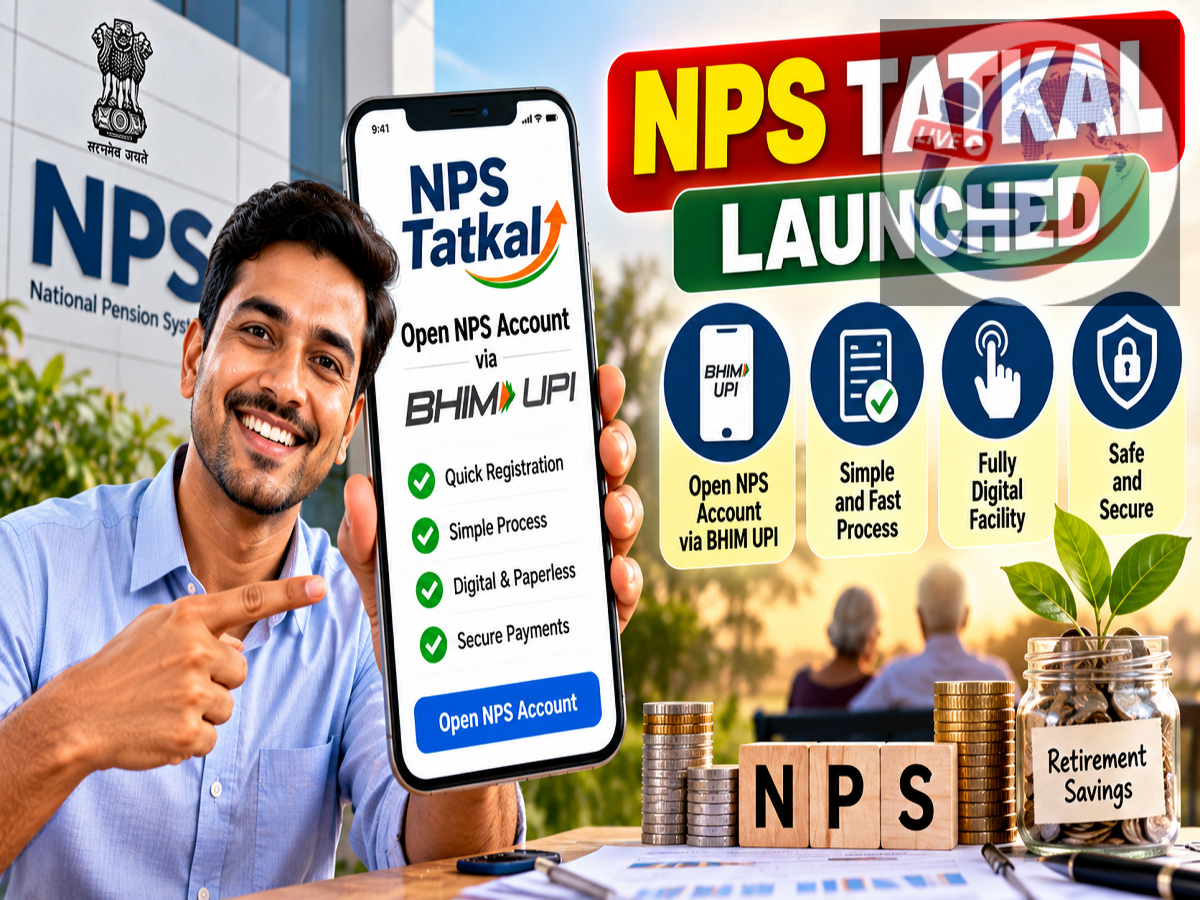
Opening a National Pension System (NPS) account is becoming faster with the introduction of NPS Tatkal, a digital onboarding facility designed to simplify the process for new subscribers.
The Pension Fund Regulatory and Development Authority (PFRDA) has introduced the Tatkal NPS framework as part of its push to expand pension coverage and make NPS more accessible through digital channels.
One important point, however, needs to be understood from the beginning: NPS Tatkal is not a separate pension scheme offering a new or guaranteed pension. Instead, it is a faster way for eligible individuals to open an NPS account digitally.
The facility uses the UPI ecosystem and has initially been made available through the BHIM app with participating banks.
PFRDA is also looking to significantly expand the NPS subscriber base, particularly among people outside the traditional formal employment system.
What Is NPS Tatkal?
NPS Tatkal is essentially a simplified digital onboarding mechanism for the National Pension System.
Its main objective is to reduce the number of steps normally required for opening an NPS account.
Instead of going through a lengthy physical application process, eligible customers of participating banks can use their existing KYC-verified banking relationship to complete the onboarding process digitally.
The service has initially been integrated with the BHIM UPI application.
This means an eligible user can begin the NPS registration process through the app, select the relevant bank account, provide the required information and make the initial contribution digitally.
Once the process is successfully completed, a Permanent Retirement Account Number (PRAN) can be generated.
NPS Tatkal Is Not a New Pension Product
The word “Tatkal” may create some confusion because people are familiar with Tatkal railway tickets, where a separate booking category applies.
That is not what is happening here.
NPS Tatkal does not replace the National Pension System, nor does it automatically offer subscribers a higher pension or special investment return.
It primarily changes how quickly and conveniently a new subscriber can join NPS.
Once the account is created, the subscriber continues under the applicable NPS framework, investment options, withdrawal conditions and other regulatory rules.
How to Open an NPS Account Through BHIM
The supplied information describes a simple digital process for eligible customers.
A user can open the BHIM application and locate the NPS option under the relevant payments or services section.
The customer then provides basic information such as date of birth and chooses the bank account displayed during the onboarding process.
Since the system uses a KYC-verified bank account, much of the verification process can be completed digitally.
The user then authorises the initial NPS contribution through UPI.
After successful verification and payment, the NPS account can be activated and the subscriber receives a PRAN.
NPS Tatkal: Process at a Glance
| Step | What the User Does |
|---|---|
| 1 | Open the BHIM app |
| 2 | Find the NPS service |
| 3 | Enter required basic details |
| 4 | Select the eligible KYC-verified bank account |
| 5 | Complete verification |
| 6 | Make the required initial contribution through UPI |
| 7 | Complete NPS registration and receive PRAN |
The exact screens and fields can change as the facility evolves, so users should follow the instructions displayed in the app.
Which Banks Currently Support NPS Tatkal?
According to information reported around the launch, customers of five major banks were initially covered by the facility:
-
State Bank of India
-
HDFC Bank
-
ICICI Bank
-
Axis Bank
-
IDFC FIRST Bank
The list can expand as additional banks and financial institutions integrate with the framework.
Customers should therefore check whether their bank is currently supported when trying to use the NPS Tatkal facility.
Why Is a KYC-Verified Bank Account Important?
One of the biggest advantages of the Tatkal framework is its use of existing verified banking information.
A bank already holds KYC information for its customers. By using an eligible KYC-verified account, the digital NPS onboarding process can reduce repetitive documentation and manual verification.
This is intended to make registration faster while maintaining identity-verification requirements.
However, users still need to ensure that the information associated with their bank account is correct.
A mismatch involving personal or KYC details can potentially interrupt the onboarding process.
Initial Contribution Can Be Made Digitally
Another feature of NPS Tatkal is digital payment integration.
According to the supplied information, a subscriber can authorise an initial contribution of at least ₹250 through UPI during the onboarding process.
The amount and contribution requirements should be checked against the applicable NPS account type and current PFRDA rules at the time of registration.
The UPI-based approach means eligible subscribers do not have to rely on cash or physical payment instruments simply to start their NPS journey.
What Is PRAN?
Every NPS subscriber receives a Permanent Retirement Account Number, commonly known as PRAN.
This unique number identifies the subscriber's NPS account.
Once PRAN is generated and the account is activated, the subscriber can continue making contributions and manage the retirement account according to the applicable NPS rules.
PRAN therefore remains important regardless of whether the account was opened through a traditional channel or the newer Tatkal onboarding facility.
Why Has PFRDA Introduced NPS Tatkal?
A major objective is to make NPS easier to access.
Digital onboarding can be particularly useful for people who may not have convenient access to a physical pension-service point.
The facility could therefore help expand NPS participation in smaller cities and towns as well as among self-employed and informal-sector workers.
PFRDA has indicated an ambition to add 2–3 crore subscribers over the coming years, according to recent reports.
Simplifying account opening is one of the measures intended to broaden pension participation.
NPS Is a Market-Linked Retirement System
People considering NPS should also understand how the underlying pension system works.
NPS is a defined-contribution, market-linked retirement system.
Subscribers contribute money during their working years, and the funds are invested according to the applicable asset-allocation framework and investment choices.
Returns are therefore linked to investment performance and are not a fixed or guaranteed interest rate like a conventional bank fixed deposit.
The eventual retirement corpus depends on factors such as contributions, investment period, asset allocation, market performance, charges and withdrawals.
Is NPS Mandatory for Everyone?
No.
NPS coverage differs depending on the subscriber category.
It has been part of the pension framework for eligible central government employees appointed under the applicable NPS regime, while various state governments have their own pension arrangements.
For private-sector workers, self-employed individuals and other eligible citizens, NPS can generally be joined voluntarily under the applicable rules.
Therefore, the launch of NPS Tatkal does not make NPS compulsory for every Indian citizen.
What About the Demand for OPS?
The supplied report also refers to demands by some employee organisations for restoration of the Old Pension Scheme (OPS).
Certain organisations have sought pension-related changes, including demands linked to guaranteed pension benefits.
These demands should be distinguished from the launch of NPS Tatkal.
NPS Tatkal is an onboarding initiative under the existing NPS framework. It does not itself decide the separate policy debate around OPS, NPS or other pension arrangements for government employees.
Benefits of the NPS Tatkal Facility
The new onboarding approach is designed around convenience.
Eligible users can potentially complete the registration process digitally without traditional paperwork, while existing bank KYC information can simplify verification.
UPI integration also allows the initial contribution to be completed through a familiar digital-payment method.
For people living far from physical service points, this could reduce the effort required to open an NPS account.
Does NPS Tatkal Guarantee Faster Pension or Higher Returns?
No.
“Tatkal” refers to the speed of account onboarding, not the speed at which a subscriber earns retirement benefits.
It also does not provide a special guaranteed return.
Investment performance after opening the account continues to depend on the NPS scheme and asset allocation applicable to the subscriber.
Similarly, retirement and withdrawal benefits remain governed by NPS rules.
What Subscribers Should Check Before Opening an Account
Anyone considering NPS Tatkal should first understand whether NPS suits their retirement-planning requirements.
Users should check the applicable investment choices, contribution rules, withdrawal conditions, charges and retirement provisions.
They should also verify that their bank is currently supported by the Tatkal facility and that the KYC information linked to their bank account is accurate.
NPS Tatkal Could Make Pension Onboarding Easier
The biggest significance of NPS Tatkal is its attempt to make pension-account registration as simple as other digital financial services.
By connecting NPS onboarding with BHIM UPI and KYC-verified bank accounts, PFRDA aims to reduce paperwork and simplify the process of obtaining a PRAN.
Initially, customers of participating banks such as SBI, HDFC Bank, ICICI Bank, Axis Bank and IDFC FIRST Bank have been cited as being able to access the facility, with the ecosystem potentially expanding further.
For prospective subscribers, the key takeaway is simple: NPS Tatkal is a faster route to opening an NPS account, not a separate pension scheme or a promise of higher returns.
Before enrolling, individuals should understand the market-linked nature of NPS and review the applicable investment, contribution and withdrawal rules according to their retirement needs.