
New Calling Rules From November 1, 2026: Unknown Callers' Names May Appear Without Truecaller
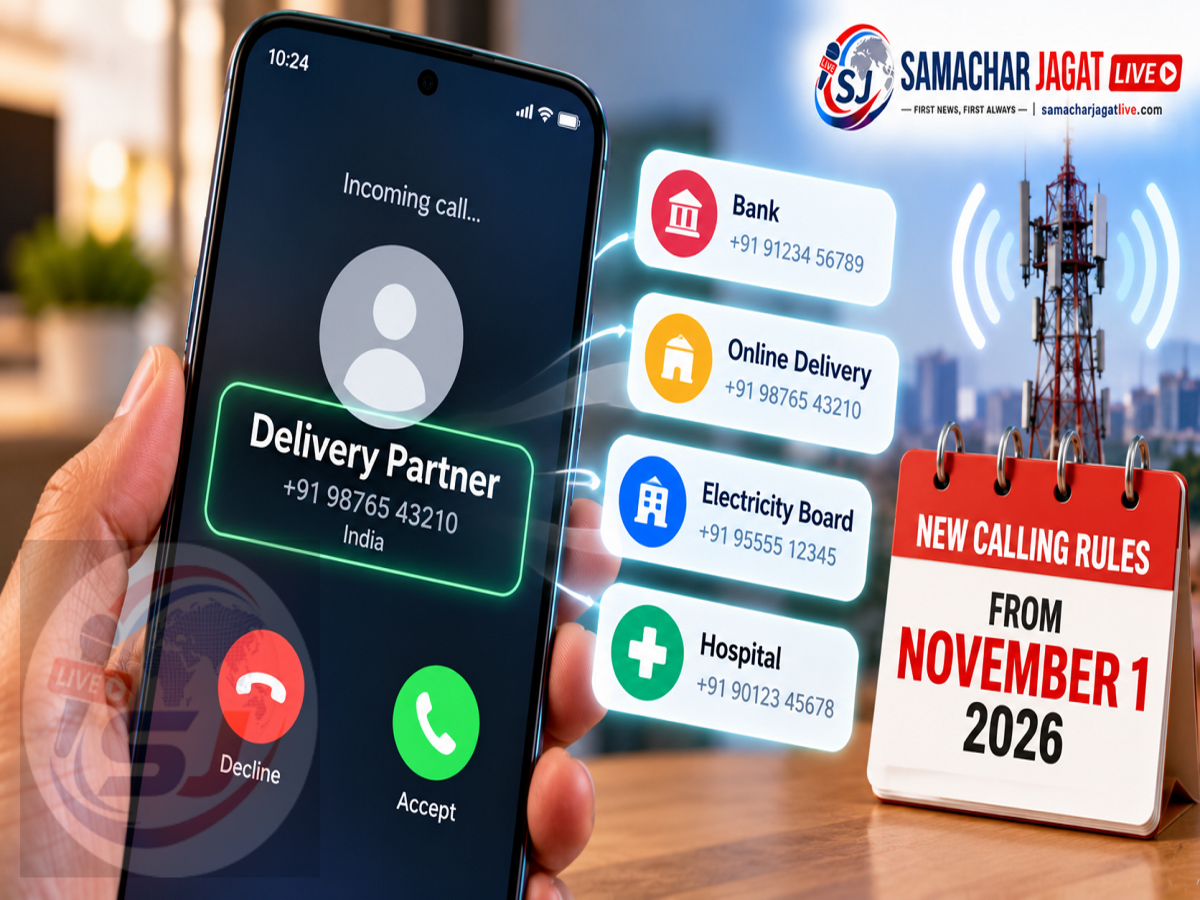
CNAP Service India 2026: Identifying unknown callers could become easier for millions of mobile users in India from November 1, 2026. According to a report published on October 15, the Department of Telecommunications (DoT) has directed telecom operators to introduce a new caller identification service known as Calling Name Presentation (CNAP).
The proposed service will allow compatible mobile phones to display the caller's name along with their phone number, even when the number is not saved in the recipient's contact list.
Unlike third-party caller identification applications such as Truecaller, CNAP is designed to use information maintained by telecom operators.
The service is reportedly scheduled to begin on November 1, 2026, for 4G and newer mobile networks, including supported 5G services.
However, this does not necessarily mean every mobile subscriber will receive the feature on the same day. Availability may depend on network implementation, device compatibility and other technical requirements.
Here is how CNAP is expected to work, who may benefit and what mobile users should know about the new calling system.
What Is CNAP and Why Is It Being Introduced?
CNAP stands for Calling Name Presentation.
It is a network-based caller identification facility intended to display information about the person or subscriber associated with an incoming phone call.
Currently, when someone receives a call from an unsaved number, the phone generally displays the mobile number without identifying the caller.
Some users rely on third-party applications to obtain additional information about unknown numbers.
CNAP aims to provide caller name information through the telecom network itself.
Under the system described in the report, telecom operators will use their subscriber records to identify the name associated with the calling number.
This information can then be presented to the person receiving the call.
The objective is to make caller identification more accessible and potentially help users recognise unfamiliar numbers.
CNAP Service Expected to Start From November 1, 2026
According to the supplied report, the Department of Telecommunications has instructed telecom service providers to introduce CNAP from November 1, 2026.
The initial implementation will focus on 4G and newer wireless networks.
This means compatible 4G and 5G users may be among the first to receive the new caller identification facility.
However, a scheduled implementation date should not be confused with guaranteed nationwide availability for every handset and connection.
Telecom operators may need to complete technical integration, subscriber database preparation and network-level changes before the service becomes fully operational.
Users should watch for official announcements from their telecom providers regarding availability.
How Will CNAP Show the Name of an Unknown Caller?
The proposed process is relatively straightforward.
When someone makes a phone call, the receiving telecom network will be able to obtain caller name information associated with the number.
The name will be drawn from the relevant telecom operator's subscriber records rather than depending entirely on a third-party application's user-generated database.
For example, suppose you receive a call from a number that is not saved in your phone.
Under a supported CNAP system, your screen may display both the mobile number and the subscriber name associated with that number.
This could help you decide whether to answer the call.
However, the displayed name may not always identify the actual person speaking.
A phone connection could be registered in one person's name while being used by another family member, employee or authorised user.
Therefore, CNAP information should be treated as an identification aid rather than definitive proof of a caller's identity.
What Happens If the Number Is Already Saved in Your Contacts?
The reported system distinguishes between saved and unsaved numbers.
If the incoming number is already stored in your phone's contact list, the device may continue displaying the name you saved.
For example, if you have stored a number as "Office Manager," that contact name may appear when the person calls.
If the number is not saved, CNAP may display the name associated with the telecom subscriber record.
This arrangement is intended to preserve the familiar calling experience while providing additional information for unknown numbers.
The exact display behaviour may vary depending on device software and network support.
Two Details May Appear on Your Phone Screen
According to the report, CNAP is designed to show two important pieces of information during an incoming call.
These are the caller's mobile number and the associated name.
For domestic calls from unsaved numbers, the name may be retrieved from the telecom operator's subscriber database.
For international calls, the report states that the screen may display an "International Call" label.
The following table summarises the proposed experience.
| Incoming Call Type | Expected Display |
|---|---|
| Number saved in contacts | Saved contact name and relevant calling details |
| Unsaved domestic number | Caller number and available subscriber name |
| International call | International Call identification, as described in the report |
| Unsupported network or device | Existing caller display behaviour may continue |
These details are based on the reported CNAP framework. The final user experience may depend on the implementation.
Will CNAP Replace Truecaller?
CNAP could reduce the need for third-party caller identification applications for some users.
However, it should not automatically be considered a complete replacement for Truecaller or similar services.
The two approaches rely on different sources of information.
CNAP is designed to use telecom subscriber records.
Third-party caller identification applications may use their own databases, community reports and additional detection mechanisms.
Some applications also provide features such as spam warnings, number blocking and other call management tools.
The supplied report does not establish that CNAP will provide all these additional functions.
Therefore, users may still prefer dedicated caller identification applications for certain features.
CNAP vs Truecaller: What's the Difference?
| Feature | CNAP | Third-Party Caller ID Apps |
|---|---|---|
| Information Source | Telecom subscriber records | App databases and other available information |
| Main Purpose | Display caller identity information | Caller identification and additional call-related features |
| Separate App Required | Designed as a network-level facility | Usually requires an application |
| Name Accuracy | Depends on subscriber records | Depends on database quality and other inputs |
| Spam Detection | Not guaranteed by the reported CNAP functionality | May be offered |
| Availability | Depends on telecom and device support | Depends on app and device compatibility |
Both systems have limitations, and neither should be treated as an absolute guarantee of caller authenticity.
Will 2G and 3G Users Get CNAP?
The initial implementation described in the report is focused on 4G and newer wireless networks.
This means users relying on older 2G or 3G services may not receive the feature during the first phase.
The government is reportedly considering separate implementation arrangements for older networks and landline services.
However, no confirmed rollout date for those categories is provided in the supplied report.
Users with older devices should therefore wait for further information from their telecom providers.
What About Landline Users?
The report indicates that the implementation of CNAP on landline networks will be considered separately.
Landline calling infrastructure differs from modern mobile networks, and additional technical arrangements may be necessary.
As a result, the proposed November 1 implementation should not be interpreted as confirmation that all fixed-line phones will immediately display caller names.
Further instructions may be issued for landline services.
How Will Telecom Companies Manage Caller Names?
CNAP requires telecom operators to maintain subscriber information that can be used to identify incoming calls.
According to the report, telecom providers will need to maintain databases linking subscribers' names with their mobile numbers.
When a call is made, the receiving operator will obtain the relevant caller name information and deliver it to the supported device.
The report also states that the government has instructed operators not to retain the caller name obtained through this process after the call ends.
This reported restriction is intended to address concerns about unnecessary retention of personal information.
However, the detailed technical and privacy requirements should be confirmed through the final official directions.
Can CNAP Help Reduce Scam Calls?
The proposed caller identification system could make it easier for users to recognise some unfamiliar callers.
For example, seeing a subscriber name alongside an unknown number may provide additional context before answering.
However, CNAP does not guarantee that a call is genuine or safe.
Fraudsters may still attempt to deceive people through social engineering, impersonation or other methods.
A caller may also be using a connection registered in someone else's name.
Therefore, users should not assume that a displayed name automatically verifies the caller's identity.
The feature may improve transparency, but it is not a complete solution to telephone fraud.
Important Safety Tips for Mobile Users
Even after CNAP becomes available, users should follow basic precautions when receiving unexpected calls.
Never share OTPs, UPI PINs, internet banking passwords or card security codes over the phone.
If someone claims to represent a bank, government department or telecom company, verify the request through the organisation's official customer support channel.
Avoid transferring money solely because a caller claims that an account is blocked or an urgent payment is required.
Do not install unfamiliar applications at the request of an unknown caller.
Remember that even a familiar-looking caller name may not establish that the person is trustworthy.
Will Users Need to Activate CNAP Manually?
The supplied report does not confirm whether users will need to enable CNAP through a separate phone setting.
Because the facility is designed to operate at the telecom network level, implementation may involve operator-side and device-side support.
Some phones may require compatible software or network settings.
However, users should not install unofficial applications claiming to activate CNAP early.
They should wait for verified instructions from their telecom provider or device manufacturer.
Frequently Asked Questions
What is the new caller name feature coming to India?
It is called Calling Name Presentation, or CNAP. The service is intended to display caller name information alongside incoming phone numbers.
When is CNAP expected to launch?
According to the supplied report, telecom operators have been directed to introduce the service from November 1, 2026.
Will CNAP work without Truecaller?
CNAP is designed as a telecom network-based service and does not depend on installing Truecaller.
Will every unknown caller's real name appear?
Not necessarily. The displayed information may reflect the registered subscriber rather than the actual person making the call.
Will CNAP work on 5G phones?
The reported initial rollout covers 4G and newer wireless networks, which may include supported 5G services.
Will 2G and 3G users receive CNAP?
The report indicates that implementation on older networks will be considered separately.
Can CNAP completely stop fraud calls?
No. Caller name information may help with identification, but it cannot guarantee that a caller is trustworthy.
Final Thoughts
India's proposed Calling Name Presentation service could change how mobile users identify unfamiliar callers.
By displaying subscriber name information alongside incoming phone numbers, CNAP may reduce the need to rely entirely on third-party caller identification applications.
The reported November 1, 2026 rollout is expected to focus initially on supported 4G and 5G networks.
However, the exact availability will depend on implementation by telecom operators and compatibility with users' devices.
Most importantly, a name appearing on the screen should never be treated as proof that a call is safe.
Users should continue verifying unexpected requests and protecting sensitive banking and personal information.
Disclaimer: This article is based on the supplied October 15, 2026 news report. The reported Department of Telecommunications directions, rollout date and technical requirements have not been independently verified against the original government order. Users should check official DoT and telecom operator announcements for confirmed implementation details.