
New Caller ID Rules From November 1, 2026: Unknown Callers' Names May Appear Automatically on Your Phone
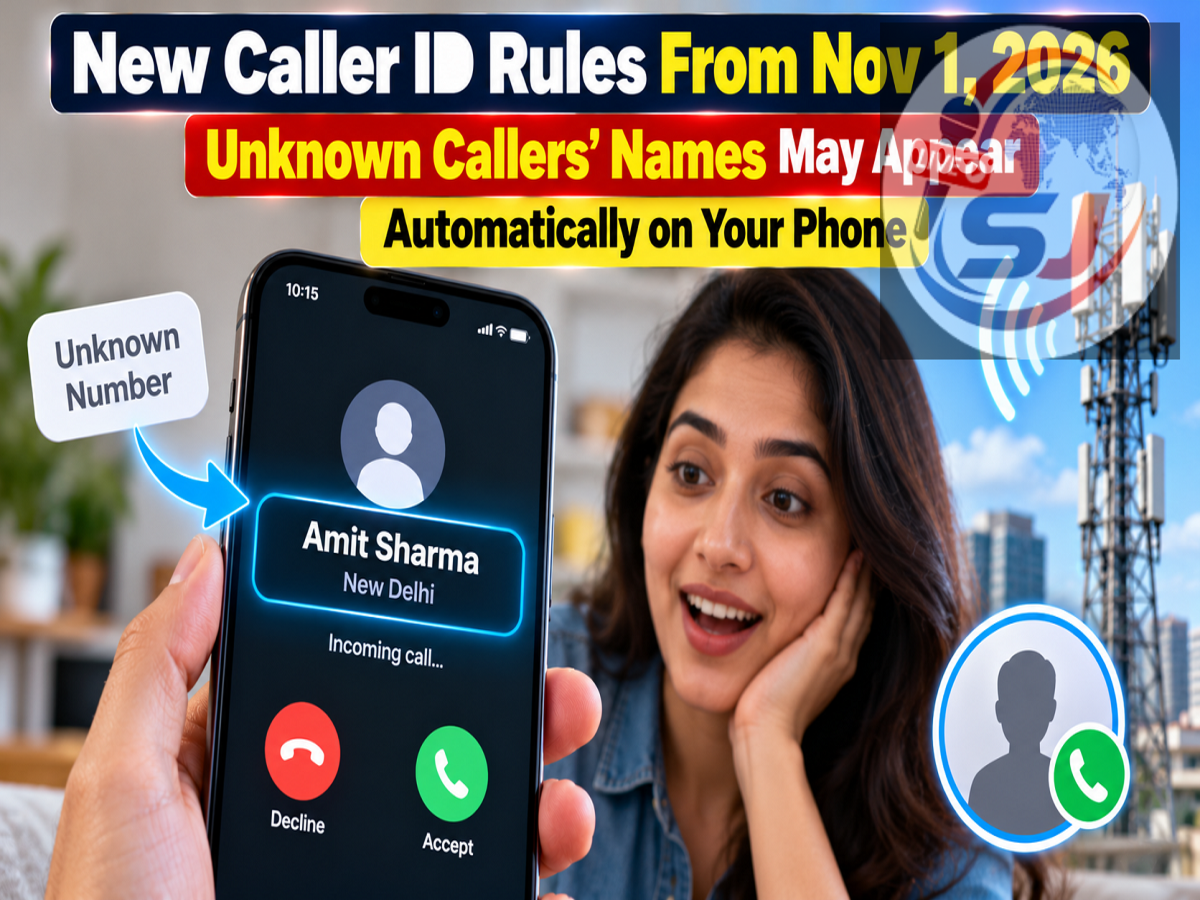
CNAP New Rules 2026: Mobile users across India could soon experience a significant change in how incoming calls appear on their smartphones. From November 1, 2026, telecom operators are preparing to introduce Calling Name Presentation (CNAP), a network-based caller identification facility designed to display the registered name associated with an incoming phone number.
The development could make it easier for people to identify unfamiliar callers without depending entirely on third-party caller identification applications.
According to reports published on October 23, the Department of Telecommunications (DoT) has directed telecom companies to implement the facility, with the initial rollout focusing on 4G and newer-generation mobile networks.
The change is particularly relevant to users who regularly receive calls from unknown numbers and want more information before answering.
However, the name displayed through CNAP should not be treated as proof that a caller is trustworthy.
What Is CNAP and Why Is It Important?
Calling Name Presentation is a telecom-network feature that provides caller-name information alongside an incoming telephone number.
Currently, when someone calls from an unsaved number, a smartphone may display only the number unless the device or a separate application can identify it.
CNAP is designed to make additional caller information available through telecom operators themselves.
The system uses subscriber information associated with the calling number, rather than relying primarily on crowdsourced contact lists.
For example, when an unfamiliar mobile number calls, the recipient may see a registered subscriber name along with the number.
This could help users decide whether to answer, ignore or verify the call through another channel.
CNAP Launch Date and Network Coverage
The Department of Telecommunications issued directions on October 13, 2026, asking authorised telecom operators to introduce CNAP from November 1.
The initial implementation applies to 4G LTE, 5G and newer-generation wireless networks. Services using 2G, 3G and fixed-line connections will be considered separately.
| Feature |
Details |
|---|---|
| Service name |
Calling Name Presentation (CNAP) |
| Scheduled launch |
November 1, 2026 |
| Responsible authority |
Department of Telecommunications |
| Initially supported networks |
4G, 5G and newer networks |
| Major operators |
Jio, Airtel, Vi and BSNL |
| Separate app needed |
No |
| Separate activation request |
Not required |
| Older networks |
Implementation to be decided separately |
What Will Appear on Your Phone During an Unknown Call?
Under the new system, the incoming call screen is expected to display the telephone number and a corresponding caller-name field.
The information displayed will depend on the type of call.
| Calling Situation |
Expected Caller ID |
|---|---|
| Number already saved in contacts |
Your saved contact name |
| Unsaved Indian mobile number |
Name from telecom subscriber records |
| Unsaved international number |
International Call |
| Eligible caller with identification restriction |
Name may be withheld |
The name displayed for an unknown domestic caller will generally come from the originating operator's subscriber records.
Will Jio, Airtel, Vi and BSNL Users Get CNAP?
The directions apply to authorised access-service providers, including major Indian telecom operators.
This means customers using eligible connections from Reliance Jio, Bharti Airtel, Vodafone Idea and BSNL are within the intended scope.
However, the practical experience may vary depending on the device, network and technical readiness of the operator.
The November 1 date is the regulatory rollout date, not a guarantee that every handset will display the feature identically from the first day.
Will You Need Truecaller After CNAP Starts?
CNAP is designed to provide caller-name information directly through telecom networks, reducing dependence on third-party caller identification applications.
However, CNAP and Truecaller are not identical services.
Third-party applications may provide spam reports, call blocking and other features based on their own databases.
CNAP focuses on displaying the name associated with a telecom connection.
Users may therefore continue using other caller-identification tools for additional functions.
Will CNAP Be Activated Automatically?
According to the DoT directions, telecom companies must provide the service without requiring a separate request from customers.
Users should not need to complete a new application simply to receive caller-name information.
There is also no requirement in the cited directions for users to download a special CNAP app.
Consumers should be cautious about messages asking for an OTP, payment or identity documents to activate the feature.
Can CNAP Help Prevent Fraudulent Calls?
The new facility may make it easier to recognise unfamiliar callers, but it cannot guarantee that a call is safe.
The name displayed may belong to the registered subscriber rather than the person actually using the connection.
Fraudsters may also attempt to impersonate legitimate businesses or individuals.
Users should continue verifying suspicious requests independently, particularly when callers ask for bank details, passwords, OTPs or money transfers.
What About Privacy and Incorrect Names?
The DoT framework includes security safeguards intended to protect caller-name information.
Operators are expected to prevent tampering and ensure that caller-name data obtained during identification is not retained after the call ends.
The framework also provides for eligible Calling Line Identification Restriction (CLIR) arrangements.
Telecom operators must establish grievance-redressal mechanisms for issues relating to the service, including incorrect names.
Final Takeaway
The scheduled introduction of CNAP on November 1, 2026, represents an important change in India's mobile calling system.
The service is designed to display registered caller names for unfamiliar domestic numbers on eligible 4G and 5G connections.
Users generally will not need to install an additional application or submit a separate activation request.
The main benefit will be improved caller identification, but a displayed name should never replace basic precautions against phone scams.
Disclaimer: This article reflects the DoT rollout directions and reporting available on October 23, 2026. Actual availability may depend on operator implementation and network compatibility.