
Man Gets a Road Displayed Under His Name on Google Maps: Here’s How the Unusual Edit Happened
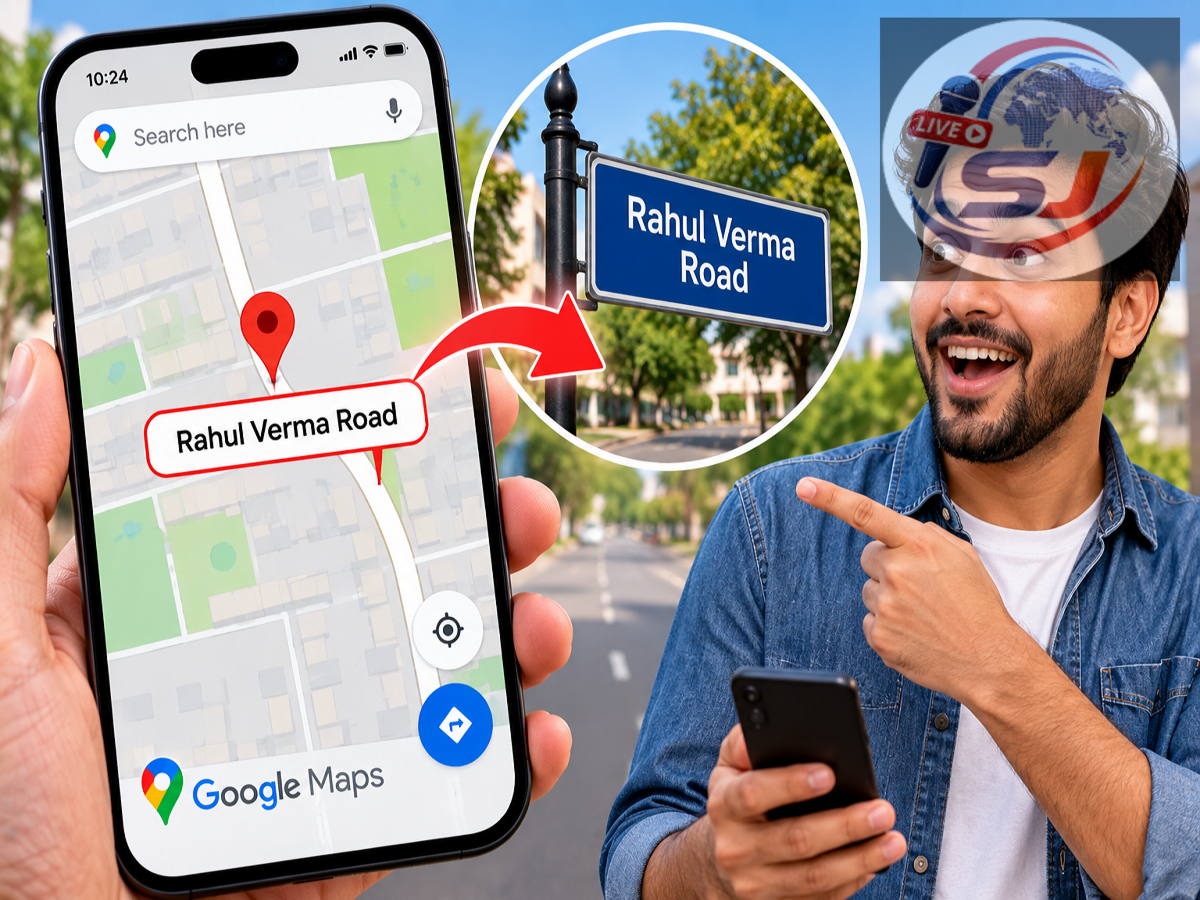
Google Maps has become an everyday navigation tool for millions of people. Whether someone is searching for a road, locating a shop, checking a neighbourhood or trying to reach an unfamiliar destination, the platform provides an enormous amount of geographic information.
But seeing a name on a digital map does not necessarily mean that the information represents an official government record.
An unusual incident highlighted in media reports demonstrates exactly why that distinction matters. According to the report, a man managed to get a road displayed on Google Maps under his own name by taking advantage of the platform's user-contributed editing process.
The change reportedly looked convincing enough that an ordinary Maps user could easily have assumed it was the road's genuine name.
So how can something like this happen, and does changing a road name on Google Maps mean the road has actually been renamed?
How Did the Road Appear Under the Man's Name?
Google Maps contains information from numerous sources, and users can also submit corrections or suggest changes when they believe information on the map is inaccurate or incomplete.
According to the report, the man used this contribution mechanism to submit a change relating to the road's name.
The resulting information reportedly appeared on the map like an ordinary road label, making it difficult for users to immediately recognise that the name had originated from an unusual user-submitted change.
This is an important distinction: appearing on Google Maps and receiving an official road name from a government authority are not the same thing.
Can Google Maps Users Change Information?
Google Maps allows users to suggest edits to certain information displayed on the platform.
For example, users may be able to report incorrect details, suggest that information has changed or provide updates about places and map features.
This crowdsourced approach has an important purpose.
The physical world changes constantly. Shops close, businesses relocate, roads change, new locations open and existing information becomes outdated.
Allowing users to report errors can help a mapping service identify changes more quickly than relying exclusively on a single source of information.
However, a submitted suggestion does not necessarily mean that the requested change should automatically become an authoritative fact.
Google uses review and verification processes for contributed information, and whether an edit appears can depend on the information available to its systems.
Did the Man Officially Rename the Road?
No such conclusion should be drawn merely because a different road name appeared on Google Maps.
Officially naming or renaming a road generally involves the relevant government or local administrative authority and applicable procedures.
Changing a label on a digital mapping platform does not itself change municipal, land, postal or other official records.
This distinction is especially important when a map is being used for legal, property or administrative purposes.
A Google Maps label can be extremely useful for navigation, but it should not automatically be treated as proof of an officially recognised road name.
Why Does Google Accept User Contributions?
Maintaining an accurate global map is a huge task.
Roads, buildings and businesses can change every day. A restaurant may permanently close, a store can move to another address or a new road may open before all databases have been updated.
User contributions can help identify these changes.
If someone notices incorrect information, the ability to suggest a correction can make the platform more useful for everyone.
The same basic mechanism, however, means that platforms need effective safeguards against inaccurate, misleading or joke submissions.
The incident described in the report highlights this challenge.
Information on a Digital Map Can Change
Users may assume that a road or place name displayed in a mapping application is permanent.
That is not necessarily the case.
Digital maps are continuously updated. Information may be added, corrected or removed as new data becomes available.
A user-submitted edit that temporarily appears on a map may later be corrected if it is found to be inaccurate.
This is why particularly important information should be verified through an appropriate authoritative source.
Don't Rely Only on Google Maps for Official Records
Google Maps is primarily useful for navigation, discovering places and understanding geographical surroundings.
It should not be treated as a replacement for official documents.
Suppose a person is buying property and needs to establish the official road name, address or land boundary. In such a situation, relying solely on what appears on a consumer mapping application could be risky.
Municipal records, government documents, registered property records and other appropriate official sources should be checked where legal accuracy matters.
The same principle can apply to disputes over addresses, administrative boundaries or officially recognised place names.
Crowdsourcing Has Benefits and Risks
Crowdsourcing is one reason digital maps can be updated quickly.
Local users often know about a change before it reaches a large central database.
For example, residents might notice that a business has closed or that the entrance to a location has moved.
Their reports can help improve the map.
But user-generated information also creates the possibility of mistakes, jokes or deliberately misleading submissions.
Platforms therefore have to balance two competing requirements: making it easy for legitimate users to report real-world changes while preventing inaccurate edits from being presented as trustworthy information.
Why Verification Matters
Even a seemingly harmless incorrect road name can create confusion.
People may use digital maps for taxi journeys, deliveries, emergency navigation, business listings and meeting points.
If inaccurate information spreads widely, many users could potentially encounter it before it is corrected.
That makes verification an important part of any platform that depends partly on community contributions.
Automated systems can process enormous amounts of data quickly, while human and authoritative-source checks may be useful in situations where the information is disputed or difficult to verify.
What Should You Do If You Find Incorrect Information?
If you notice that a place, road or business is incorrectly identified on Google Maps, use the platform's available reporting or edit-suggestion tools rather than attempting to manipulate the listing.
Provide accurate information and, where the platform requests it, appropriate supporting details.
Users should also avoid submitting deliberately false names or misleading information as a prank. Incorrect map information can inconvenience other people and may violate platform rules.
Google Maps Is Useful, but It Isn't a Government Register
The unusual road-name incident illustrates an important point about digital mapping services.
Information appearing on a map can look official even when it has been assembled from several different data sources or influenced by user contributions.
Google Maps remains an extremely useful navigation and location-discovery service, but a map label should not automatically be considered proof of an official administrative decision.
If a road name, property address or geographical detail has legal or administrative importance, verify it using the relevant official authority or records.
The lesson from this incident is therefore bigger than one unusual road name: digital maps are powerful tools, but important information should still be independently verified when accuracy really matters.