
LPG Cylinder Booking Scam Alert 2026: ICICI Bank Warns Against Fake Gas Subsidy and KYC Update Links
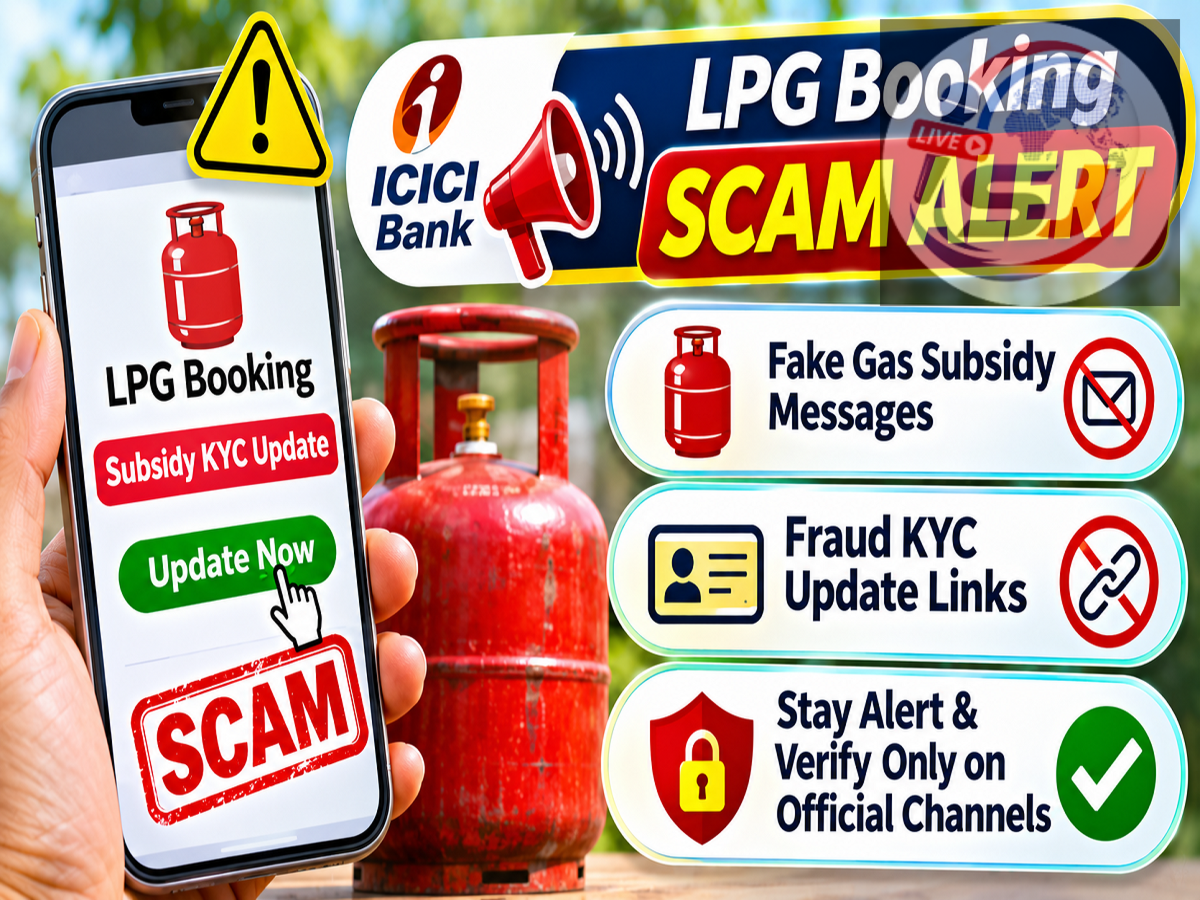
LPG Cylinder Booking Fraud Alert 2026: Cybercriminals are reportedly targeting LPG consumers in India through fraudulent gas cylinder booking messages, fake subsidy notifications and misleading Know Your Customer (KYC) update requests. These scams are designed to trick people into revealing sensitive banking information or transferring money to fraudsters.
According to a report published on November 22, 2026, ICICI Bank has issued a warning about cyber fraud involving LPG cylinder bookings and subsidy-related messages.
Fraudsters are allegedly sending suspicious links through SMS, WhatsApp and other digital channels. These messages may claim that a customer's LPG connection will be suspended, a subsidy payment has been blocked or an urgent KYC update is required.
The objective is to create fear or urgency so that consumers click on malicious links without checking whether the communication is genuine.
LPG Cylinder Booking Scam: How Does the Fraud Work?
Cybercriminals often impersonate gas distribution companies, banking representatives or customer support officials.
The fraud may begin with a message claiming that the consumer's LPG subsidy has been stopped because their KYC information is incomplete.
In other cases, the message may state that a cylinder booking cannot be processed until the customer updates their bank details.
A link is then provided, directing the recipient to a website that may closely resemble an official LPG distributor's portal.
Once the consumer opens the fraudulent website, they may be asked to enter personal information, bank account details, card numbers or other sensitive data.
Some fraudulent websites may also request an OTP or UPI PIN under the pretext of verification.
These details can then be misused to initiate unauthorised financial transactions.
Fake LPG Subsidy Messages: Common Warning Signs
Consumers should be cautious when receiving unexpected messages about LPG subsidies or gas connections.
Fraudulent messages may use language designed to pressure recipients into acting immediately.
Examples of suspicious claims include:
-
Your LPG subsidy will be cancelled unless KYC is updated immediately.
-
Your gas cylinder booking has been blocked due to incomplete verification.
-
Click this link to receive a pending LPG subsidy payment.
-
Your LPG connection will be disconnected within 24 hours.
-
Enter your bank details or OTP to activate your subsidy.
These are illustrative examples of common scam tactics, not genuine notices from an LPG company.
A message should not be considered authentic simply because it includes the name of a bank, government department or gas distributor.
ICICI Bank Cyber Fraud Alert: Why Customers Must Be Careful
The report highlights an ICICI Bank warning concerning LPG booking and subsidy-related scams.
The warning is particularly relevant because fraudsters frequently exploit everyday services that people use regularly.
Cooking gas is an essential household requirement, and consumers may respond quickly when they receive messages suggesting that their supply could be interrupted.
Scammers take advantage of this concern by creating a false sense of urgency.
A fraudulent message may include a professional-looking logo, official-sounding language or a website address designed to resemble a legitimate service.
However, these elements do not establish authenticity.
Consumers should verify unexpected LPG-related requests through their distributor's official channels rather than relying on links received from unknown senders.
How Fraudsters Use Fake KYC Updates
KYC verification is a legitimate process used by banks and service providers to confirm customer identity.
However, criminals may misuse the term to make fraudulent requests appear credible.
For example, a consumer may receive a message stating that their LPG account needs immediate re-verification.
The message could direct them to a fake website asking for Aadhaar information, bank details or payment credentials.
In some cases, fraudsters may attempt to persuade consumers to install an unfamiliar application or grant remote access to their phones.
Such access could expose sensitive information and potentially enable unauthorised transactions.
Customers should remember that legitimate verification procedures do not require them to disclose confidential banking credentials to unknown callers or websites.
Never Share Your OTP, UPI PIN or Banking Password
One of the most important precautions against LPG-related cyber fraud is protecting confidential financial information.
A UPI PIN is used to authorise certain outgoing payments. It is not required simply to receive money into a bank account.
Similarly, an OTP should not be shared with an unknown person claiming to process a gas subsidy.
Consumers should never disclose internet banking passwords, debit card PINs or other confidential credentials in response to unsolicited messages.
If a website asks for such information during an unexpected LPG verification process, the safest approach is to stop and verify the request independently.
How to Book an LPG Cylinder Safely
Consumers should use the official booking facilities provided by their LPG distributor.
Major LPG providers in India include Indane, Bharatgas and HP Gas.
Customers can access information through the official websites of the respective companies:
| LPG Provider |
Official Website |
|---|---|
| Indane – IndianOil |
|
| Bharatgas – BPCL |
|
| HP Gas – HPCL |
Customers should open the official website or application directly rather than following a link received through an unexpected message.
If there is uncertainty about a subsidy, booking or KYC requirement, consumers can contact their registered LPG distributor using verified contact details.
How to Check LPG Subsidy Information Safely
LPG subsidy eligibility and payment arrangements depend on the applicable government scheme and the consumer's circumstances.
Customers who want to check their subsidy status should use authorised LPG provider channels.
They should avoid websites that promise immediate subsidy approval in exchange for bank details or a small processing payment.
A legitimate-looking subsidy notification is not sufficient evidence that a payment is pending.
Consumers should independently verify the claim through their LPG distributor or authorised service portal.
What to Do If You Click a Fraudulent LPG Link
If someone accidentally opens a suspicious link, the appropriate response depends on what happened afterward.
Simply opening a webpage does not necessarily mean that money has been stolen.
However, entering sensitive details, downloading malicious software or approving a financial transaction can create significant risks.
If confidential banking information has been disclosed, the customer should immediately contact their bank through its official customer support number.
They should also change compromised passwords and take steps to secure the affected accounts.
If an unauthorised financial transaction has occurred, it is important to report the incident without delay.
How to Report LPG Booking Cyber Fraud in India
India provides dedicated channels for reporting suspected cybercrime and financial fraud.
National Cybercrime Helpline
1930
Report suspected cyber-enabled financial fraud promptly.
Official Cybercrime Reporting Portal
National Cyber Crime Reporting Portal
Consumers can also report suspected fraudulent communications through the government's Sanchar Saathi platform, including its Chakshu reporting facility where applicable.
If money has been debited from a bank account, reporting the incident quickly may improve the chances of timely intervention, although recovery is not guaranteed.
Customers should preserve relevant messages, transaction references and screenshots for reporting purposes.
Why LPG Consumers Are Being Targeted
LPG services are used by millions of households, making gas booking and subsidy-related communication familiar to a large number of consumers.
Fraudsters may exploit this familiarity to make deceptive messages appear routine.
The possibility of losing a subsidy or facing an interruption in cooking gas supply can also encourage people to respond without verification.
Digital payments and online booking services offer convenience, but consumers need to distinguish genuine service notifications from attempts to steal information.
Awareness of common scam techniques can help reduce the risk of financial loss.
LPG Cylinder Booking Fraud 2026: Important Safety Advice
The reported ICICI Bank warning highlights the need for caution when dealing with LPG booking, subsidy and KYC-related messages.
Consumers should avoid opening suspicious links, sharing confidential banking information or installing unfamiliar applications at the request of unknown individuals.
Official LPG booking and subsidy services should be accessed through verified provider channels.
Most importantly, customers should never enter a UPI PIN or disclose an OTP merely because someone claims that a gas subsidy is pending or a cylinder booking requires urgent verification.
Anyone who suspects financial fraud should immediately contact their bank and report the incident through the official cybercrime helpline.