
JPV Mobile App 2026: Government Digitises Rice Mill Verification, 1,020 Mills Processed for Faster Approvals
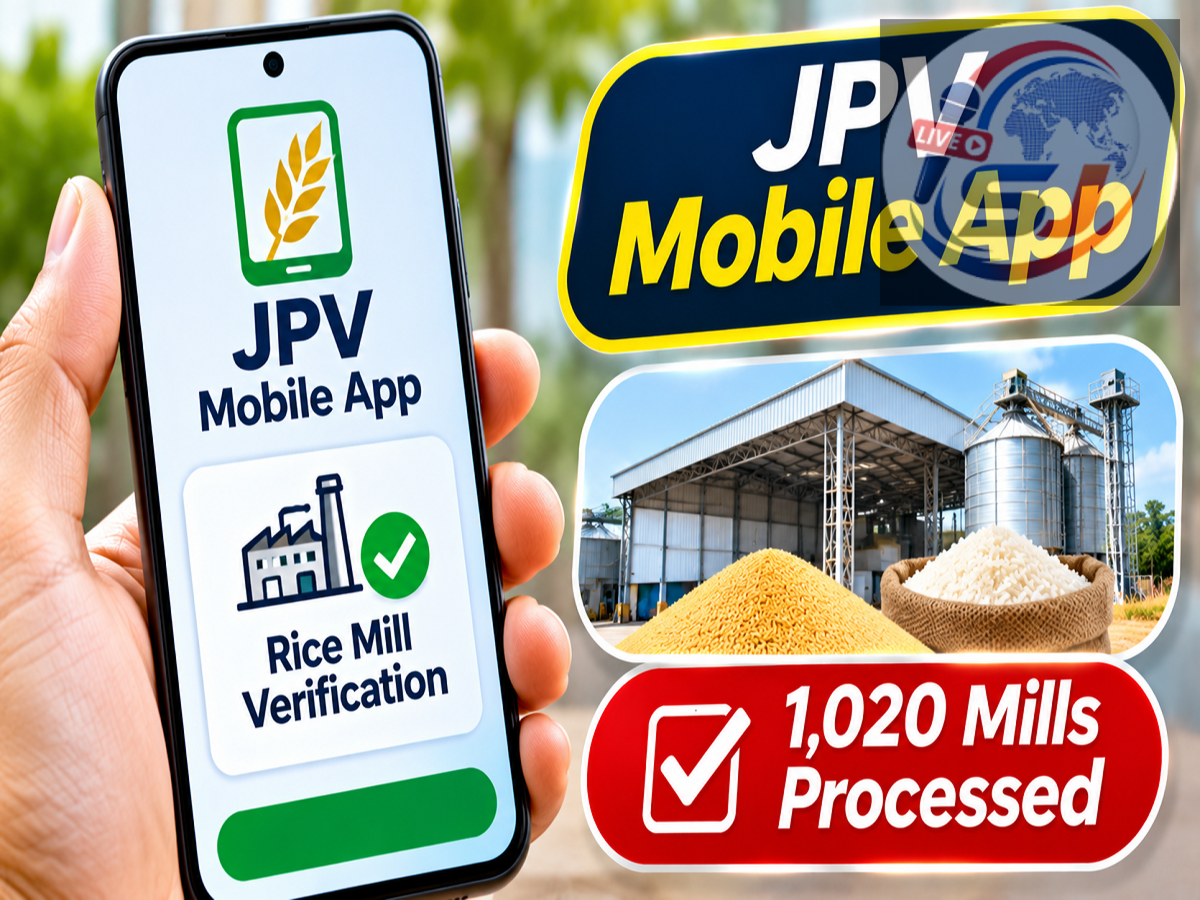
JPV Mobile App 2026: The Department of Food and Public Distribution (DFPD), Government of India, has highlighted the growing role of digital technology in improving rice mill verification and administrative procedures. According to an official social media update, the JPV mobile application is helping make the milling extension process more efficient, transparent and less dependent on paperwork.
The department reported that 1,020 mills have been processed through the JPV system, demonstrating its use in digitising mill-related verification activities.
The application supports real-time inspections and digital reporting, allowing information collected during verification to be recorded electronically. This approach is intended to simplify administrative work and help officials make decisions more quickly.
The initiative reflects the government's broader efforts to modernise foodgrain management through technology-based monitoring and documentation.
What Is the JPV Mobile App?
The JPV mobile application is a digital tool being used for mill verification activities associated with the milling extension process.
According to the Department of Food and Public Distribution, the application supports digital inspections and reporting, reducing dependence on traditional paper-based procedures.
In conventional verification systems, inspection details may need to be recorded manually and forwarded to the relevant authorities for review.
Such procedures can involve considerable documentation and administrative coordination.
The JPV application aims to streamline these activities by enabling verification information to be captured and processed digitally.
However, the department's brief announcement does not specify the full form of JPV, the application's complete technical specifications or its availability to the general public.
JPV App 2026: Key Highlights
| Particulars |
Details |
|---|---|
| Government Department |
Department of Food and Public Distribution |
| Digital Platform |
JPV Mobile App |
| Primary Purpose |
Digitisation of mill verification |
| Process Supported |
Milling extension |
| Mills Processed |
1,020 |
| Major Features Highlighted |
Real-time inspections and digital reporting |
| Expected Benefits |
Reduced paperwork, improved transparency and faster decisions |
| Official Source |
DFPD social media announcement |
1,020 Mills Processed Through the JPV System
One of the major highlights of the department's announcement is the processing of 1,020 mills through the JPV application.
This figure indicates the scale of mill-related verification activity reported under the digital system.
The department has presented this development as an example of how technology can support more efficient administrative procedures.
By recording inspection information digitally, the application can help reduce the manual documentation associated with mill verification.
However, the announcement does not specify the geographical distribution of these mills, the period during which they were processed or how many cases received final approval.
The figure should therefore be understood as the number of mills reported as processed, rather than the number of approved milling extensions.
How Does Digital Mill Verification Improve Efficiency?
Digital verification systems can simplify several administrative activities involved in inspections and approvals.
The JPV application specifically highlights three operational areas.
1. Real-Time Inspections
The department states that the application supports real-time inspections.
This allows inspection-related information to be captured digitally as part of the verification process.
Such functionality can reduce the need to rely entirely on handwritten inspection records and subsequent manual data entry.
It can also make inspection information available in a more structured format for administrative review.
2. Digital Reporting
Another important feature is digital reporting.
Instead of depending exclusively on physical files, verification details can be documented electronically.
Digital records may help officials organise inspection information and retrieve relevant details when reviewing applications.
The department has specifically identified reduced paperwork as one of the benefits of the system.
3. Faster Administrative Decision-Making
The availability of inspection information in digital form can help simplify the review process.
According to DFPD, the JPV application is facilitating faster decision-making in milling extension cases.
This does not necessarily mean that every application will receive immediate approval.
Final decisions remain subject to the applicable administrative requirements and verification procedures.
Why Is Transparency Important in Mill Verification?
Verification procedures are an important part of administrative oversight in foodgrain-related operations.
A transparent process helps ensure that relevant information is documented and available for review by authorised officials.
Digital reporting can support this objective by creating structured records of inspection activities.
Compared with systems that depend heavily on physical documentation, electronic records may be easier to organise, retrieve and examine.
The department has identified improved transparency as a central benefit of the JPV initiative.
However, the announcement does not provide independent audit findings or detailed performance comparisons between the digital and earlier manual systems.
JPV Mobile App and the Milling Extension Process
The department's announcement specifically connects the JPV application with the milling extension process.
Milling-related administrative activities may require verification of relevant facilities and records before decisions can be taken.
Digitising these activities can help improve coordination between field-level inspections and administrative review.
The JPV application is intended to support this process by enabling digital reporting and real-time verification.
Nevertheless, the official post does not explain the eligibility requirements for milling extensions, the application procedure or the exact responsibilities of different officials.
It also does not clarify whether mill operators can access the application directly or whether it is restricted to authorised personnel.
These details would require additional official documentation.
How Can Digital Reporting Reduce Paperwork?
Traditional inspection processes can involve multiple documents, physical forms and manual record transfers.
Moving inspection information into a digital system can potentially reduce the volume of paperwork required.
It may also make it easier to maintain consistent records across different stages of verification.
For example, electronically recorded inspection information can support administrative review without requiring every detail to be repeatedly transcribed.
The JPV initiative is intended to deliver such operational improvements.
However, the department has not disclosed the exact reduction in paperwork or the average processing time saved per mill.
Digital Transformation in Foodgrain Administration
Technology-based systems are increasingly relevant to the management and monitoring of public services.
Within foodgrain administration, digital tools can support record management, verification and communication between different administrative levels.
The JPV mobile application is one example of how a specific verification activity is being moved toward a digital workflow.
Its reported use in processing 1,020 mills indicates that the system is already being used for mill-related administrative work.
The department's announcement focuses on operational efficiency and transparency rather than announcing a new public-facing benefit scheme.
As a result, citizens should not confuse the JPV application with ration card services or public distribution grievance portals.
JPV Mobile App 2026: What Has the Government Confirmed?
The Department of Food and Public Distribution's announcement establishes four important points: the JPV mobile application is being used to digitise mill verification, it supports real-time inspections, it enables digital reporting, and 1,020 mills have been processed through the system.
The department also states that the initiative is helping reduce paperwork and facilitate quicker decisions.
Further information about the application's technical functions, rollout locations, approval statistics and user eligibility has not been provided in the announcement.
Conclusion
The JPV mobile application represents a technology-driven effort to simplify mill verification and milling extension procedures.
With 1,020 mills reported as processed, the Department of Food and Public Distribution has highlighted the application's contribution to digital inspections, electronic reporting and more transparent administrative workflows.
The initiative aims to reduce paperwork while helping officials make timely decisions based on digitally recorded verification information.
The key development is the digitisation of mill verification, with real-time inspections and digital reporting forming the foundation of the JPV system.
Source Credit: Department of Food and Public Distribution, Government of India — Official DFPD announcement on X.