
Instagram and Facebook Addiction: Meta Faces New Lawsuit Over Children's Mental Health
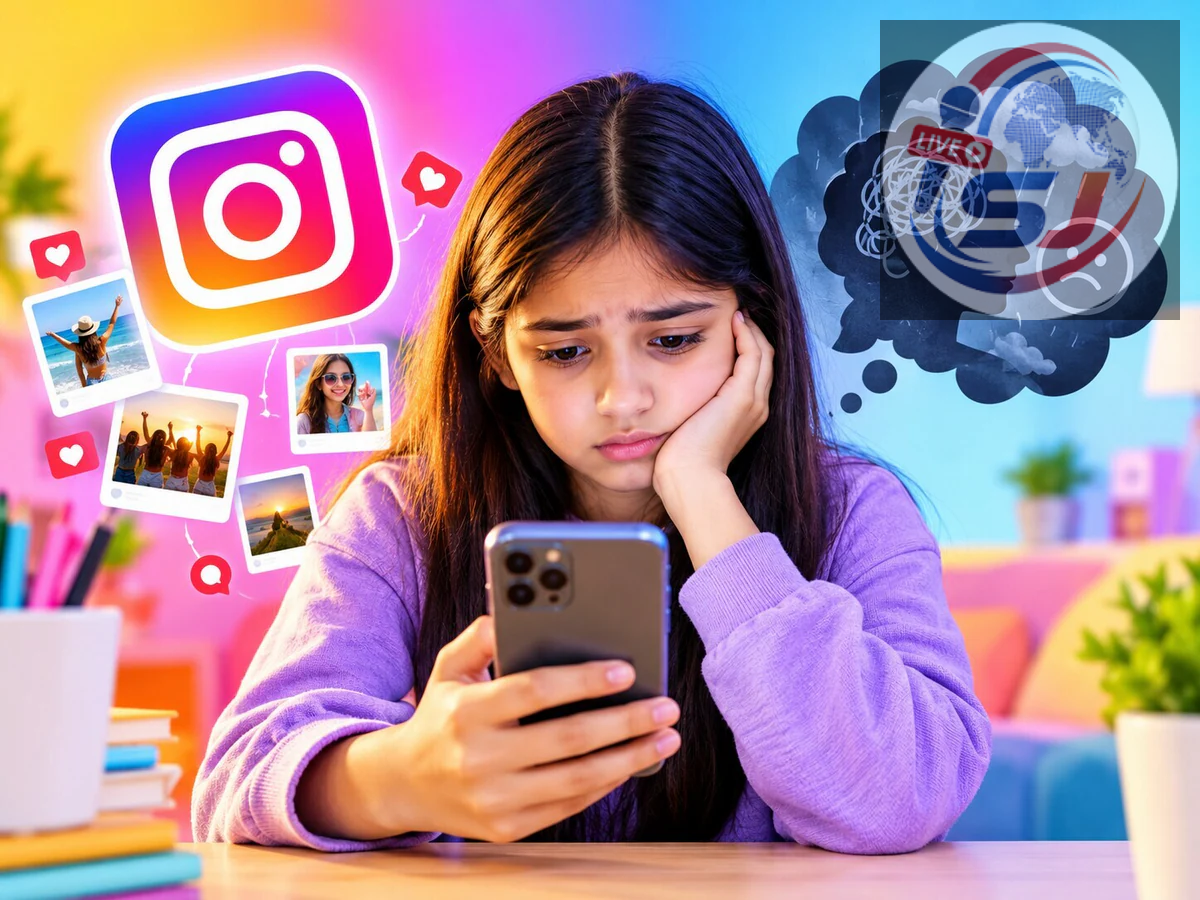
Meta Social Media Lawsuit 2026: Facebook and Instagram's parent company, Meta, is facing fresh legal challenges in the United States over allegations that its social media platforms are designed to encourage excessive use among children and teenagers.
The lawsuit raises concerns about the potential impact of social media on young users' mental health. The plaintiffs allege that features such as endless scrolling, automatically playing videos and engagement-based rewards can encourage compulsive behaviour.
According to a Reuters report cited by Live Hindustan on October 29, 2026, Meta and Snapchat's parent company, Snap, are among the defendants involved in legal proceedings in Los Angeles.
The plaintiffs are seeking financial compensation, alleging that their experiences with social media contributed to depression, anxiety and eating-related difficulties.
Both Meta and Snap have denied the allegations.
Why Is Meta Facing a New Lawsuit?
The latest legal proceedings focus on whether social media companies deliberately designed features that encourage young users to spend excessive amounts of time on their platforms.
The plaintiffs argue that certain design choices make it difficult for users, particularly children, to stop using social media.
Features mentioned in the allegations include infinite scrolling, autoplay and Snapchat Streaks.
These tools are designed to keep users engaged, but the lawsuit questions whether their use can contribute to harmful patterns of behaviour.
The central legal issue is not simply whether teenagers spend too much time online.
Instead, the case examines whether the companies knew about potential risks associated with their platform designs and whether they took adequate steps to protect younger users.
The allegations remain contested, and the companies have rejected claims that they are legally responsible for the alleged harm.
Two Young Women Raise Mental Health Concerns
According to the report, the legal proceedings involve two young women identified in court documents by their initials.
One plaintiff, identified as S.J., is a 16-year-old from Illinois.
The other, identified as K.D.B., is an 18-year-old from Mississippi.
The plaintiffs reportedly began using YouTube at approximately three or four years of age and started using other social media platforms around the age of nine.
They allege that prolonged social media use contributed to mental health difficulties, including depression, anxiety and eating-related problems.
The plaintiffs have sought damages, including punitive damages.
However, these are allegations presented in legal proceedings, not medical findings establishing that a particular platform caused their conditions.
Mental health difficulties can involve multiple interacting factors, and the question of legal responsibility is central to the dispute.
Which Social Media Companies Are Involved?
The lawsuits originally involved several major technology companies.
According to the report, YouTube and TikTok reached settlements before the relevant trial proceedings began.
The claims against Meta and Snap have followed different paths for the two plaintiffs.
The Illinois teenager reportedly resolved her claim against Meta, while the Mississippi plaintiff continued pursuing her case against the company.
Both plaintiffs continued claims against Snap, according to the account.
The legal status of each claim matters because settlements do not necessarily establish that a company admitted wrongdoing.
Major Companies Mentioned in the Case
| Company |
Platform |
Reported involvement |
|---|---|---|
| Meta |
Instagram and Facebook |
Facing allegations concerning platform design and youth mental health |
| Snap |
Snapchat |
Facing claims involving engagement features |
| |
YouTube |
Reportedly settled claims before trial |
| ByteDance |
TikTok |
Reportedly settled claims before trial |
The exact claims and legal outcomes differ between defendants and plaintiffs.
What Is Infinite Scrolling and Why Is It Under Scrutiny?
Infinite scrolling is a feature that continuously loads new content as users move down a feed.
Instead of reaching a clear stopping point, users can continue viewing posts and videos without manually opening another page.
This makes browsing convenient, but it may also make it harder for some users to recognise how much time they have spent online.
The plaintiffs argue that such design features can encourage repeated and prolonged engagement.
However, the presence of infinite scrolling alone does not establish that an application causes addiction or a mental health disorder.
The legal debate concerns the effects of particular designs, their intended use and the evidence linking them to alleged harm.
How Autoplay and Snapchat Streaks Keep Users Engaged
Autoplay is another feature highlighted in the case.
When autoplay is enabled, a new video may begin automatically after the previous one ends.
This reduces the need for users to actively select another video.
For some users, the continuous stream of content can encourage longer viewing sessions.
Snapchat Streaks work differently.
They reward repeated communication between users over consecutive days.
The plaintiffs argue that such features can create pressure to return to an application regularly.
Snap disputes the allegations and maintains that its platform differs from traditional social media services.
What Has Meta Said About the Allegations?
Meta has denied the claims against it.
According to Reuters, the company argues that young people's mental health is influenced by numerous factors and cannot be explained solely by social media use.
Meta has also pointed to safety measures introduced across its platforms over the past decade.
These measures are intended to give users and families more control over online experiences.
The company's position is that the allegations do not adequately establish that its products caused the specific harms claimed.
This remains a disputed issue for the courts to examine.
Snap Also Rejects the Claims
Snap has similarly denied allegations that its platform is responsible for the reported harm.
The company argues that Snapchat operates differently from conventional social media platforms.
It has also referred to safety measures designed to protect users.
The court proceedings will examine the competing arguments and evidence.
The fact that a company is named in a lawsuit does not mean that a court has found it liable.
Could Mark Zuckerberg Testify in the Case?
The report states that senior technology executives could be called to testify during the proceedings.
Those mentioned include Meta CEO Mark Zuckerberg, Instagram head Adam Mosseri and Snap CEO Evan Spiegel.
Their potential testimony could address questions about platform design, user engagement and safety measures.
However, the report describes possible testimony rather than confirming that each executive has appeared before the court.
The proceedings could continue for several weeks.
Why Is This Lawsuit Important?
The case is significant because it forms part of a much wider legal dispute involving social media companies and allegations of harm to young users.
According to the report, more than 3,000 related lawsuits are being handled through coordinated proceedings in Los Angeles.
These cases raise questions about whether platform design choices can create legal liability when users allege psychological harm.
The report also refers to an earlier case in March 2026 in which a jury reportedly found Meta and YouTube negligent and awarded $6 million in damages.
That earlier reported verdict is separate from the proceedings described here.
The outcomes of individual cases may influence how other claims are handled, although each lawsuit depends on its own facts, evidence and applicable law.
Does Social Media Really Cause Depression or Anxiety?
The relationship between social media use and mental health is complex.
Some research has found associations between certain patterns of social media use and negative experiences such as poor sleep, body-image concerns, anxiety or depressive symptoms.
However, an association does not necessarily prove that social media directly caused a mental health condition.
Individual experiences can differ depending on age, existing vulnerabilities, the type of content viewed, online interactions and how much social media use interferes with everyday activities.
Social media can also provide positive experiences, including social connection, creativity, entertainment and access to supportive communities.
The key concern in the lawsuit is whether specific platform features contributed to harm in the plaintiffs' circumstances.
What Parents Can Do to Encourage Healthier Social Media Habits
The lawsuit has renewed attention on how children and teenagers interact with social media.
Parents and caregivers can take practical steps to encourage balanced use without treating every online activity as harmful.
-
Discuss online experiences: Encourage children to talk about content that makes them uncomfortable, anxious or pressured.
-
Set reasonable boundaries: Agree on device-free times, especially around sleep and family activities.
-
Review privacy and safety settings: Use available parental supervision tools where appropriate.
-
Encourage offline activities: Make time for physical activity, hobbies, friends and other interests.
-
Watch for significant changes: Persistent sleep disruption, distress or withdrawal from usual activities may warrant a supportive conversation and professional guidance.
The aim is to support healthy digital habits rather than assume that a particular application is responsible for every emotional difficulty.
What Happens Next in the Meta Lawsuit?
The court proceedings are expected to examine the plaintiffs' allegations, the companies' responses and evidence concerning the design and effects of the platforms.
The plaintiffs are seeking compensation, while Meta and Snap dispute responsibility for the alleged harm.
The broader litigation could have implications for how social media companies defend product-design decisions and explain their safety measures.
However, the outcome of the current proceedings cannot be assumed in advance.
Meta Social Media Lawsuit 2026: Final Update
Meta and Snap are facing allegations that certain features of their social media platforms encourage compulsive use and contribute to mental health problems among younger users.
The plaintiffs have raised concerns about infinite scrolling, autoplay and engagement-based features.
Both companies have denied wrongdoing and pointed to the complexity of mental health issues and their existing safety measures.
The key takeaway: The lawsuits have brought renewed attention to children's online safety and the responsibilities of social media platforms. However, the allegations are still being contested, and the legal proceedings should not be interpreted as proof that Instagram, Facebook or Snapchat caused the specific mental health conditions described.
Source Credit: Live Hindustan, October 29, 2026 — Arpit Soni. Based on Reuters reporting concerning social media litigation involving Meta and Snap in Los Angeles.