
Indian Railways PRS Upgrade 2026: Tatkal Booking Could Get Faster With New System , Know the features
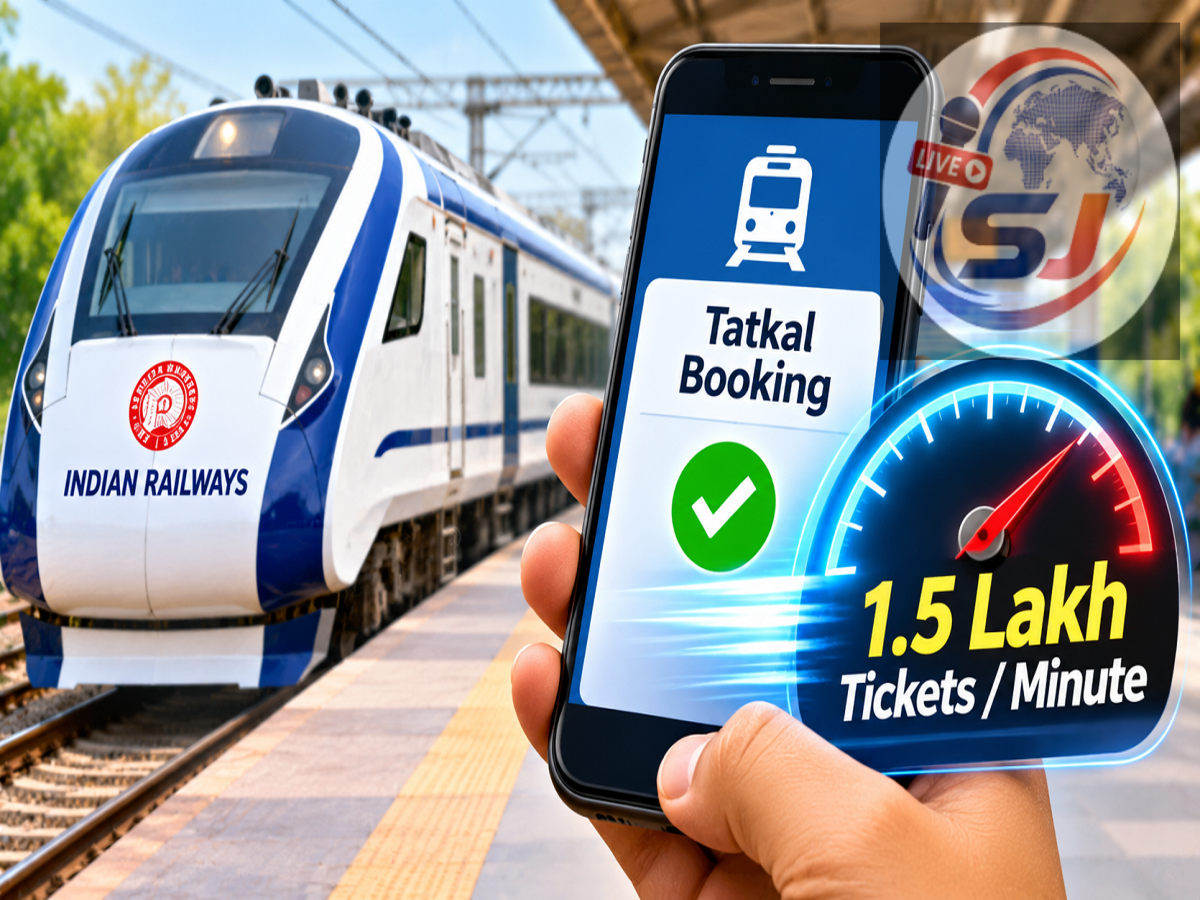
Indian Railways Ticket Booking Update 2026: Train passengers who frequently experience slow booking pages, payment interruptions or delays during Tatkal ticket reservations may soon benefit from a major technology upgrade. Indian Railways has reportedly modernised its Passenger Reservation System (PRS) to improve booking speed, increase processing capacity and handle heavy online traffic more efficiently.
According to a NewsPoint report published on November 17, 2026, reservation data for more than 2,200 Mail and Express trains has been transferred to a next-generation platform developed by the Centre for Railway Information Systems (CRIS).
The upgraded system is designed to process more than 1.5 lakh booking transactions per minute, compared with the reported capacity of approximately 32,000 per minute under the earlier infrastructure.
The new technology could improve the experience of passengers using the IRCTC website, mobile booking services and railway reservation counters.
However, the upgrade does not guarantee confirmed Tatkal tickets or eliminate every possibility of server errors and payment failures.
Indian Railways Upgrades Passenger Reservation System
The Passenger Reservation System is a key part of Indian Railways' ticketing infrastructure.
It manages important reservation-related activities, including ticket availability, booking transactions, passenger records and other services.
With millions of passengers relying on railway reservations, the system must handle substantial traffic every day.
Demand becomes particularly intense during festivals, holidays and the opening minutes of Tatkal booking.
According to the source report, Indian Railways has undertaken a major technology transition to improve the system's capacity and responsiveness.
The migration reportedly includes reservation information associated with more than 2,200 Mail and Express trains.
This is expected to support faster processing and a more reliable booking experience as the upgraded platform is implemented.
Why Was the Old Reservation System Upgraded?
The earlier PRS infrastructure relied on older technology, including the OpenVMS platform.
According to the report, the system had been operating on legacy infrastructure for several years, creating challenges as passenger demand and online transactions increased.
During high-demand booking periods, users sometimes encountered slow page loading, delayed responses or difficulty completing reservations.
Tatkal booking has been particularly challenging because a large number of passengers attempt to reserve a limited number of seats within a short period.
A modernised system with greater transaction-processing capacity could help reduce some of these technology-related bottlenecks.
However, ticket availability will still depend on the number of seats released for booking and the applicable railway reservation rules.
New PRS Can Process Over 1.5 Lakh Bookings Per Minute
One of the most significant improvements highlighted in the report is the increase in booking-processing capacity.
The previous PRS infrastructure reportedly supported approximately 32,000 booking transactions per minute.
The upgraded system is described as capable of handling more than 1,50,000 transactions per minute.
This represents an increase of more than four times the earlier capacity and is close to a fivefold improvement.
Old vs New Railway Reservation System
| Feature | Earlier PRS | Upgraded PRS |
|---|---|---|
| Reported booking-processing capacity | Around 32,000 per minute | More than 1,50,000 per minute |
| Reported enquiry-processing capacity | Around 4 lakh per minute | More than 40 lakh per minute |
| Technology approach | Legacy infrastructure | Cloud-native, microservices-based architecture |
| Ability to handle demand spikes | More limited | Designed for greater scalability |
| Expected passenger experience | Potential slowdowns during heavy traffic | Faster processing and improved responsiveness |
The figures reflect the capacities reported in the source article. Actual performance may vary depending on system load, network conditions and the status of individual booking services.
Tatkal Ticket Booking Could Become More Convenient
Tatkal booking is one of the most time-sensitive services offered through Indian Railways.
Passengers often log in before the booking window opens and attempt to complete their reservations as quickly as possible.
Even a short delay during payment or ticket confirmation can affect the booking experience.
The upgraded PRS is expected to improve the system's ability to handle large numbers of simultaneous requests.
This may help reduce delays caused by insufficient processing capacity.
Passengers booking through mobile phones could also benefit from faster responses if the upgraded infrastructure performs as intended.
Nevertheless, the number of available Tatkal seats remains limited.
A faster reservation system does not mean that every passenger attempting to book a ticket will receive a confirmed reservation.
Will Tatkal Booking Server Problems Disappear Completely?
The new technology is intended to improve reliability and reduce congestion, but no online reservation system can guarantee uninterrupted service in every situation.
Booking failures can arise for several reasons, including internet connectivity problems, payment gateway issues, heavy demand and temporary technical faults.
The upgraded PRS may help address some system-capacity limitations.
However, it cannot eliminate every possible reason for a failed or incomplete transaction.
Passengers should continue to verify their booking status and payment records before attempting another transaction after an error.
Railway Enquiry Capacity Could Increase Tenfold
The upgrade is not limited to ticket booking.
According to the report, the new reservation infrastructure can process more than 40 lakh live enquiries per minute.
The earlier system reportedly handled around 4 lakh enquiries per minute.
This represents an approximately tenfold increase in the stated enquiry-processing capacity.
Railway passengers frequently search for information such as seat availability, reservation status and train-related booking details.
Higher enquiry capacity could allow more users to access such information simultaneously.
This may be particularly helpful during peak travel periods when large numbers of passengers check availability before booking.
What Is Cloud-Native Technology in Railway Reservations?
The new reservation system reportedly uses a cloud-native, microservices-based architecture.
In simple terms, this approach allows different parts of a large software system to operate through smaller, independently managed services.
Such an arrangement can make it easier to scale selected functions when demand increases.
For example, if booking enquiries rise sharply during a festival period, the infrastructure can be designed to allocate additional processing resources where required.
Cloud-native architecture may also make software maintenance and future upgrades more flexible.
However, the actual benefits depend on how the system is deployed, managed and integrated with existing railway services.
IRCTC Website May Offer a Simpler Booking Experience
The report also discusses improvements intended to make the online reservation process easier for passengers.
A more streamlined interface could reduce the number of steps required to search for trains, check availability and complete reservations.
This may be particularly useful for passengers who book tickets through smartphones.
The report further refers to features that could help users identify travel dates with lower fares.
Such functionality, where available, may assist passengers with flexible travel plans in comparing options.
However, users should check the live IRCTC interface for the actual availability of these features rather than assuming every reported enhancement is already operational.
Will Passengers Be Able to Choose Seats More Easily?
The source article suggests that the upgraded system may improve the process of checking seat preferences and reservation options.
Faster enquiry processing could make it easier to review available trains and booking alternatives.
However, the allocation of specific berths and seats remains subject to railway rules, available inventory and the reservation system's allocation procedures.
Passengers should not assume that the technology upgrade guarantees the ability to select any vacant berth or seat.
More Than 2,200 Trains Reportedly Migrated to New PRS
According to the November 17 report, reservation data for more than 2,200 Mail and Express trains has been transferred to the next-generation PRS infrastructure.
The migration is an important step because the railway reservation network handles large volumes of passenger information and booking transactions.
A transition of this scale requires coordination between the existing reservation system and the upgraded technology platform.
The report identifies CRIS as the organisation responsible for developing the next-generation system.
CRIS plays an important role in providing information technology solutions for Indian Railways.
How Has Railway Ticket Booking Changed Over the Years?
Indian Railways has gradually moved from manual reservation arrangements towards computerised and online ticketing.
The report highlights several important developments in this transition.
| Year or Period | Development |
|---|---|
| 1986 | Computerised railway reservation services began in India |
| 2002 | Online railway ticket booking was introduced |
| 2010 onward | Legacy PRS infrastructure continued to support reservations, according to the report |
| November 2026 | Next-generation PRS upgrade and migration of over 2,200 trains reported |
The increasing popularity of online ticketing has made the performance of digital railway systems more important than ever.
The source report also states that approximately 90% of railway ticket bookings are now completed through online channels. This figure should be treated as the report's claim rather than a separately verified railway statistic.
What Should Passengers Do When Booking Tatkal Tickets?
Even with improved technology, passengers should prepare carefully when attempting to book Tatkal tickets.
They should use authorised booking platforms, ensure that their account details are correct and keep the required passenger information ready.
It is also important to maintain a reliable internet connection and use an available payment method.
Passengers should follow the latest Tatkal booking rules, including any applicable identity-verification requirements.
If a payment is deducted but the booking does not appear to be confirmed, they should check the transaction and booking history before initiating another payment.
These precautions remain useful regardless of the reservation system's processing capacity.
Does the PRS Upgrade Change Tatkal Booking Timings?
The supplied report does not announce any change to Tatkal booking opening times.
The technology upgrade concerns reservation infrastructure and processing capacity rather than a confirmed revision of booking schedules.
Passengers should therefore continue to follow the latest timings and eligibility rules published by Indian Railways and IRCTC.
Any future changes to Tatkal procedures should be confirmed through official notifications.
Where Can Passengers Check Official Railway Booking Information?
Passengers can use the official IRCTC website to book tickets and check reservation-related information.
Official IRCTC Website: https://www.irctc.co.in/
Information about Indian Railways services and announcements is also available through official railway communication channels.
Passengers should avoid unauthorised websites or applications claiming to provide guaranteed Tatkal tickets in exchange for additional payments.
Conclusion
The reported upgrade of Indian Railways' Passenger Reservation System represents an important effort to modernise railway ticketing infrastructure.
With a stated capacity of more than 1.5 lakh booking transactions and 40 lakh enquiries per minute, the next-generation platform is designed to handle substantially more traffic than the earlier system.
The migration of reservation data for over 2,200 trains is also expected to support the transition to modern technology.
For passengers, the potential benefits include faster responses, smoother booking procedures and fewer delays during high-demand periods.
However, the improved system cannot guarantee Tatkal ticket confirmation or completely prevent payment and connectivity problems.
Travellers should continue to use official booking platforms and follow the latest railway reservation rules.
Disclaimer: The performance figures, migration details and proposed passenger-facing features are based on the supplied NewsPoint report and have not been independently verified here. Actual booking performance and feature availability may differ. Passengers should refer to official Indian Railways and IRCTC announcements for confirmed operational updates.