
How Does an ATM Card Store Your Details? Here’s What Happens When You Insert It Into a Machine
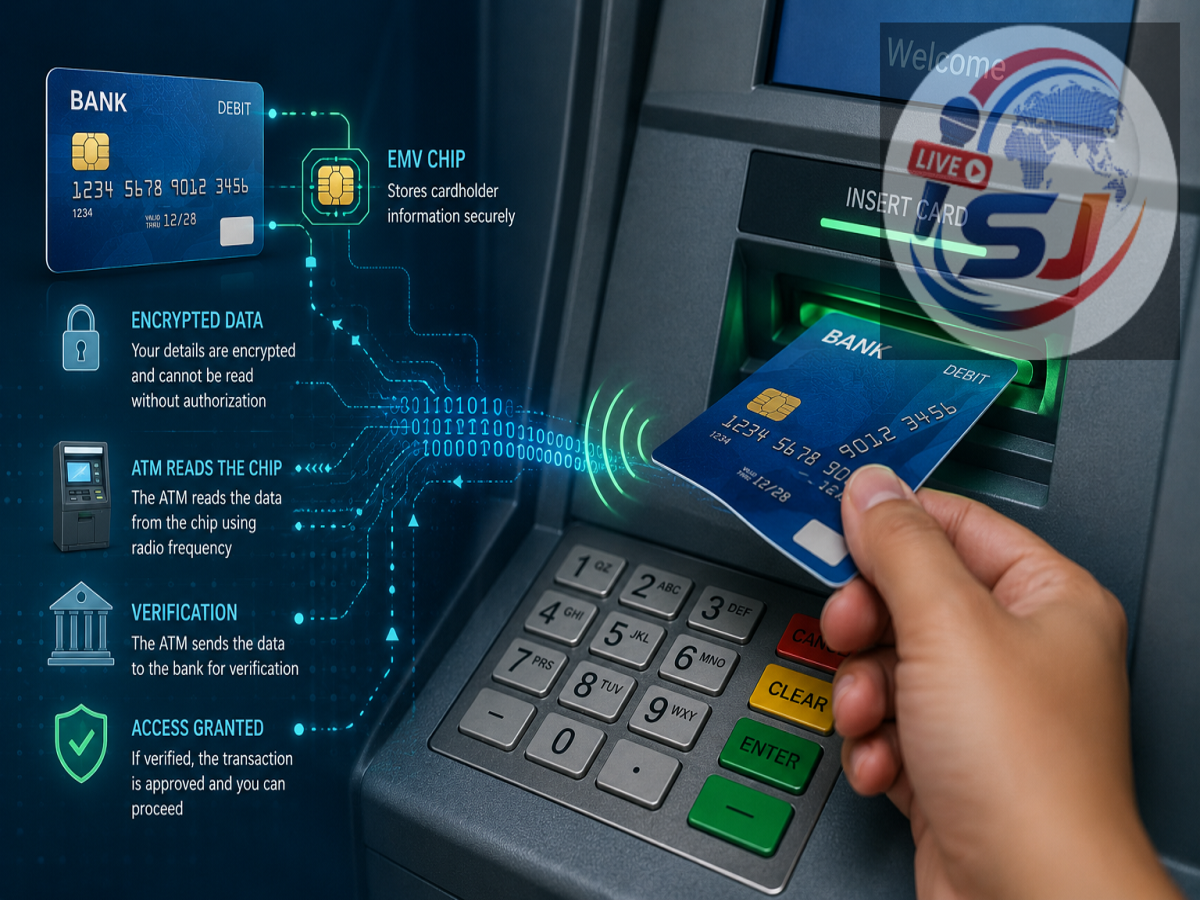
ATM Card Technology Explained: An ATM or debit card may look like a simple piece of plastic, but several technologies work together every time you withdraw cash. The card’s EMV chip or magnetic stripe provides essential card information, while the bank’s systems verify the card, PIN and transaction before approving the request.
Even with UPI and mobile banking becoming increasingly popular, debit cards remain important for withdrawing cash, making purchases and accessing other banking services. But an interesting question is: does your ATM card actually contain your bank account details and balance?
The answer is more complicated than it might seem.
What Information Is Stored on an ATM Card?
The first thing to understand is that your debit card does not store your current bank balance.
Information related to your account and available balance is maintained in the bank's systems. The card essentially provides information that enables the payment or ATM network to identify and authenticate the card and route the transaction appropriately.
A debit card typically contains information associated with the card, such as the card number, expiry-related data and other information required for processing and security.
Some details are printed or embossed on the physical card, while electronic information is available through its EMV chip and, on many cards, the magnetic stripe.
What Does the Magnetic Stripe Do?
The black or dark strip visible on the back of many debit cards is called a magnetic stripe.
It stores encoded card information magnetically. When the card is swiped through a compatible reader, the machine reads the information from the stripe.
That information helps identify the card so that the transaction request can be routed through the appropriate payment network and ultimately to the card-issuing bank for authorisation.
However, magnetic-stripe data can be vulnerable to copying or "skimming." This is one reason EMV chip technology has become the standard for modern payment cards.
How Does the EMV Chip Work?
The small metallic chip visible on the front of most modern debit and credit cards is an EMV chip.
EMV stands for Europay, Mastercard and Visa, the organisations associated with the original development of the standard. Today, EMV specifications are managed by EMVCo.
Unlike a magnetic stripe that relies largely on static card data, an EMV chip can participate in cryptographic authentication during a transaction.
It can generate transaction-specific cryptographic information that helps the payment system determine whether the card being presented is genuine.
This makes creating and successfully using a counterfeit chip card considerably more difficult than simply copying magnetic-stripe information.
What Happens When You Insert Your Card Into an ATM?
When you insert your debit card into an ATM, several steps take place behind the scenes.
First, the ATM communicates with the card's chip and reads the information necessary to initiate the transaction. Depending on the ATM, card and transaction method, additional card authentication procedures may also take place.
The ATM then communicates through banking/payment networks to the relevant systems.
Your card does not tell the ATM, for example, "this customer has ₹50,000 available."
Instead, the bank's systems are consulted to determine whether the requested transaction can be authorised.
What Happens After You Enter Your PIN?
PIN verification is another important part of the process.
When you enter your PIN on an ATM keypad, the PIN is not supposed to be transmitted as ordinary readable text. ATM systems use specialised security mechanisms to protect PIN information during processing.
The PIN is handled using cryptographic protections and transmitted through secure banking infrastructure for verification according to the card and banking network's procedures.
If authentication succeeds, the transaction can proceed to the next stage.
If the PIN is incorrect, the transaction may be rejected. Repeated incorrect attempts can also result in temporary restrictions or other protective measures depending on the bank's policy.
How Does the ATM Know Whether You Have Enough Money?
Suppose you request a withdrawal of ₹10,000.
The ATM itself does not know how much money you have in your account.
A transaction request is sent through the banking network. The issuing bank's systems check relevant factors such as whether the card/account is eligible for the transaction, whether sufficient funds or an appropriate withdrawal limit are available, and whether other security controls permit the request.
If everything is satisfactory, an approval response is returned.
The ATM can then dispense the authorised amount.
The transaction is subsequently reflected in your account according to the bank's processing system.
The Process Happens Within Seconds
In simplified form, an ATM cash withdrawal works something like this:
Card inserted → Card/chip information read → Transaction initiated → PIN authentication → Withdrawal request sent → Bank/network checks request → Approval or rejection → Cash dispensed if approved.
Although several systems can be involved, customers usually see the result within seconds.
Why Is an EMV Chip Safer Than a Magnetic Stripe?
The major security advantage of EMV is its use of cryptographic transaction processing.
Magnetic-stripe information is comparatively static. If criminals successfully capture that information using a skimming device, they may attempt to reproduce it on another card.
EMV transactions are designed differently. The chip participates in generating cryptographic data associated with the transaction, making simple duplication of captured information much less useful for creating a counterfeit chip transaction.
That does not mean chip cards are immune to fraud. Criminals may still use phishing, stolen credentials, social engineering, compromised ATMs and other techniques.
ATM Transactions Have Multiple Security Layers
Modern ATM transactions rely on several layers of protection rather than one technology alone. These can include EMV chip authentication, PIN protection, encrypted communications, transaction monitoring, banking-network security and real-time authorisation controls.
Banks may also use fraud-detection systems to identify unusual transaction patterns and potentially block suspicious activity.
Be Careful While Using an ATM
Technology provides significant protection, but users still need to remain cautious.
Before inserting your card, check whether the card slot or keypad looks unusual or loose. Cover the keypad while entering your PIN, and never disclose your ATM PIN, OTP, CVV or banking password to anyone claiming to be a bank employee.
If an ATM retains your card or a transaction behaves unusually, contact your bank through its official customer-service channel rather than accepting help from strangers near the machine.
Your Money Isn't Stored Inside the Card
Perhaps the biggest misconception about ATM cards is that they somehow contain your account balance.
They don't.
Think of your debit card more like a secure credential that helps identify and authenticate access to banking services. Your account balance and transaction records remain in the bank's systems.
So the next time an ATM dispenses cash only seconds after you insert your card, remember that the card, ATM, payment network and banking systems have performed multiple authentication and authorisation steps behind the scenes before that cash reaches your hand.