
Giving UPI Access to Your Children? Use This Feature to Set Spending Limits and Protect Your Money
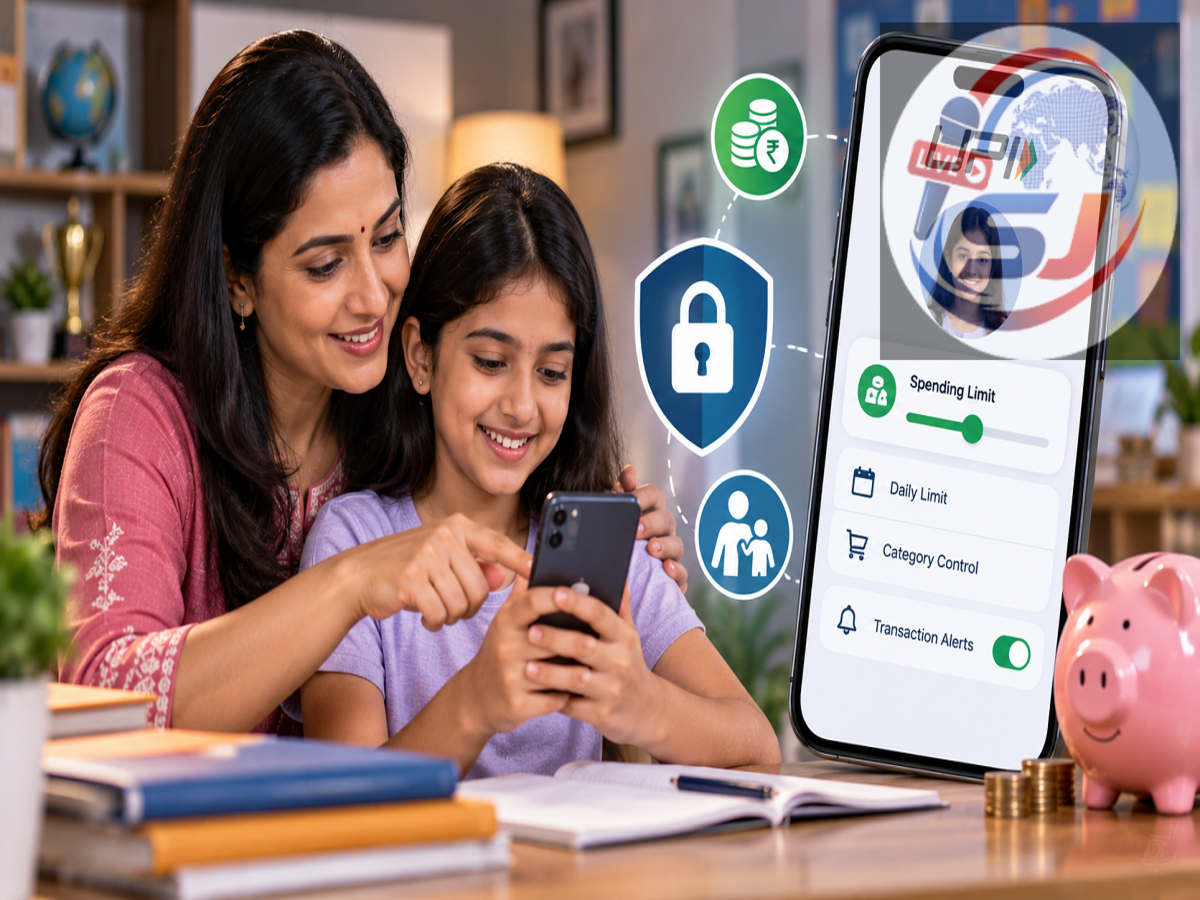
UPI Safety Tips for Parents: Digital payments have become part of everyday life, and children and young adults increasingly need to make payments for food, travel, shopping, education and other daily expenses. However, handing over your smartphone or sharing your UPI PIN with a child can expose your bank account to unnecessary risk.
A wrong amount entered during payment, an incorrect QR code or accidental transaction could result in money being debited from the account.
There is a safer alternative for parents who want to give their children controlled access to digital payments without handing over their personal UPI credentials.
The feature is called UPI Circle, and its Full Delegation option allows a primary user to authorise a trusted secondary user to make payments from the primary user's account while staying within a predefined spending limit.
What Is UPI Circle?
UPI Circle is a delegated payment facility that allows one UPI user to give another trusted person controlled authority to make payments.
The person whose bank account is linked is known as the primary user, while the person receiving payment access is the secondary user.
For example, a parent can remain the primary user and authorise a child or another dependent as a secondary user.
This arrangement can help families manage routine expenses without requiring the primary user to hand over their phone or disclose their UPI PIN.
Full Delegation Can Be Useful for Children
One of the key options under UPI Circle is Full Delegation.
With Full Delegation, a trusted secondary user can initiate and complete permitted UPI payments directly from the primary user's account within the limits established for the delegation.
This can be particularly useful for parents who want their children to pay for routine expenses independently while retaining oversight of the money being spent.
Instead of giving a child unrestricted access to the parent's UPI account, the parent can establish a defined monthly allowance.
This effectively creates a controlled digital spending arrangement.
How Much Can You Allow Your Child to Spend?
Under the UPI Circle framework, Full Delegation allows a maximum monthly limit of ₹15,000 per delegation.
A parent does not necessarily have to set the maximum amount. A lower spending limit can be chosen depending on the family's requirements and the child's expected expenses.
For instance, if a child normally needs ₹3,000 a month for transport, food and other routine purchases, the parent can keep the delegated spending amount around that requirement instead of providing unrestricted access to the entire bank balance.
This helps limit the financial impact of accidental or unnecessary transactions.
No Need to Share Your UPI PIN
One of the biggest advantages of delegated payments is that parents do not have to disclose their personal UPI PIN to their children.
A UPI PIN is a sensitive authentication credential and should not be casually shared with anyone.
Giving another person your phone along with your UPI PIN can potentially provide much broader access than intended.
With UPI Circle, the objective is different: the secondary user receives authorised payment rights within the limits defined by the primary user rather than being given the primary user's confidential credentials.
Parents Can Maintain Better Control
Controlled access is important because children may not always recognise payment risks.
They could accidentally enter ₹5,000 instead of ₹500, scan an incorrect QR code or make an unnecessary purchase without understanding how quickly the transaction will debit the linked account.
A delegated payment arrangement reduces the need to expose the parent's normal UPI credentials.
The primary user can define the permitted spending level while retaining visibility over transactions.
This can also help parents teach children how to manage digital money responsibly.
UPI Circle Isn't Only for Children
Although parents and children are an obvious use case, UPI Circle can serve other household needs as well.
The facility can be useful for:
-
Young adults managing routine expenses
-
Elderly parents who need help accessing digital payments
-
Family members who do not have their own bank-linked UPI setup
-
Dependents who require money for everyday purchases
-
Trusted staff making approved business-related payments
The common idea is that the bank account holder retains control while another trusted individual receives limited authority to make payments.
How UPI Circle Can Help Manage a Child's Allowance
Parents traditionally give children pocket money in cash or transfer a fixed amount to a separate bank account.
Delegated UPI payments offer another approach.
Suppose a parent wants to provide ₹4,000 every month for a child's routine expenses. Instead of sharing a UPI PIN or repeatedly sending money whenever the child needs to make a payment, the parent can set an appropriate delegated spending limit where the facility is supported.
The child can then make eligible payments within that allowance.
For parents, this provides a clearer way to manage spending while keeping the main bank account and its UPI credentials under their control.
Never Share Your UPI PIN
Whether or not you use UPI Circle, one security rule remains important: do not share your UPI PIN.
The PIN is used to authenticate UPI transactions and should be treated like other confidential banking credentials.
Parents should also explain to children that they should verify the recipient or merchant details and transaction amount carefully before approving a digital payment.
Unknown QR codes, suspicious payment requests and messages asking for banking credentials should be treated cautiously.
A Safer Way to Introduce Children to Digital Payments
Giving children access to digital payments can be convenient, but it should not require handing them unrestricted access to a parent's bank account.
UPI Circle provides a more controlled alternative.
Through delegated payments, parents can authorise children or other trusted family members to make payments within predetermined limits while avoiding the need to share their personal UPI PIN.
For families that increasingly rely on cashless payments, this can be a practical way to combine convenience with greater control over everyday spending.