
Geyser Buying Guide 2026: Is a 15L or 25L Water Heater Better for Your Family? Check 5-Star Benefits
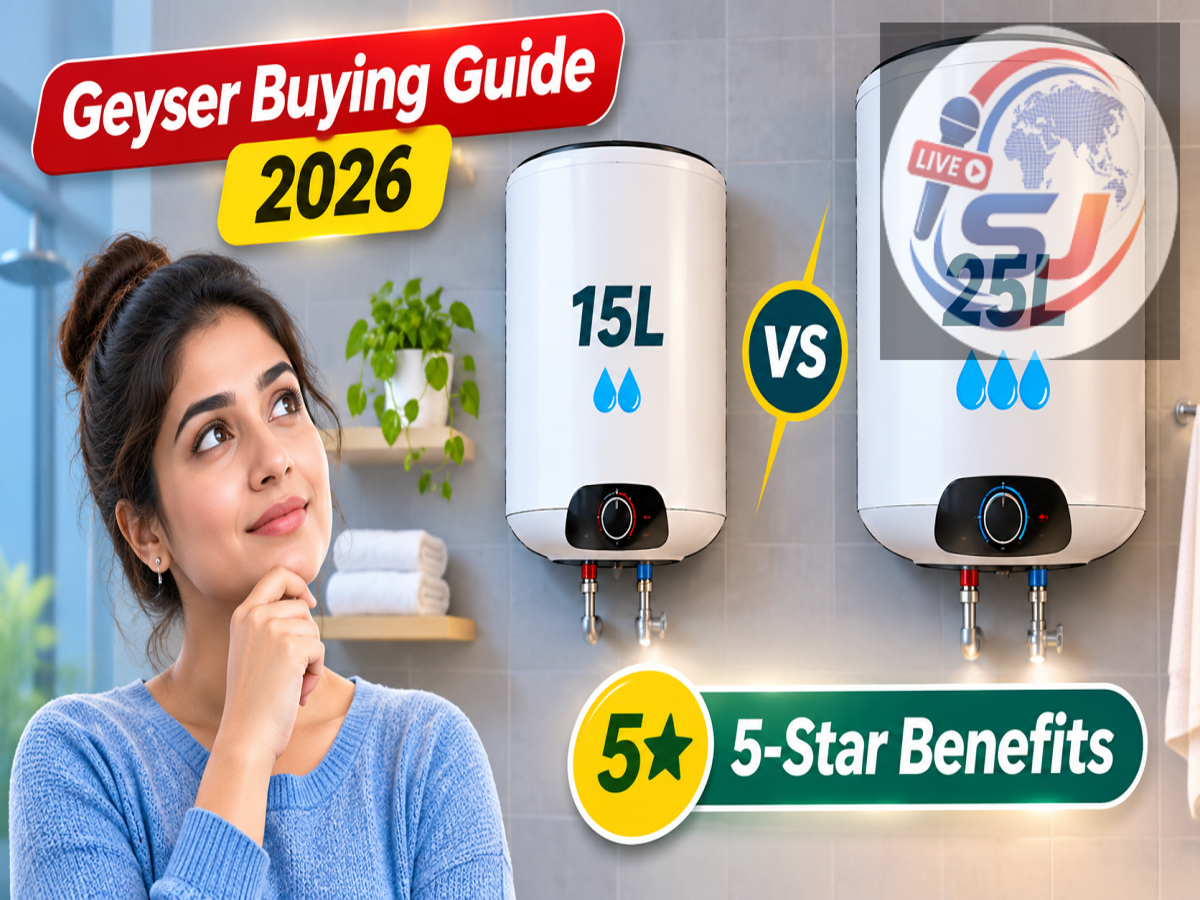
Best Geyser for Home in Winter 2026: As temperatures begin to fall, a reliable water heater becomes an essential household appliance. However, choosing the right geyser involves more than comparing prices and brands. Tank capacity, electricity consumption, energy efficiency and family size all play important roles in determining which model will suit your daily requirements.
For households with two to four members, selecting an oversized water heater may lead to unnecessary energy consumption, while a smaller model could struggle to meet demand during winter mornings. Understanding the difference between 15-litre and 25-litre geysers can help families make a practical and economical decision.
Here is a detailed guide to choosing the right geyser capacity, understanding Bureau of Energy Efficiency (BEE) star ratings and reducing electricity expenses.
Which Geyser Capacity Is Suitable for a Family of 2 to 4 People?
The number of family members is an important consideration when purchasing a water heater. However, actual hot water consumption also depends on bathing habits, shower usage, water temperature and the time available between consecutive baths.
For smaller households, a 15-litre storage geyser is often sufficient. Families with three or four members may find a 25-litre model more convenient, particularly when several people need hot water within a short period.
The following table provides a general comparison.
| Family Size |
Suggested Geyser Capacity |
Suitable Usage |
|---|---|---|
| 1 person |
10–15 litres |
Individual bathing and regular bathroom use |
| 2 people |
15 litres |
Moderate daily hot water requirements |
| 3 people |
15–25 litres |
Consecutive bathing and shared bathroom use |
| 4 people |
25 litres |
Higher demand during winter |
| 5 or more people |
25–35 litres or more |
Larger households with frequent hot water usage |
These are general recommendations rather than fixed requirements. Families using bucket baths may need less storage capacity than households relying on long showers.
Why Is a 15-Litre Geyser a Practical Choice for Two People?
A 15-litre storage water heater can be a convenient option for couples or small households with moderate hot water needs.
It stores enough heated water for many everyday bathing requirements, especially when hot water is mixed with cold water before use.
Another advantage is its relatively compact size, making it suitable for bathrooms where installation space is limited.
Compared with larger storage models, a smaller tank generally requires less energy to heat a full tank of water to the same temperature.
However, households that use high-flow showers or require hot water for several activities simultaneously may need a larger capacity.
Is a 25-Litre Geyser Better for Three or Four Family Members?
For families consisting of three or four people, a 25-litre storage geyser is often a suitable choice.
The additional capacity provides a larger reserve of heated water, which can be useful when multiple family members bathe one after another.
During colder months, incoming water temperatures may be significantly lower, increasing the energy and time needed for heating.
A 25-litre model can provide greater convenience in these conditions, particularly for households with moderate to high water consumption.
However, it is important to remember that a 25-litre tank does not guarantee unlimited hot water. The amount available depends on the thermostat setting, water mixing ratio and flow rate.
Should You Buy a 10-Litre or 35-Litre Geyser?
A 10-litre geyser may be suitable for limited hot water requirements, smaller bathrooms or households with low consumption.
However, it may prove inconvenient for families requiring multiple consecutive baths, especially during winter.
On the other hand, a 35-litre or larger water heater may be unnecessary for a small household unless water consumption is particularly high.
Larger tanks generally require more energy for a complete heating cycle because they contain more water. They may also experience greater total standby heat loss, depending on their insulation and design.
Choosing the right capacity can therefore help balance convenience with electricity consumption.
What Does a 5-Star BEE Rating Mean for Geysers?
Energy efficiency is another important factor when selecting a storage water heater.
In India, the Bureau of Energy Efficiency (BEE) operates an energy labelling programme that helps consumers compare the efficiency of eligible appliances.
For covered electric storage water heaters, star ratings generally range from one to five.
A higher star rating indicates better performance under the applicable rating criteria.
A 5-star-rated storage geyser is designed to have lower standing heat losses than a comparable lower-rated model under the same testing standard.
This can help reduce electricity consumption associated with keeping stored water hot.
However, actual savings depend on usage patterns, heating temperature, tank capacity, electricity tariffs and insulation quality.
Consumers should compare products with similar capacities and check the label's validity period, as rating standards can change over time.
Instant Geyser vs Storage Geyser: Which One Should You Choose?
Instant and storage water heaters serve different household requirements.
An instant geyser heats water as it flows through the appliance and generally has a smaller internal water volume.
It can be useful for kitchen sinks, washbasins and applications requiring limited quantities of hot water.
A storage geyser, meanwhile, heats and stores a larger quantity of water inside an insulated tank.
This makes it convenient for bathrooms where hot water is required for bathing or other household activities.
For families with three or four members, a storage geyser is often more practical, particularly when multiple people need hot water.
However, a properly sized instant water heater may also work in certain situations, depending on its heating power, flow rate and incoming water temperature.
How to Reduce Your Geyser Electricity Bill During Winter
Using a water heater efficiently can make a difference to household electricity expenses.
Here are some practical ways to reduce unnecessary energy consumption.
1. Switch On the Geyser Only When Needed
Avoid keeping a storage water heater switched on continuously when hot water is not required.
Turning it on before bathing and switching it off afterward can reduce unnecessary standby heating.
The required heating time varies according to tank capacity, wattage and incoming water temperature. A 25-litre geyser may take longer than 15–20 minutes to reach its thermostat setting.
2. Choose an Appropriate Temperature Setting
A moderate thermostat setting can help reduce energy consumption.
Some households use settings around 50–60°C, depending on the appliance and their needs.
However, very hot water can cause scalding injuries, while excessively low storage temperatures may create hygiene concerns. Follow the manufacturer's guidance and use a suitable mixing arrangement to ensure safe water temperatures at taps and showers.
3. Check Tank Insulation
A well-insulated water heater retains heat for longer periods.
Older appliances with deteriorated insulation may lose heat more quickly, requiring additional heating cycles.
When purchasing a new model, consider the manufacturer's insulation specifications and energy efficiency rating.
4. Use a Timer Where Appropriate
A compatible timer can help control operating hours and prevent unnecessary heating.
However, electrical accessories must be suitable for the geyser's power rating and installed safely.
Consult a qualified electrician before adding an external timer or changing the electrical connection.
5. Schedule Regular Maintenance
Mineral deposits can accumulate inside water heaters, particularly in areas with hard water.
Over time, these deposits may affect heating performance and appliance reliability.
Periodic servicing, including inspection of the heating element and safety components, can help maintain efficient operation.
Always use qualified service personnel for internal cleaning or repairs.
Important Safety Features to Check Before Buying a Geyser
Apart from capacity and electricity efficiency, buyers should examine essential safety features.
Look for a reliable thermostat, thermal cut-out protection, appropriate pressure rating and a properly installed pressure-relief valve.
The appliance should also be compatible with the home's electrical supply and plumbing arrangement.
Proper earthing and residual-current protection are important for bathroom electrical safety.
Households living in high-rise buildings should pay particular attention to the manufacturer's pressure specifications.
A suitable warranty and accessible service support can also make the appliance easier to maintain over the long term.
Final Verdict: Which Geyser Is Best for Your Family?
For most two-member households with moderate hot water requirements, a 15-litre storage geyser can be a practical choice.
Families with three or four members may prefer a 25-litre model, particularly if several people use the bathroom consecutively.
A 4-star or 5-star BEE-rated storage water heater can be worth considering when comparing models of similar capacity, although actual electricity savings will depend on usage.
Ultimately, selecting the right geyser involves balancing tank size, energy efficiency, safety, installation requirements and household consumption.
Making an informed purchase before winter can help ensure a convenient hot water supply while avoiding unnecessary electricity expenses.