
Foodgrain Procurement Goes Digital: Government Introduces QR Tracking and Automated Billing Through SCAN Portal
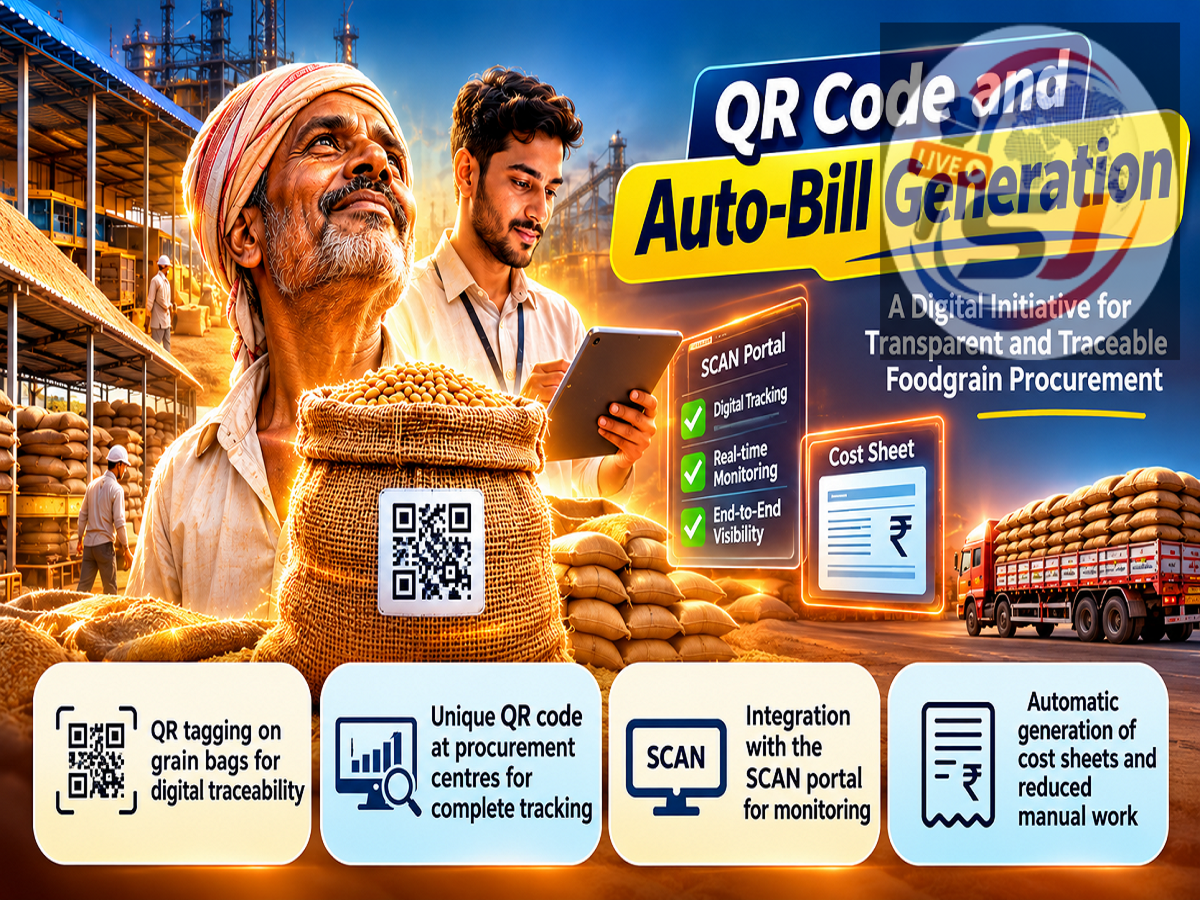
Foodgrain Procurement Digital Update 2026: The Government of India is strengthening transparency in foodgrain procurement through QR code-based tracking and automated billing technology. The Department of Food and Public Distribution has highlighted an initiative that uses digitally tagged foodgrain bags and the SCAN portal to improve monitoring, traceability and cost management in the procurement system.
According to information shared by the department on its official social media account, the QR Code and Auto-Bill Generation initiative is designed to make foodgrain procurement operations more transparent and efficient. By integrating QR-tagged bags with digital monitoring systems, the initiative supports end-to-end tracking and automated preparation of cost sheets.
The development reflects growing efforts to modernize foodgrain management through technology and improve accountability across the procurement process.
Government Focuses on QR Code-Based Foodgrain Monitoring
Foodgrain procurement is an important component of India's food security framework. Government agencies procure agricultural commodities such as wheat and rice under applicable procurement arrangements to support public distribution and food security programmes.
Managing large quantities of foodgrains involves several administrative and logistical activities, including procurement, bagging, transportation, storage and financial documentation.
Traditional recordkeeping processes can require extensive paperwork and manual verification.
The QR Code and Auto-Bill Generation initiative aims to improve these operations by introducing digital tracking and automated documentation.
Under the system described by the department, QR-tagged foodgrain bags can be monitored through the integrated SCAN portal, helping authorities maintain better visibility over procurement-related activities.
What Is the QR Code and Auto-Bill Generation Initiative?
The QR Code and Auto-Bill Generation initiative combines digital identification with automated financial documentation.
QR codes are machine-readable identifiers that can be scanned using compatible digital devices. When linked to an authorized database, they allow users to retrieve or update information associated with a particular item.
In foodgrain procurement, QR-tagged bags provide a digital reference that can support tracking and verification.
The department has identified two important components of the initiative:
1. Digital tracking of foodgrain bags
QR-tagged bags can be monitored through the integrated system, improving traceability during procurement operations.
2. Automated cost sheet generation
The system supports automatic preparation of cost sheets, reducing dependence on repetitive manual calculations and documentation.
Together, these facilities are intended to improve transparency and strengthen administrative oversight.
How Does QR Code Tracking Work in Foodgrain Procurement?
QR code technology helps connect physical items with digital records.
In a foodgrain procurement environment, a QR-tagged bag can be associated with information maintained in the relevant digital system.
Authorized personnel can use compatible scanning equipment to access or update records according to the system's operational procedures.
The general concept involves the following stages:
-
Digital identification: A QR code provides a machine-readable reference for a foodgrain bag.
-
Record integration: Information associated with the tagged bag is maintained within the connected digital system.
-
Scanning and verification: Authorized users can scan the code during relevant operational activities.
-
Movement monitoring: Recorded scanning events can support tracking across different stages of the procurement chain.
-
Digital documentation: The information can assist authorities in maintaining traceable procurement records.
The department's announcement confirms end-to-end monitoring of QR-tagged bags but does not specify every operational stage, scanning requirement or technical procedure.
What Is the Role of the SCAN Portal?
The SCAN portal is an important component of the initiative highlighted by the Department of Food and Public Distribution.
According to the official communication, the QR Code and Auto-Bill Generation system is integrated with the portal to support digital monitoring and automated cost sheet preparation.
The integration is intended to connect tracking information with procurement-related administrative processes.
Such digital coordination can help authorities review information more efficiently and reduce the challenges associated with fragmented records.
The department has not provided detailed public instructions in the cited announcement regarding portal access, user registration or the specific responsibilities of participating agencies.
Therefore, the initiative should not be confused with a new public-facing ration card service or beneficiary registration platform.
Automated Cost Sheets Could Simplify Procurement Accounting
Preparing cost sheets is an important administrative activity in foodgrain procurement.
These documents help organize relevant expenditure information and support financial recordkeeping.
When calculations and documentation depend heavily on manual processes, preparing and reviewing records can become time-consuming.
Automated cost sheet generation offers a way to streamline this work.
Potential operational advantages include:
-
Reducing repetitive manual data entry.
-
Improving consistency in financial documentation.
-
Supporting faster preparation of procurement-related cost records.
-
Making information easier for authorized officials to review.
-
Helping maintain more organized digital records.
However, the accuracy of automatically generated documents still depends on reliable source data, correct system configuration and appropriate verification.
The official announcement does not provide figures showing how much time or money the initiative has saved.
How Can Digital Tracking Improve Transparency?
Transparency is particularly important in large procurement systems involving substantial quantities of agricultural commodities and multiple participating agencies.
Digital tracking can provide a clearer record of how identified foodgrain bags move through recorded stages of the procurement process.
This may help authorities investigate discrepancies, verify information and strengthen accountability.
QR-based identification can also reduce reliance on handwritten references and disconnected documentation.
When properly implemented, digital monitoring systems can support more consistent recordkeeping and make procurement activities easier to audit.
Nevertheless, technology alone cannot eliminate every operational challenge. Effective monitoring also depends on accurate scanning, dependable infrastructure and regular supervision.
Will This Initiative Affect Ration Cardholders?
The QR Code and Auto-Bill Generation initiative primarily concerns foodgrain procurement and related administrative operations.
It is not a new ration card application scheme, nor does the department's announcement introduce changes to foodgrain entitlements under the Public Distribution System.
Ration cardholders do not need to scan foodgrain procurement bags or complete a separate registration process because of this announcement.
The initiative may indirectly support the wider food security system by improving transparency and management in the procurement supply chain.
Any changes to beneficiary eligibility, ration quantities or distribution procedures would require separate official communication.
Digital Technology Becoming Important for India's Food Security System
India's food security operations involve procurement agencies, storage facilities, transportation networks and Fair Price Shops.
Coordinating these activities requires reliable information and effective administrative systems.
Digital technologies, including electronic records, tracking tools and automated documentation, can help strengthen coordination between different operational stages.
The QR Code and Auto-Bill Generation initiative is another example of how technology is being applied to foodgrain management.
Its long-term effectiveness will depend on implementation, the quality of recorded information and the ability of participating agencies to use the system consistently.
Government Highlights Transparency and Traceability
The Department of Food and Public Distribution has emphasized that QR code tracking and automated billing can improve transparency and traceability in foodgrain procurement.
By integrating QR-tagged bags with the SCAN portal, the initiative seeks to support end-to-end digital monitoring and simplify cost sheet generation.
The official communication does not announce a nationwide rollout deadline, provide implementation statistics or identify additional compliance requirements for ordinary citizens.
The key objective is to make foodgrain procurement more traceable, organized and accountable through digital technology.
As government agencies continue modernizing foodgrain management systems, such initiatives could contribute to more efficient procurement operations and stronger oversight of public food security resources.
Source Credit: Department of Food & Public Distribution, Government of India — Official X (Twitter) Post.
Original Source: https://x.com/fooddeptgoi/status/2117594288179802128