
Flexible Solar Panels Explained: Lightweight Design, Key Benefits and What to Check Before Buying
Solar panels are increasingly being considered for homes, travel setups and portable power needs, but conventional rooftop panels are not suitable for every situation. Their rigid construction, weight and mounting requirements can make installation difficult on curved surfaces or places where a heavy supporting structure is impractical.
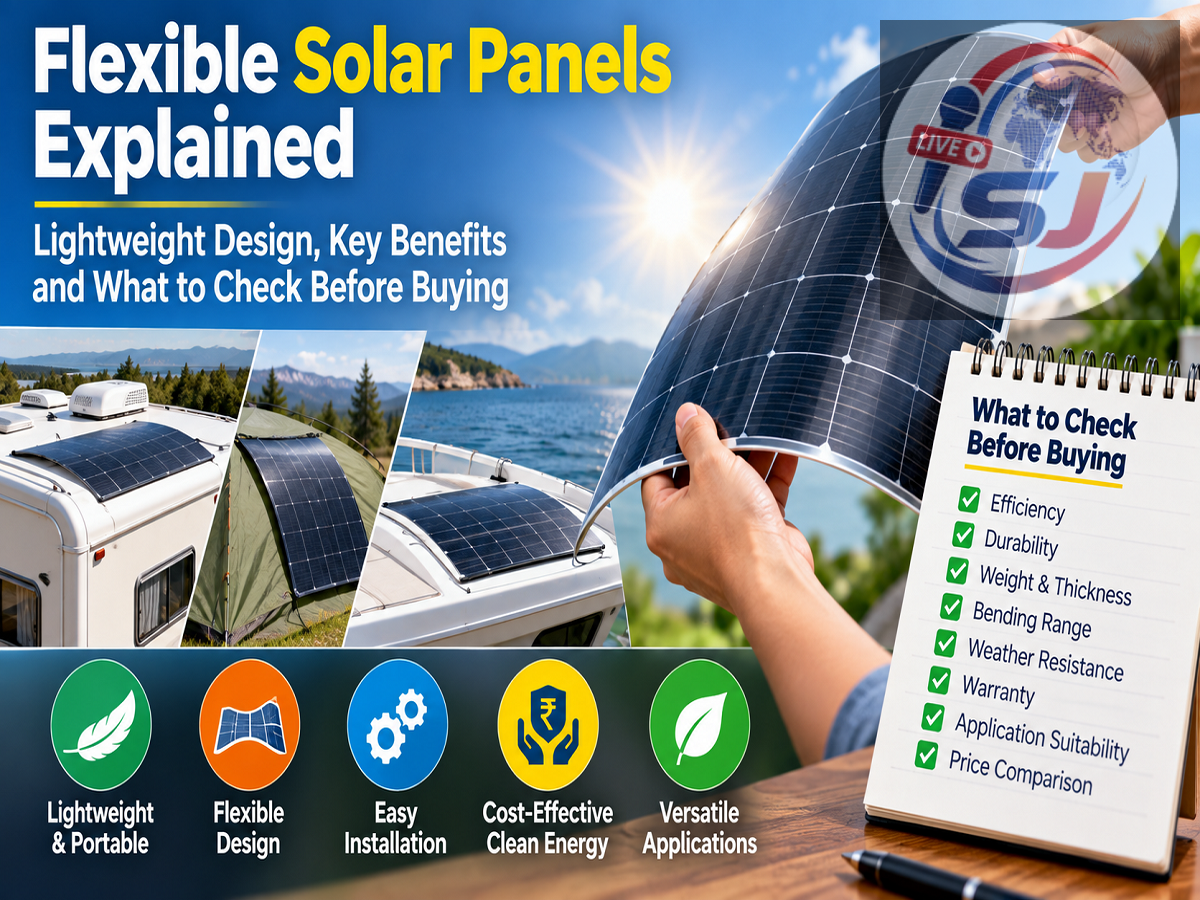
This is where flexible solar panels can be useful. Unlike conventional rigid panels, flexible models are designed to be thinner and lighter, and some can bend enough to fit gently curved surfaces. These characteristics make them suitable for applications such as boats, caravans, camping setups and other locations where portability or low weight is important.
However, flexible panels are not automatically a better choice than conventional solar modules. Buyers need to compare power output, durability, installation requirements, expected lifespan and intended use before deciding which technology suits them.
What Is a Flexible Solar Panel?
As the name suggests, a flexible solar panel is a solar module designed with a degree of bendability instead of the completely rigid structure associated with traditional glass-and-frame modules.
Many conventional rooftop panels use a glass front and aluminium frame, which gives them structural strength but also increases their weight.
Flexible panels typically use lighter construction materials and do not require the same heavy frame. Depending on the product, they can follow mildly curved surfaces where installing a conventional rigid panel would be difficult.
The degree of flexibility varies considerably between manufacturers and models. “Flexible” should therefore not be interpreted as meaning that a solar panel can be folded sharply or repeatedly without damage.
Lightweight Construction Is a Major Advantage
One of the biggest attractions of flexible solar technology is its low weight.
A conventional solar module can be considerably heavier because of its glass, aluminium frame and supporting construction. Flexible alternatives remove or reduce some of these heavy components.
For example, the source article notes that some 100-watt flexible solar panels may weigh roughly 1.5 to 2.5 kg, although actual weight varies by manufacturer and design.
A lighter module can be particularly useful where the installation surface has strict weight limitations or where the panel needs to be transported regularly.
Useful for Curved and Unusual Surfaces
Conventional rigid solar panels work best on flat mounting structures. Flexible models provide additional installation possibilities because some can conform to gently curved surfaces.
This can make them useful for boats, caravans, RVs, camping equipment and other mobile applications.
They may also be considered for surfaces where adding a large conventional mounting frame is difficult.
However, buyers should always follow the manufacturer's minimum bend-radius and installation instructions. Excessive bending can damage solar cells, internal connections or protective layers.
Heavy Mounting Structures May Not Be Necessary
Traditional rooftop solar systems generally need an appropriate mounting arrangement to secure the panels and maintain their position.
Because flexible solar panels are lighter and thinner, certain products can be installed without the same type of heavy mounting structure used for conventional framed panels.
That can simplify installation in specific portable or space-constrained applications.
But a lighter panel does not mean it can simply be attached to any surface. Proper mounting remains essential for safety, heat management and durability. Wind exposure, surface temperature, moisture and ventilation should all be considered.
Who Can Benefit From Flexible Solar Panels?
Flexible panels can be especially useful for people whose priority is portability, low weight or installation on a non-flat surface.
Campers and frequent travellers may find them convenient for portable electricity generation. Boat and caravan owners may consider them where a rigid glass module would be difficult to install.
They can also serve certain temporary or backup power applications when combined with compatible charging equipment and batteries.
For a permanent residential rooftop installation with sufficient space and a suitable mounting structure, however, conventional rigid solar modules may still be more appropriate depending on cost, efficiency, warranty and expected lifespan.
Are Flexible Solar Panels Cheaper?
Buyers should not assume that a flexible panel will necessarily cost less simply because it uses less heavy material.
The price of a solar module depends on its technology, wattage, efficiency, manufacturer, durability, warranty and other specifications.
A flexible panel may reduce certain mounting or transportation challenges, but the total value should be assessed on the basis of cost per watt and expected usable life, not just its purchase price.
If the primary objective is to build a large permanent rooftop solar system, comparing total installation cost and long-term energy generation is more useful than comparing panel prices alone.
Power Output and Efficiency Need Attention
Flexible panels can have performance trade-offs compared with high-quality rigid modules, depending on the underlying solar-cell technology and product design.
Buyers should check the panel's rated wattage, efficiency, operating temperature range and expected performance under real-world conditions.
For instance, someone who needs only enough electricity to charge portable devices during camping will have very different requirements from a household trying to offset a substantial portion of its electricity consumption.
The required solar capacity should therefore be calculated before purchasing panels.
Durability Can Be a Concern
Flexibility is useful, but repeatedly bending a panel beyond its designed limits can shorten its life.
Solar cells and electrical connections remain sensitive components even when they are enclosed in flexible materials. Excessive flexing, poor installation, overheating or physical stress may eventually damage the module.
This makes manufacturer specifications particularly important.
Before buying, check the permitted bend radius, waterproofing or weather-resistance rating where relevant, product warranty and recommended installation method.
Check These Factors Before Buying
A flexible solar panel should be selected according to where and how it will actually be used. Buyers should compare the required wattage, panel dimensions, weight, efficiency, flexibility limit, warranty and compatibility with their existing solar equipment.
Also consider whether the panel will remain permanently installed or be moved frequently. A product designed for occasional camping use may not necessarily be the best choice for years of continuous outdoor exposure.
For a grid-connected residential solar system, buyers should also verify that the modules, inverter and installation meet the applicable technical and regulatory requirements.
Flexible or Rigid Solar Panel: Which One Should You Choose?
Neither technology is universally better.
Flexible solar panels stand out because they are lightweight, thin and suitable for certain curved or mobile installations. They can be particularly practical for travellers, campers, boats, caravans and places where reducing weight is a priority.
Conventional rigid panels, on the other hand, are widely used for permanent rooftop installations where structural space is available and long-term durability and power generation are key considerations.
Therefore, the right choice depends on the intended application. Before buying a flexible solar panel simply because it is lighter or bendable, compare its power output, durability, warranty and installation requirements with a conventional panel of similar capacity.
Choosing according to actual electricity needs and installation conditions can help ensure that the solar setup delivers useful power without compromising reliability or long-term value.