
Fake Trading App Scam Alert 2026: Beware of Fraudulent Investment Apps Promising Huge Profits
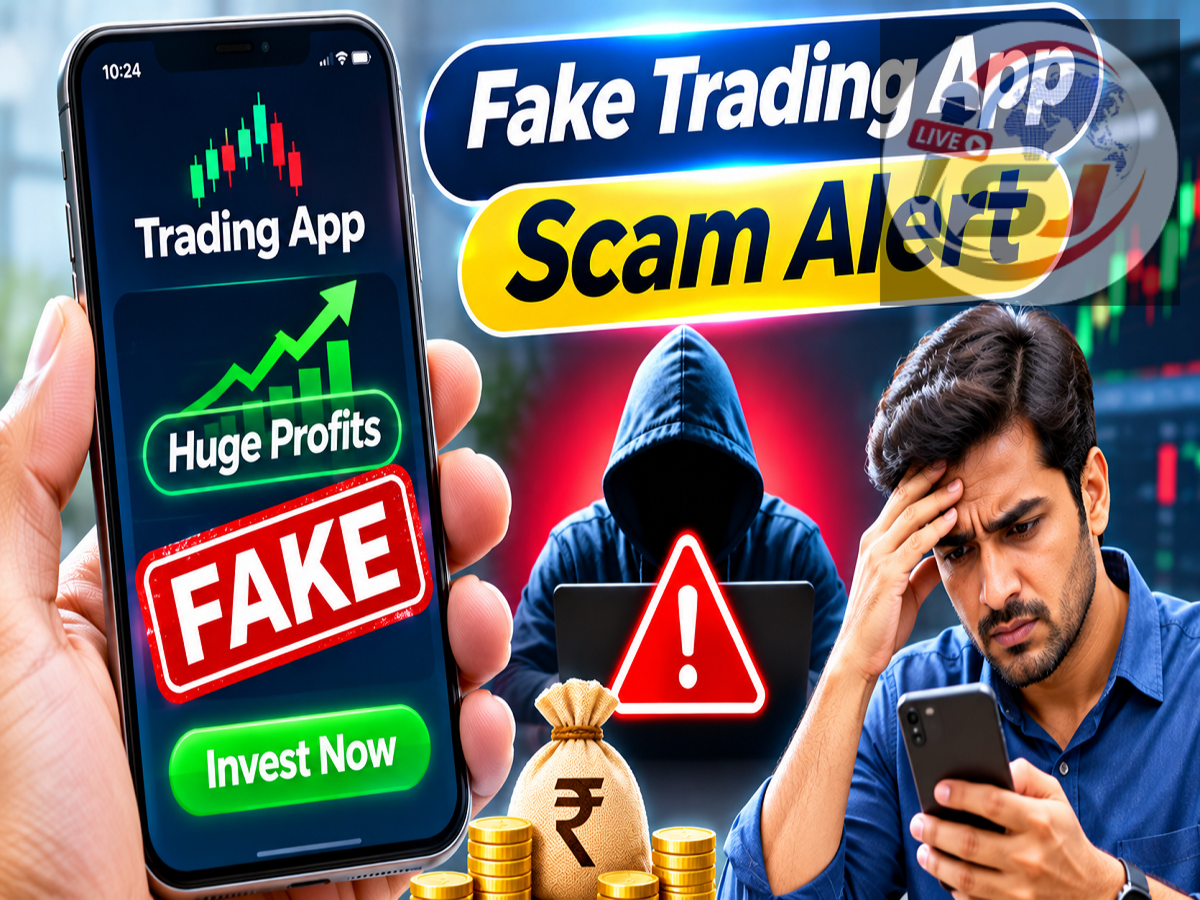
Fake Trading App Scam 2026: A trading application may show impressive profits, rapidly growing investment balances and attractive returns. However, the money displayed on the screen may be completely fictitious. The Department of Telecommunications (DoT) has issued a cyber safety awareness message warning citizens about fraudulent trading applications and online investment scams designed to steal their hard-earned money.
The advisory highlights how cybercriminals use fake investment platforms to create the illusion of successful trading. Victims may initially believe their investments are generating substantial profits, only to discover that they cannot withdraw their money.
The department has urged citizens to remain vigilant, avoid suspicious investment offers and help others recognize financial fraud.
Fake Trading App Scam 2026: Important Details
| Particulars | Information |
|---|---|
| Cyber Safety Advisory | Fake Trading Apps and Investment Fraud |
| Government Department | Department of Telecommunications |
| Common Fraud Method | Fake Investment Platforms Showing Artificial Profits |
| Main Attraction | High Returns and Quick Wealth |
| Potential Channels | WhatsApp, Telegram, Social Media and Fraudulent Websites |
| Main Risk | Financial Loss and Theft of Personal Information |
| Investment Verification | SEBI Registration and Official Exchange Records |
| Financial Cyber Fraud Helpline | 1930 |
| Cybercrime Reporting Portal | https://cybercrime.gov.in |
| Telecom Fraud Reporting | Sanchar Saathi – Chakshu |
| Official Sanchar Saathi Website | https://sancharsaathi.gov.in |
What Is a Fake Trading App Scam?
A fake trading app scam is a fraudulent investment operation in which criminals use an application or website that appears to offer legitimate financial trading services.
The platform may display stock prices, investment balances, profit charts and transaction histories.
However, the information shown to the victim may be manipulated.
In some cases, the application does not execute genuine market transactions at all.
Instead, the platform may simply display fictional gains to encourage additional deposits.
When victims attempt to withdraw their funds, scammers may block access or demand further payments.
How Does a Fake Trading App Scam Work?
Fraudsters may begin by approaching potential investors through social media advertisements, unsolicited messages or online investment groups.
They often claim to have access to special trading strategies, exclusive stock recommendations or guaranteed high-return opportunities.
The victim may then be asked to download an unfamiliar application or register on a website.
After the first deposit, the platform may display rapid profits.
This creates confidence and encourages the victim to invest larger amounts.
Some fraudsters allow small initial withdrawals to make the platform appear trustworthy.
However, when the investor tries to withdraw a substantial balance, the platform may impose unexpected restrictions.
The scammer may demand additional payments described as taxes, processing fees, verification charges or account-unlocking fees.
These payments may also be stolen.
Why Do Fake Trading Apps Show Huge Profits?
The profits displayed on fraudulent investment platforms are often intended to influence the victim's decisions.
A person who sees their investment apparently doubling may feel encouraged to deposit more money.
Scammers exploit this reaction by presenting attractive charts and account balances.
For example, a victim may deposit ₹50,000 into a fraudulent application.
The platform might later display an account value of ₹1.50 lakh.
However, the additional ₹1 lakh shown on the screen may not represent real investment gains.
If the platform is fraudulent, even the original ₹50,000 may have been diverted to accounts controlled by criminals.
An investment balance displayed in an application is not proof that the money exists or can be withdrawn.
Seven Warning Signs of Fake Trading Apps
Investors should be cautious when they notice the following warning signs.
1. Guaranteed High Returns
The platform promises unusually high profits with little or no risk.
Legitimate market investments involve risk, and returns cannot generally be guaranteed.
2. Unverified Trading Applications
The app is distributed through an unfamiliar link or an unofficial download source.
3. Pressure to Invest Quickly
The recruiter claims that a special opportunity will expire unless payment is made immediately.
4. Payments to Personal Accounts
Investors are instructed to transfer money to unrelated individuals or unfamiliar bank accounts.
5. Fake Profit Screenshots
The platform repeatedly displays impressive earnings without providing independently verifiable transaction records.
6. Withdrawal Restrictions
The investor is unable to withdraw funds and is asked to pay additional charges.
7. Impersonation of Market Experts
Fraudsters misuse the names, photographs or identities of investment professionals, brokers or financial institutions.
Any combination of these warning signs should prompt further verification.
How to Check Whether a Trading App Is Genuine
Before transferring money, investors should verify the financial intermediary operating the application.
The Securities and Exchange Board of India (SEBI) provides information about registered intermediaries.
Investors can visit https://www.sebi.gov.in to check relevant registration details.
They should also verify whether the broker is a member of the appropriate recognized stock exchange.
For example, investors can consult official information available through the National Stock Exchange or BSE.
However, the presence of a familiar company name or logo inside an application is not sufficient proof of authenticity.
Fraudsters may create applications that imitate genuine financial platforms.
Investors should independently obtain the official website and application details of the registered intermediary.
Are WhatsApp and Telegram Investment Groups Safe?
Not every financial discussion group is fraudulent, but unsolicited groups promising extraordinary profits deserve particular caution.
Scammers may create groups containing fake participants who claim to have earned substantial returns.
They may share fabricated screenshots of profitable trades and successful withdrawals.
Some groups impersonate well-known investment advisers or financial institutions.
Victims may be encouraged to join a private trading platform or make deposits through unfamiliar payment instructions.
Investors should avoid treating testimonials in messaging groups as independent proof of investment performance.
They should verify any investment service through official regulatory and institutional channels.
What Should You Do if a Trading App Blocks Withdrawals?
If an application refuses to process withdrawals and demands further payments, investors should avoid sending additional money without independent verification.
They should preserve evidence of transactions and communications.
Relevant records may include bank transfer details, payment receipts, screenshots, application links and messages from the alleged adviser.
The matter should be reported through appropriate financial and cybercrime channels.
Victims should not assume that paying an additional tax or unlocking fee will release their money.
Such demands are commonly used to extract further payments.
How to Report Fake Trading App Fraud in India
Victims of financial cyber fraud should act immediately.
Step 1: Call the national financial cyber fraud helpline at 1930.
Step 2: Visit https://cybercrime.gov.in and submit a complaint through the prescribed process.
Step 3: Inform the relevant bank or payment service provider about the fraudulent transaction.
Step 4: Preserve transaction reference numbers, messages and screenshots.
Step 5: Follow official instructions regarding further documentation and investigation.
Prompt reporting may improve the chances of tracing fraudulent funds, although recovery is not guaranteed.
Investors may also report relevant securities-market concerns through SEBI's official grievance mechanisms where applicable.
How Can Sanchar Saathi Help?
The Department of Telecommunications operates the Sanchar Saathi platform to support telecom safety.
Its Chakshu facility allows users to report suspected fraudulent communications received through supported channels.
If a fake trading scheme is promoted through a suspicious call, SMS or supported messaging communication, the recipient may be able to report that communication through the portal.
However, Chakshu is not a replacement for filing a financial cybercrime complaint.
People who have already lost money should use the national cybercrime reporting system and contact their bank promptly.
How to Protect Yourself From Investment Scams
Investors should verify the identity and registration status of financial intermediaries before investing.
They should avoid downloading trading applications from unknown links.
Promises of guaranteed returns should be treated with skepticism.
Investment payments should be made only through verified and authorized channels.
Banking passwords, OTPs and UPI PINs should never be shared with investment advisers or unknown callers.
Investors should also review actual contract notes, statements and other independently verifiable transaction records where applicable.
If an investment opportunity seems unusually profitable, independent verification is essential.
Fake Trading App Scam Alert 2026: Latest DoT Advisory
The Department of Telecommunications has warned citizens that apparent profits displayed on fraudulent trading applications can conceal the theft of real money.
The awareness message emphasizes that attractive digital account balances should not be mistaken for genuine investment returns.
Citizens are encouraged to verify investment platforms, remain alert to suspicious offers and help others recognize fraudulent trading schemes.
Anyone who suspects financial cyber fraud should promptly contact 1930 and use the official cybercrime reporting portal.
Source Credit: Department of Telecommunications (DoT), Government of India – Public cyber safety awareness communication on fake trading applications and investment fraud.
Official Resources:
-
Sanchar Saathi: https://sancharsaathi.gov.in
-
SEBI: https://www.sebi.gov.in
-
National Stock Exchange: https://www.nseindia.com
-
Cybercrime Reporting: https://cybercrime.gov.in
-
Financial Cyber Fraud Helpline: 1930
Disclaimer: This article is intended for financial and cyber safety awareness. Investments in securities markets involve risk. Readers should independently verify financial intermediaries and consult qualified professionals when necessary. Reporting a fraudulent transaction does not guarantee recovery of lost funds.