
Fake Customer Care Number Scam: Never Share OTP or UPI PIN, Report Fraud on Sanchar Saathi
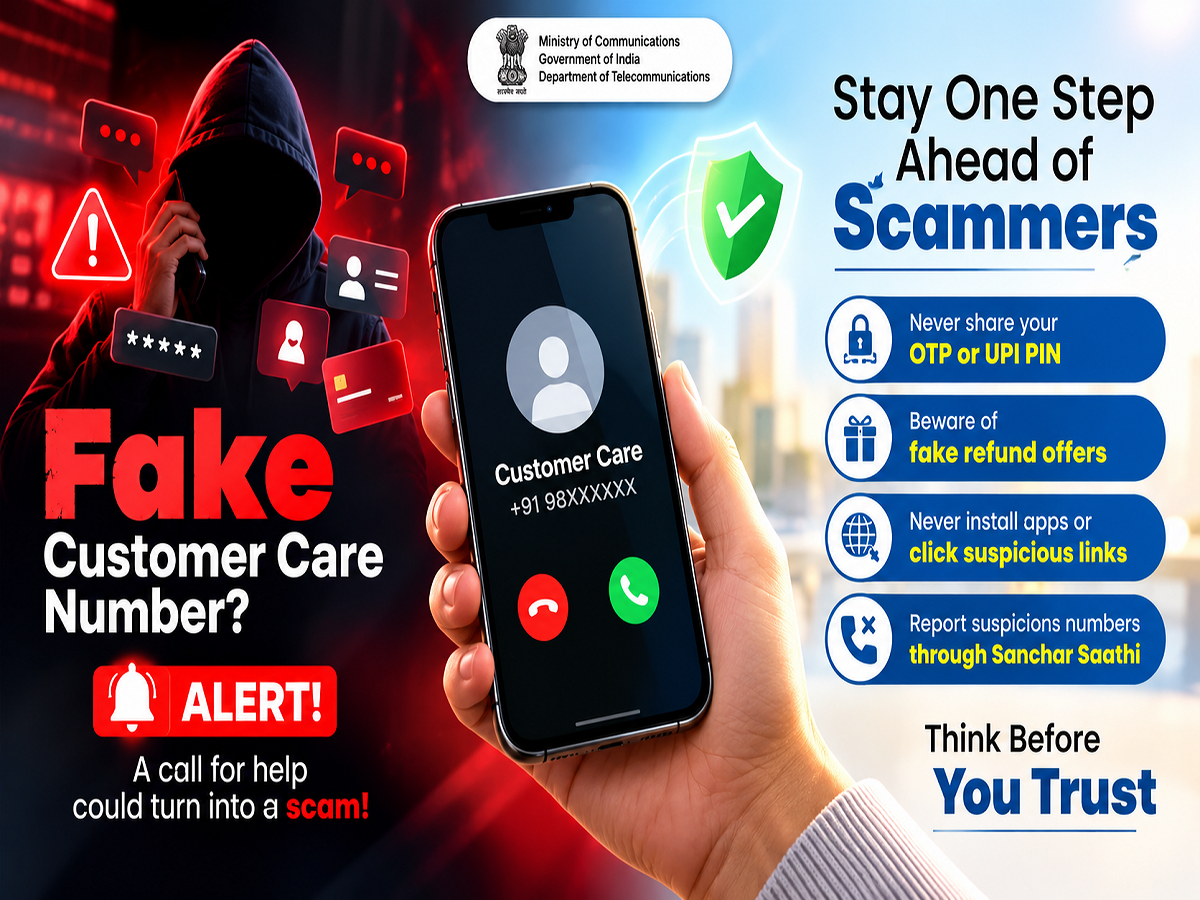
Cyber Fraud Alert 2026: Not every customer care number appearing on the internet belongs to a genuine company. Cybercriminals are increasingly using fake helpline numbers, refund promises and misleading customer support messages to deceive unsuspecting users.
A public awareness advisory has warned people to verify customer service numbers before making calls and to avoid sharing confidential banking information with anyone claiming to be a company representative.
Fraudsters may impersonate bank officials, shopping platform executives, delivery agents or payment application support staff. Their objective is often to obtain sensitive information or persuade victims to authorise fraudulent transactions.
The advisory also encourages citizens to report suspicious phone numbers and communications through the government's Sanchar Saathi portal.
What Is a Fake Customer Care Number Scam?
A fake customer care scam occurs when criminals impersonate the customer support team of a legitimate organisation.
They may publish fraudulent phone numbers on misleading websites, social media pages, online advertisements or unofficial business listings.
When someone searches for assistance with a bank account, online order, refund or payment problem, they may accidentally contact one of these numbers.
The person answering the call then pretends to be an authorised customer support representative.
The fraudster may request personal details, banking credentials, OTPs or payment authorisation under the pretext of resolving the customer's problem.
In some cases, scammers may ask users to install unfamiliar applications that enable screen sharing or remote access.
Such requests can expose sensitive information and increase the risk of financial fraud.
How Do Fake Refund Scams Work?
Refund-related fraud is one of the techniques used by criminals pretending to provide customer support.
A customer may be waiting for a refund from an online shopping platform or payment service.
A fraudster claiming to represent the company may offer to process the refund immediately.
The caller may then ask the customer to enter a UPI PIN, approve a payment request or share an OTP.
These instructions are warning signs.
Receiving an ordinary UPI payment does not require entering your UPI PIN. The PIN is used to authorise transactions such as sending money.
Customers should never approve an unfamiliar payment request simply because someone claims it is necessary to receive a refund.
Five Warning Signs of Fake Customer Support
Online fraud attempts often involve similar patterns. Recognising these warning signs can help customers avoid financial losses.
1. Asking for an OTP
A caller claiming to represent a bank or payment company may request an OTP to verify the customer's identity.
OTPs are confidential security credentials and should not be shared with unknown callers.
2. Requesting Your UPI PIN
Fraudsters may falsely claim that entering a UPI PIN is necessary to receive cashback, a refund or a reward.
Customers should remember that a UPI PIN must never be disclosed to another person.
3. Promising an Instant Refund
Scammers sometimes use attractive refund offers to persuade customers to act quickly.
Before following any instructions, verify the refund status through the official application or website.
4. Asking You to Install an Application
A fake support executive may ask a customer to download a screen-sharing or remote-access application.
Installing such software at the direction of an unknown caller can create serious security risks.
5. Creating Pressure or Fear
Fraudsters may claim that an account will be blocked or a refund cancelled unless the customer acts immediately.
This pressure is often intended to prevent the victim from checking the caller's identity.
How to Identify a Genuine Customer Care Number
Customers should use official sources when looking for customer support contact details.
The safest approach is to open the company's official website or mobile application and locate its customer service section.
Phone numbers found in unsolicited messages, social media comments or unfamiliar websites should not be trusted automatically.
A number appearing prominently in an online search result is not necessarily genuine.
Before sharing any information, customers should confirm that they are communicating with an authorised representative.
If a caller requests confidential banking credentials, the customer should end the conversation and independently contact the organisation through a verified channel.
What Is the Sanchar Saathi Portal?
Sanchar Saathi is a citizen-focused digital platform operated by the Department of Telecommunications.
It provides services intended to help people manage telecom-related security concerns and report suspicious communications.
One of its important facilities is Chakshu, which allows citizens to report suspected fraudulent communications received through channels such as calls, SMS and WhatsApp.
Reports may involve impersonation, suspicious payment requests, fake customer support messages and other suspected fraud attempts.
The platform helps authorities collect information about potentially fraudulent communications for further examination and appropriate action.
However, submitting a report does not automatically guarantee that a number will be blocked or that lost money will be recovered.
How to Report a Fake Customer Care Number on Sanchar Saathi
People who receive suspicious calls or messages can report them through the official portal.
Follow these steps:
-
Visit the official Sanchar Saathi website at https://sancharsaathi.gov.in/.
-
Find the Chakshu facility for reporting suspected fraudulent communications.
-
Select the relevant communication category.
-
Provide the suspicious mobile number or communication details as requested.
-
Enter the date and other required information.
-
Upload supporting evidence, if available and appropriate.
-
Complete the prescribed verification process.
-
Submit the report.
Users should follow the instructions displayed on the portal, as reporting categories and procedures may be updated.
Only genuine information should be submitted.
Sanchar Saathi vs Cybercrime Helpline 1930
It is important to understand the difference between reporting a suspicious communication and reporting an actual financial fraud.
| Service | Main Purpose |
|---|---|
| Sanchar Saathi – Chakshu | Report suspected fraudulent calls, SMS and WhatsApp communications |
| Cybercrime Helpline 1930 | Report financial cyber fraud |
| cybercrime.gov.in | Submit cybercrime complaints online |
| Bank's Official Helpline | Report unauthorised banking transactions and secure the account |
If someone has already lost money in a cyber fraud incident, they should immediately contact their bank and report the incident through 1930 or the National Cyber Crime Reporting Portal.
Sanchar Saathi's Chakshu facility is intended for reporting suspected fraudulent communications, not as a replacement for the financial cybercrime complaint process.
What Should You Do If You Shared an OTP or UPI PIN?
Anyone who suspects that their banking credentials have been compromised should act immediately.
Contact the bank or payment service provider using its official customer support channel.
Explain what information was disclosed and follow the institution's instructions for securing the account.
If unauthorised transactions have occurred, report them promptly through the bank and the national cybercrime reporting system.
Customers should also change compromised credentials through official applications and review recent transactions.
Preserve screenshots, transaction references, messages and phone numbers that may help with the investigation.
Prompt reporting is important, although recovery of funds cannot be guaranteed.
How to Stay Safe From Customer Care Fraud
A few simple precautions can reduce the risk of becoming a victim.
-
Use only customer care numbers published through verified company channels.
-
Never share OTPs, UPI PINs, passwords or card security codes.
-
Do not approve unknown UPI payment requests.
-
Avoid installing unfamiliar applications at the request of a caller.
-
Verify refund information directly through the official shopping or payment application.
-
Report suspicious communications through Sanchar Saathi.
-
Report financial cyber fraud immediately through 1930 or cybercrime.gov.in.
Customers should also inform family members about fake customer care scams, especially those who may be unfamiliar with digital payment security.
Final Update
Fake customer care numbers and refund-related scams can put banking information and personal savings at risk.
Fraudsters may appear convincing, but requests for OTPs, UPI PINs or unfamiliar payment approvals should always raise suspicion.
The Department of Telecommunications' Sanchar Saathi platform provides a way to report suspected fraudulent communications.
Before calling a customer care number, verify it through the company's official website or application. Never share confidential banking credentials with anyone.
For suspected fraudulent communications, visit https://sancharsaathi.gov.in/. If money has already been lost to cyber fraud, contact 1930 immediately and report the incident through https://cybercrime.gov.in/.
Cyber safety reminder: Reporting suspicious activity early can help authorities identify potential fraud patterns, but it does not guarantee financial recovery.