
Fake Customer Care Number Scam 2026: Rajasthan Government Warns Against OTP, PIN and Banking Fraud
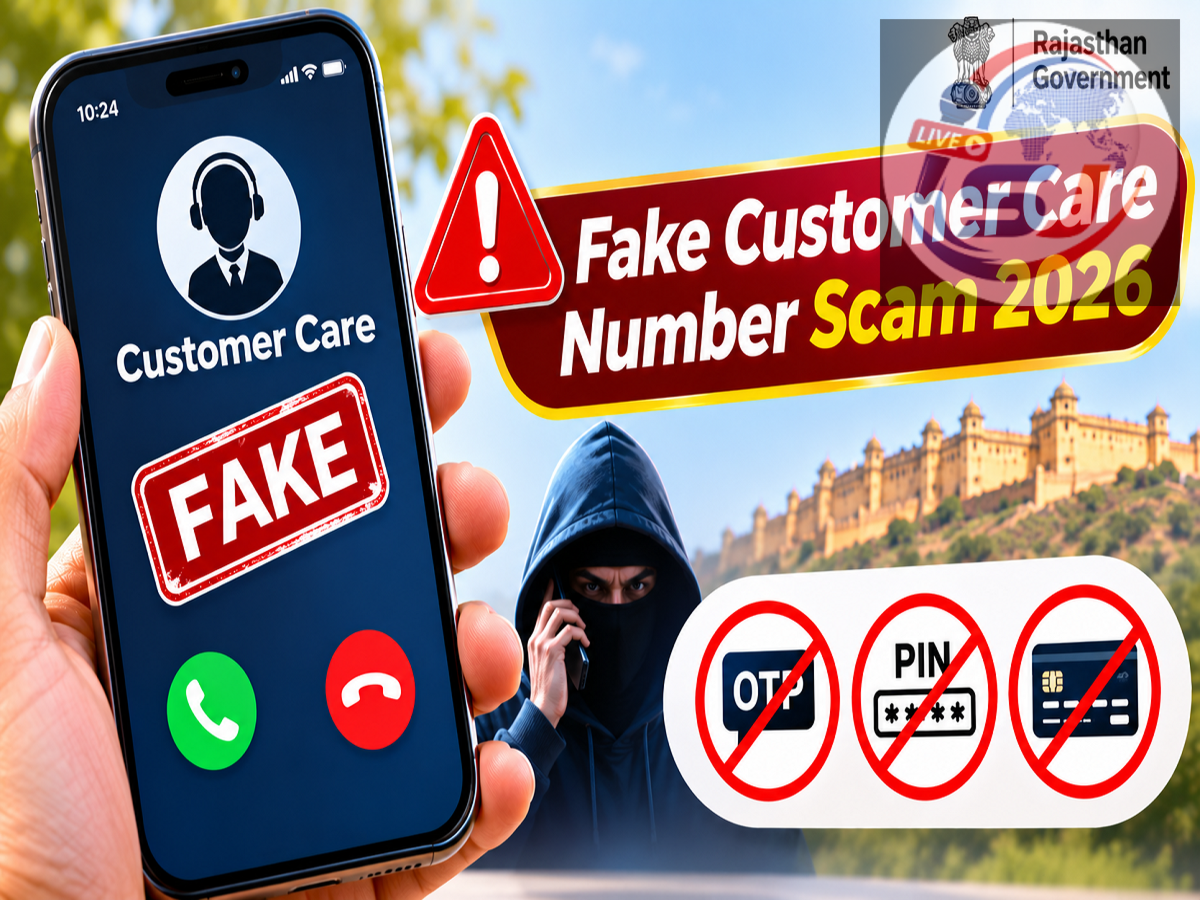
Fake Customer Care Fraud Alert 2026: Searching online for a customer care number may seem like a routine task, but using an unverified contact number can expose people to financial fraud and identity theft. Cybercriminals sometimes publish fake helpline numbers or impersonate customer support representatives to trick individuals into sharing sensitive banking information, OTPs and passwords.
The Rajasthan government's Department of Information Technology and Communication (DoIT&C) has issued a cyber safety awareness message urging citizens to verify customer care contact details through official websites or trusted applications.
The advisory highlights an essential precaution: Never share your UPI PIN, OTP, banking password or other confidential financial credentials with anyone claiming to be a customer care representative.
Rajasthan Government Issues Warning About Fake Customer Care Numbers
The Rajasthan government's latest cyber awareness message focuses on a common online fraud technique involving fraudulent customer support contacts.
People frequently search the internet for helpline numbers when they face problems with bank accounts, UPI transactions, online shopping orders, mobile recharge services or digital wallets.
Fraudsters take advantage of these situations by circulating misleading contact information.
A person who unknowingly calls a fraudulent number may be connected to someone pretending to represent a genuine company or financial institution.
The scammer may then request personal information, payment details or access to the caller's smartphone.
The government advisory encourages citizens to obtain contact details directly from verified sources rather than trusting unfamiliar numbers.
What Is a Fake Customer Care Number Scam?
A fake customer care scam occurs when cybercriminals impersonate representatives of legitimate organisations to obtain money or confidential information.
Fraudsters may use misleading websites, social media posts, online advertisements or messaging platforms to circulate fake support numbers.
When a victim contacts one of these numbers, the scammer may claim to be an authorised customer support executive.
The caller may be told that a refund is pending, a bank account requires verification or a payment problem must be resolved immediately.
The fraudster then attempts to persuade the victim to disclose sensitive details or perform a transaction.
In some cases, scammers may also ask users to install remote-access applications or click suspicious links.
These actions can increase the risk of financial loss and unauthorised access to personal information.
How Do Fraudsters Spread Fake Helpline Numbers?
Cybercriminals can use several methods to make fraudulent contact details appear genuine.
One technique involves creating websites that resemble the official support pages of banks, payment services or online retailers.
Another involves posting fake contact numbers in public comments, social media groups or online directories.
Some fraudsters may use paid advertisements or misleading search results to attract people seeking urgent assistance.
The number may be accompanied by a familiar company name or logo to create an impression of authenticity.
However, the presence of a brand name, logo or professional-looking website does not establish that the contact information is genuine.
Users should independently verify customer care details before making a call or sharing information.
Common Tricks Used by Fake Customer Care Executives
Fraudsters often use convincing explanations to gain the trust of victims.
Some common examples include:
-
Bank account verification: The caller claims that an account will be blocked unless the customer shares an OTP or completes an urgent verification.
-
UPI transaction refund: The scammer says that a failed payment can be reversed after the customer enters a UPI PIN.
-
Online shopping complaint: A fake support representative offers a refund for a delayed or cancelled order.
-
KYC update fraud: The caller claims that identity verification must be completed immediately to avoid service suspension.
-
Remote-access scam: The victim is asked to install a screen-sharing application for technical assistance.
-
Fake payment link: The scammer sends a link and asks the customer to enter card details or banking credentials.
These are examples of established fraud techniques and should not be interpreted as specific incidents confirmed in the brief Rajasthan government advisory.
Never Share Your OTP, UPI PIN or Banking Password
One of the most important rules of digital banking safety is to keep authentication credentials private.
A genuine bank or payment service provider should not ask customers to disclose their UPI PIN or banking password to a customer care representative.
Similarly, OTPs used for financial transactions or account verification should not be shared with unknown callers.
Fraudsters may claim that these details are required to process refunds or resolve technical issues.
However, sharing such information can enable unauthorised transactions or account access.
Customers should also avoid disclosing debit card PINs, internet banking passwords and other confidential security details.
If someone claiming to represent a financial institution asks for this information, users should end the conversation and contact the organisation through an independently verified channel.
How to Find a Genuine Customer Care Number
The Rajasthan government's advisory recommends using official websites and verified applications to obtain customer support contact information.
For banking-related issues, customers can visit the bank's official website or use its authorised mobile banking application.
Some banks also provide customer support information on debit cards, account statements and other official communications.
For online shopping complaints, users should open the retailer's official application or website and navigate to the help or support section.
It is important to verify the website address carefully, as fraudulent websites may use names that closely resemble legitimate domains.
Users should avoid relying solely on unfamiliar search results, forwarded messages or numbers posted in social media comments.
Fake Customer Care vs Genuine Support: Important Differences
| Genuine Customer Support |
Suspicious or Fraudulent Support |
|---|---|
| Contact details can be verified through official channels |
Contact details may appear on misleading websites or posts |
| Does not require disclosure of a UPI PIN |
May demand a UPI PIN to process a refund |
| Does not ask customers to reveal banking passwords |
May request passwords or sensitive credentials |
| Provides appropriate official complaint procedures |
May pressure users to act immediately |
| Uses established service channels |
May insist on unfamiliar links or applications |
| Allows customers to verify information independently |
May discourage verification or contacting the organisation directly |
These indicators can help users recognise suspicious interactions, although scammers may imitate legitimate procedures.
The safest approach is always to verify the support channel independently.
Beware of Remote-Access Applications During Customer Support Calls
Fake customer care scams may involve requests to install screen-sharing or remote-access software.
The scammer may claim that the application is required to resolve a banking problem or process a refund.
However, granting remote access to an unknown person can expose sensitive information and potentially allow unauthorised interaction with the device.
Depending on the application's permissions, a remote user may be able to view displayed information or control certain device functions.
Customers should never install such software solely because an unknown caller instructs them to do so.
If technical support is genuinely required, users should contact the organisation through its verified official channels and understand the permissions involved before proceeding.
What Should You Do If You Call a Fake Customer Care Number?
If you realise that you may have contacted a fraudulent helpline, stop communicating with the suspected scammer immediately.
Do not share additional information or follow instructions to make payments.
If you disclosed sensitive credentials, contact your bank or relevant service provider through its official channels.
You should also change compromised passwords and review account activity.
If a suspicious application was installed, disconnect any active remote-access session and remove the application after reviewing the device's security.
Preserve relevant evidence, including phone numbers, messages, transaction details and screenshots.
These records may help when reporting the incident.
How to Report Fake Customer Care Fraud in India
Victims of financial cyber fraud can contact the national cybercrime helpline 1930.
Complaints can also be registered through the official National Cyber Crime Reporting Portal.
If money has been transferred without authorisation, the affected person should notify their bank or payment service provider immediately.
When submitting a complaint, users should provide relevant information such as the fraudulent contact number, transaction reference, payment amount and communication records.
Prompt reporting may help financial institutions and authorities respond more quickly.
However, recovery of money depends on the circumstances and cannot be guaranteed.
Why Fake Customer Care Scams Are Dangerous
Fake customer care fraud is particularly concerning because victims often contact scammers while trying to solve an existing problem.
A person dealing with a failed UPI payment, delayed refund or blocked account may already be worried.
Fraudsters exploit this urgency by presenting themselves as helpful representatives.
They may use professional language, familiar company names and convincing explanations to gain trust.
The scam does not necessarily require sophisticated technical methods.
In many cases, the attacker relies on persuading the victim to reveal information or approve a financial transaction.
This makes public awareness an important part of preventing such fraud.
Important Cyber Safety Tips for Digital Payment Users
People using banking applications, UPI services and online shopping platforms should follow basic security precautions.
Always obtain customer care details through verified official sources.
Never disclose OTPs, UPI PINs or passwords to anyone over a phone call.
Avoid opening suspicious links received through unsolicited messages.
Do not approve payment requests unless the transaction details are correct.
If someone claims that a refund requires a UPI PIN, treat the request as suspicious because receiving a normal UPI transfer does not require PIN authorisation.
Users should also review bank transaction alerts and report unfamiliar activity promptly.
Final Takeaway: Verify Customer Care Numbers Before Calling
The Rajasthan government's cyber safety message highlights an important risk associated with online customer support searches.
Fraudsters can impersonate customer care executives and misuse fake helpline numbers to obtain confidential information or steal money.
Always find customer support numbers through official websites or verified applications, and never share your OTP, UPI PIN or banking credentials.
If a caller makes unusual demands, requests remote access or pressures you to transfer money, disconnect and independently verify the situation.
Staying alert and following basic digital safety practices can help prevent financial fraud and protect personal information.
Source Credit: Rajasthan Government Department of Information Technology and Communication (DoIT&C) — Public cyber awareness advisory shared under #DOITC, #CyberSafety, #OnlineFraud, #CyberAwareness and #Rajasthan. Additional information about fake customer support scams and cybercrime reporting procedures has been included for public awareness.