
EPFO Comes to WhatsApp: Members Can Get PF Alerts and Updates, But Can You Check Balance and Claims?
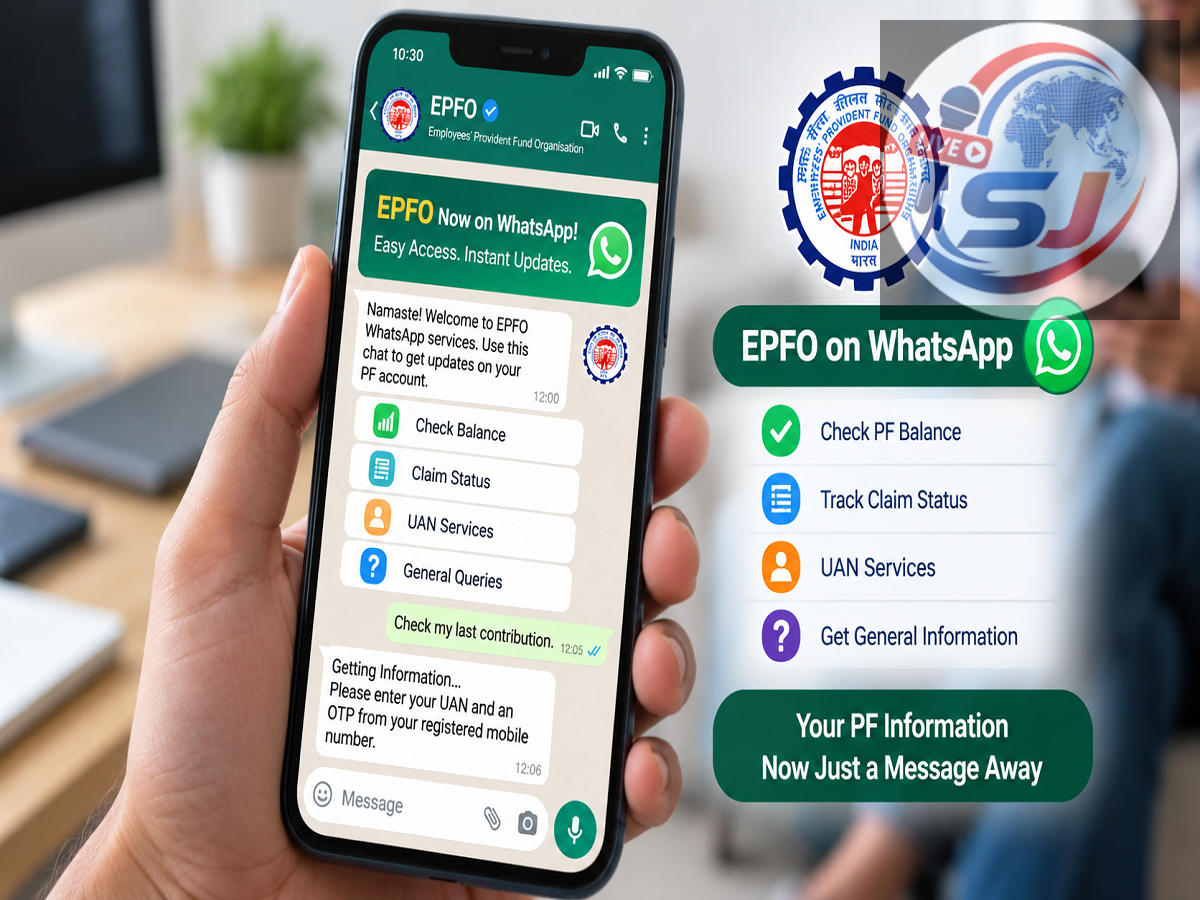
Employees' Provident Fund Organisation (EPFO) is expanding the ways in which it communicates with millions of salaried employees and pensioners. Its presence on WhatsApp is attracting attention because the messaging platform is already used daily by a large number of people.
The development could make official PF-related information easier to access, particularly for members who do not regularly check government websites or social-media accounts.
However, there is an important distinction EPF members need to understand. An official WhatsApp Channel that broadcasts EPFO news, scheme alerts and announcements is not automatically the same as an interactive chatbot capable of securely displaying an individual's PF balance, last five transactions or claim status.
Here is what members should know before depending on WhatsApp for their PF account information.
What Does EPFO's WhatsApp Channel Offer?
The WhatsApp Channel is intended to provide official information and important updates from EPFO.
Members following the channel can receive announcements, scheme-related information, service updates and other useful notifications through WhatsApp.
This can be particularly convenient because users do not have to repeatedly search different websites or social-media platforms for every new announcement.
Following a WhatsApp Channel is also different from logging into an EPFO account. A channel is primarily a broadcast mechanism through which information can be distributed to followers.
Can You Check Your PF Balance Directly on WhatsApp?
Reports have claimed that members will be able to obtain services such as PF balance information, recent transactions and claim tracking through a WhatsApp-based chatbot.
Members should be careful about treating all of these capabilities as already available through the newly publicised WhatsApp Channel.
An individual's PF balance is account-specific information. Accessing such information normally requires an authenticated EPFO service.
EPFO's official Passbook service continues to provide members with access to their EPF passbook and claim-related information. Other authorised facilities are also available for checking PF information.
Therefore, unless EPFO officially activates and documents an interactive WhatsApp service for a particular account-specific feature, users should not send confidential credentials to a WhatsApp number simply because it claims to provide PF balance information.
How Can You Check Your EPF Balance?
EPFO members already have several established methods for checking their provident-fund information.
The EPF Passbook service allows eligible members to access contribution records using the required authentication.
EPFO also lists a missed-call facility at 9966044425 for EPF balance enquiry and an SMS facility. Members can send EPFOHO UAN to 7738299899, where the language code is used according to the supported format.
Availability and eligibility for these services can depend on the member's UAN and registered details.
Members can also use supported EPFO services through UMANG for various account-related tasks.
What About the Last Five PF Transactions?
Your EPF passbook is one of the most useful places to verify whether contributions are reaching your account.
It can help members review deposits associated with their employment and identify possible discrepancies.
This is particularly useful for salaried employees because seeing a PF deduction on a salary slip does not by itself replace checking the EPFO contribution record.
If WhatsApp-based access to recent transactions is formally rolled out as an authenticated EPFO service, it could make this verification easier. Until then, members should use established official facilities for account-specific transaction details.
How to Check EPFO Claim Status
Employees who have submitted an eligible PF withdrawal, advance or other claim often want to know whether it is still being processed, approved or settled.
EPFO provides digital mechanisms for members to access claim-related information.
Members should use the official EPFO portal, UMANG or another formally authorised EPFO facility for such information.
Do not trust a WhatsApp number that asks for your UAN password, Aadhaar details, bank-account credentials or OTP in exchange for showing the status of a claim.
Why WhatsApp Could Be Useful for EPFO Members
WhatsApp can still become an important communication channel even without replacing EPFO's authenticated portals.
Many members may not regularly visit the EPFO website, while WhatsApp is checked several times a day.
That makes the platform useful for distributing information about new services, rule changes, deadlines, pension-related developments, digital facilities and fraud warnings.
Regional-language communication could make such information more accessible to people who are less comfortable navigating English-language websites.
WhatsApp Could Reduce Dependence on Physical Offices
Greater use of digital communication can also reduce unnecessary visits to EPFO offices.
A member who needs only general information about a procedure may be able to find the answer digitally instead of travelling to a regional office.
EPFO has previously used WhatsApp-based regional helplines for grievances and guidance as part of its efforts to improve member communication.
However, grievance assistance, a broadcast Channel and an authenticated account-service chatbot should not all be treated as the same product. Each may have different capabilities and security requirements.
Never Share Your UAN Password or OTP on WhatsApp
The convenience of WhatsApp also creates an opportunity for scammers.
EPFO itself warns members to remain alert about requests for personal and financial information.
Members should never disclose their UAN password, Aadhaar details, PAN, bank-account information, OTP or other confidential credentials to an unknown person through WhatsApp, calls, messages or social media.
EPFO also warns members against making payments merely because someone contacts them claiming to represent the organisation.
This precaution becomes especially important whenever a new digital service receives publicity, because fraudsters may quickly create fake accounts and numbers that imitate official services.
Check Employer Contributions Regularly
Whether or not more WhatsApp services are introduced, employees should make it a habit to monitor their PF contributions.
Compare the PF deduction shown on your salary slip with the entries available in your EPF records.
If a contribution appears to be missing, first check whether there is a normal posting delay. If the discrepancy continues, contact the employer's HR or payroll department and use EPFO's authorised grievance channels when required.
Regular monitoring can help identify problems before an employee changes jobs or needs to submit a withdrawal or transfer request.
WhatsApp Adds Convenience, but Official EPFO Services Still Matter
EPFO's move towards WhatsApp-based communication can make important PF information easier to discover. An official WhatsApp Channel can be useful for receiving news, alerts and announcements without repeatedly checking different websites.
But members should distinguish between receiving general updates and accessing confidential account information.
Claims that every user can already send a simple WhatsApp message and instantly receive their PF balance, last five transactions and live claim status without authentication should be verified against EPFO's officially documented services before being relied upon.
For now, members can continue using established options such as the EPF Passbook portal, UMANG, missed-call and SMS facilities for supported account-related services.
Most importantly, never share passwords, OTPs or banking credentials with anyone on WhatsApp. Convenience is useful, but protecting your retirement savings should remain the priority.