
Electricity Bill Scam Alert 2026: SBI Warns Against Fake KYC Messages and Disconnection Threats
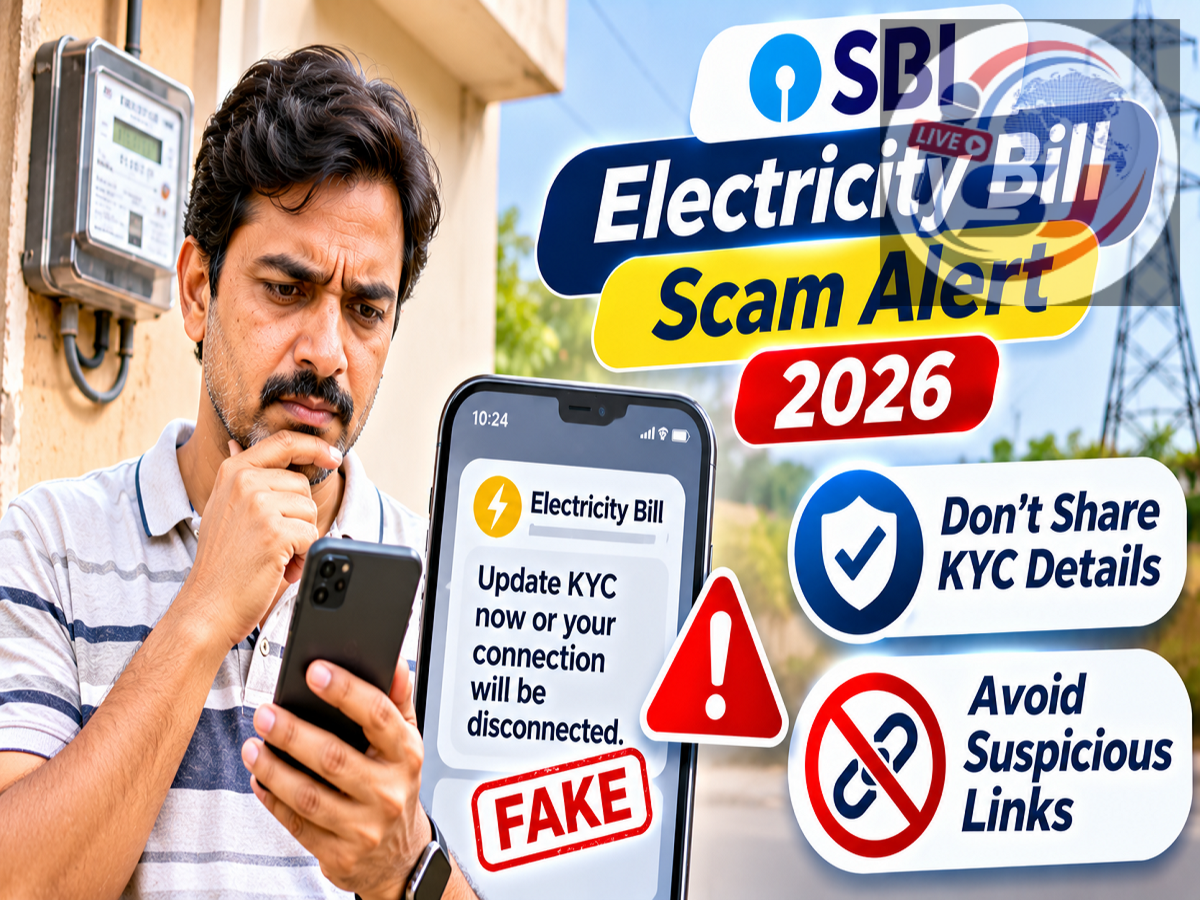
Electricity Bill Scam Alert 2026: State Bank of India (SBI) has issued a cybersecurity awareness message warning customers about fraudulent calls and messages related to electricity, gas and water bills. Cybercriminals may impersonate utility company representatives and pressure consumers into updating their Know Your Customer (KYC) details or paying supposedly overdue bills through suspicious links.
Through its Captain Y – Your Cyber Rakshak awareness campaign, SBI is encouraging people to question unexpected requests before sharing personal information, opening links or making payments.
The campaign carries a simple message: "Hamesha Poochho Why?" — always ask why before trusting an unfamiliar caller or message.
The warning is relevant to consumers who receive unexpected SMS messages, WhatsApp notifications or phone calls claiming that their utility services will be disconnected unless they act immediately.
What Is an Electricity Bill Scam?
An electricity bill scam is a type of financial fraud in which criminals pretend to represent an electricity distribution company or another utility service provider.
Fraudsters typically contact consumers through phone calls, text messages or messaging applications.
They may claim that an electricity bill is unpaid, an account requires urgent KYC verification or a service connection is about to be disconnected.
The objective is often to frighten the recipient into taking immediate action without verifying whether the message is genuine.
Victims may be directed to fraudulent websites, asked to disclose banking information or persuaded to install malicious applications.
Similar techniques can also be used in the name of gas connections and water supply services.
SBI Captain Y Cybersecurity Alert: Important Details
| Particulars | Information |
|---|---|
| Awareness Campaign | Captain Y – Your Cyber Rakshak |
| Organization | State Bank of India |
| Fraud Category | Utility Bill and Fake KYC Scam |
| Common Channels | SMS, WhatsApp and Phone Calls |
| Typical Fraudulent Claims | Pending Bills, KYC Updates and Service Disconnection |
| Main Risks | Financial Fraud and Personal Data Theft |
| Cybercrime Helpline | 1930 |
| Cybercrime Reporting Portal | https://cybercrime.gov.in |
| SBI Official Website | https://sbi.bank.in |
How Do Electricity Bill Scammers Target Consumers?
Fraudsters often use a combination of impersonation, urgency and misleading instructions.
The process may begin with an unexpected message claiming that a utility account requires immediate attention.
For example, a consumer might receive a message stating that electricity service will be disconnected unless KYC details are updated.
The message may contain a link or an unfamiliar contact number.
If the recipient responds, the fraudster may pose as a customer service executive and request personal information.
In some cases, the caller may instruct the consumer to install a mobile application or complete a payment through an unofficial website.
These actions can expose sensitive information or create opportunities for unauthorized financial transactions.
Five Warning Signs of a Fake Electricity Bill Message
1. Threats of Immediate Disconnection
Scammers may claim that electricity or another essential service will be disconnected within a few hours.
The intention is to create panic and discourage verification.
2. Unexpected KYC Update Requests
A message may state that the consumer's KYC information is incomplete or expired.
It may then direct the recipient to a suspicious website or unknown phone number.
3. Unfamiliar Payment Links
Fraudulent messages sometimes include payment links that imitate official utility company websites.
Consumers should not assume that a link is genuine simply because it contains the name of a familiar company.
4. Requests to Install Applications
A caller may ask the consumer to install an application for bill verification, KYC updates or customer support.
Unverified applications can create serious privacy and security risks, particularly if they request screen-sharing or device-access permissions.
5. Requests for OTPs or Banking Details
Fraudsters may ask for OTPs, UPI PINs, card details or banking passwords.
These credentials should never be shared with callers claiming to represent utility providers.
How to Verify Whether an Electricity Bill Message Is Genuine
Consumers should independently verify unexpected utility-related communications.
The safest approach is to use the official website, mobile application or customer service number of the relevant electricity distribution company.
Do not rely solely on a phone number provided in a suspicious message.
If the communication claims that a payment is overdue, check the bill through an authorized payment channel.
If a KYC update is genuinely required, confirm the official procedure directly with the service provider.
Consumers should also compare the information in the message with their existing account records.
An unexpected demand for payment through a personal UPI ID or unfamiliar account should be treated as a warning sign.
Can Scammers Steal Money Through Fake KYC Links?
Yes. Fraudulent KYC links may direct users to websites designed to collect personal and financial information.
Such websites may imitate legitimate service portals.
A victim may be asked to enter a mobile number, bank account information, card details or an OTP.
In other cases, a malicious application may be used to obtain sensitive device permissions.
The exact method varies, but the underlying objective is often to obtain unauthorized access to money or information.
Consumers should avoid entering sensitive details on websites reached through unexpected messages.
What Should You Do if You Receive a Suspicious Utility Bill Call?
If an unknown caller claims that your electricity, gas or water service will be disconnected immediately, avoid making a payment during the call.
Do not share OTPs, UPI PINs, banking passwords or card security information.
End the conversation and independently contact the utility provider using its verified customer support channel.
If the caller asks you to install an unfamiliar application, do not proceed.
If you have already opened a suspicious link, avoid entering additional information and check whether any unauthorized application was installed.
Consumers should also monitor their bank accounts for unusual activity if they believe their information may have been compromised.
What to Do if You Have Already Lost Money
Victims of suspected cyber-enabled financial fraud should act promptly.
In India, financial cybercrime incidents can be reported through the national cybercrime helpline at 1930.
Victims can also submit complaints through the official National Cyber Crime Reporting Portal at https://cybercrime.gov.in.
If a bank account or payment instrument may have been compromised, the customer should immediately contact their bank through official channels.
Depending on the circumstances, the bank may be able to initiate protective measures or assist with the dispute process.
Victims should preserve relevant evidence, including messages, phone numbers, transaction references and screenshots.
Reporting quickly may improve the chances of tracing suspicious transactions, although recovery of lost funds cannot be guaranteed.
Why SBI Is Promoting the Captain Y Awareness Campaign
SBI's Captain Y – Your Cyber Rakshak campaign focuses on encouraging customers to recognize suspicious digital interactions.
The central message is that consumers should question unexpected demands rather than acting under pressure.
Fraudsters frequently rely on fear, urgency and impersonation to influence their targets.
A person who receives a threatening message about an essential service may respond quickly because they want to avoid disruption.
By encouraging consumers to verify the reason behind such requests, the campaign aims to promote safer digital behaviour.
Electricity, Gas and Water Bill Scams: Who Should Be Careful?
All utility consumers should remain alert to suspicious communications.
Older adults, first-time digital payment users and people unfamiliar with online billing systems may require additional guidance.
However, experienced smartphone and internet users can also become targets of sophisticated impersonation attempts.
Families can reduce risks by discussing common scam techniques and encouraging members to verify unusual messages.
Consumers should remember that legitimate billing reminders may exist, but their authenticity must be checked through official channels.
Essential Cyber Safety Tips for Utility Consumers
A few basic precautions can help reduce the risk of fraud:
-
Use official utility company websites or applications to check bills.
-
Avoid opening unfamiliar payment or KYC links.
-
Never disclose OTPs, UPI PINs or banking passwords.
-
Do not install applications at the request of unknown callers.
-
Verify unexpected disconnection threats independently.
-
Report suspected financial cybercrime promptly through official channels.
Consumers should also avoid sharing suspicious messages with others without clearly identifying them as potential scams.
SBI Electricity Bill Scam Alert 2026: Final Reminder
State Bank of India's latest Captain Y cybersecurity awareness message highlights the risks associated with fraudulent utility bill calls and fake KYC requests.
Scammers may pretend to represent electricity, gas or water service providers and use urgent warnings to pressure consumers into clicking links, revealing confidential information or making payments.
The most important precaution is to independently verify any unexpected request before taking action.
SBI's campaign reinforces this message through its slogan, "Hamesha Poochho Why?"
Consumers who suspect financial fraud should immediately contact their bank and report the incident through the official cybercrime helpline or portal.
Source Credit: State Bank of India (SBI) – Captain Y, Your Cyber Rakshak cybersecurity awareness campaign on electricity bill and utility KYC scams.
Official References: State Bank of India | National Cyber Crime Reporting Portal
Disclaimer: This article is intended for cybersecurity awareness. Fraud methods may vary, and not every utility-related KYC or payment notification is fraudulent. Consumers should independently verify communications through their service provider's official channels. Reporting a fraudulent transaction does not guarantee recovery of funds.